





 Portuguese
  English
  Spanish
  5 min of reading
  0 comments


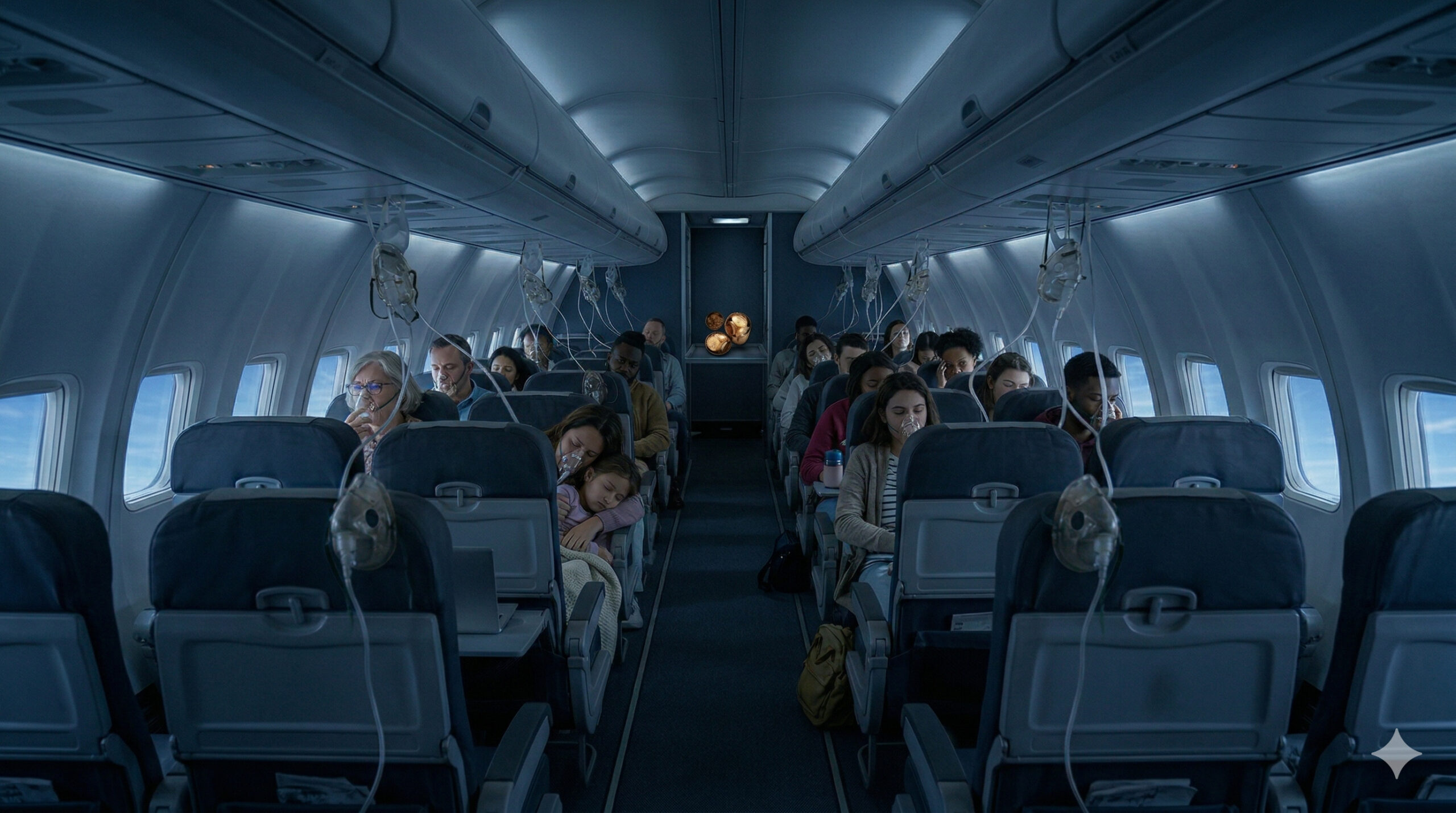
Helios 522 flight spent more than 2 hours on autopilot after depressurization left everyone unconscious and ended in a crash due to fuel exhaustion.
On August 14, 2005, the Helios Airways 522 flight, operated by a Boeing 737-300, took off from Larnaca International Airport, Cyprus, heading to Prague, with a scheduled stop in Athens, Greece. What should have been a routine commercial flight turned into one of the most analyzed episodes in modern aviation, after a series of failures led to the complete incapacitation of nearly all occupants of the aircraft.
According to official investigation reports conducted by the Hellenic Air Accident Investigation and Flight Safety Authority (AAIASB) and widely reported by organizations such as ICAO and NTSB, the flight suffered a critical failure in the cabin pressurization system, which led to a progressive reduction in oxygen levels inside the aircraft.
This process, known as hypoxia, occurs when the human body fails to receive enough oxygen, causing loss of consciousness within minutes, especially at high altitudes like those reached by commercial airplanes.
-
The United Kingdom is throwing six-ton concrete blocks to the bottom of the North Sea, and the reason is the opposite of what you might think, as each block carries 4,000 oysters capable of filtering millions of liters of water per day.

-
Family without running water in the interior of Ceará takes out a loan to drill an artesian well and discovers possible oil, but cannot use it, cannot sell it, and is left with a debt of R$ 15,000.

-
At 100 years old, an elderly man who dreamed of “making it to the newspaper” finally shares his story, reaching his centenary with children, grandchildren, great-grandchildren, and great-great-grandchildren, moving his family with a life of hard work, farming, honesty, and without vices.

-
Germany proposes silent propellers to solve a centuries-old problem: the damage caused in the ocean by ship noise.

Incorrect pressurization system mode initiated a chain of events that went unnoticed by the crew
Investigations pointed out that, before takeoff, the aircraft’s pressurization system was incorrectly set to manual mode when it should have been in automatic. This seemingly simple technical detail was decisive for the outcome of the flight.


During the ascent, the cabin was not properly pressurized, but the alerts emitted by the aircraft were not correctly interpreted by the crew. One of the audible alarms, which indicated a pressurization problem, had a sound similar to the takeoff configuration alert, contributing to the confusion.
While the pilots tried to identify the source of the alert, the internal pressure continued to drop, gradually reducing the amount of oxygen available to everyone on board.
Hypoxia incapacitated pilots and passengers within minutes during the ascent
As the aircraft gained altitude, the reduction in oxygen began to affect the occupants. At cruising altitudes, such as 10,000 to 11,000 meters, the useful consciousness time without supplemental oxygen can be only a few minutes.
Although oxygen masks were automatically deployed in the cabin, they are designed to provide temporary support. In the cockpit, pilots have their own oxygen systems, but there are indications that they were unable to use them effectively in time.
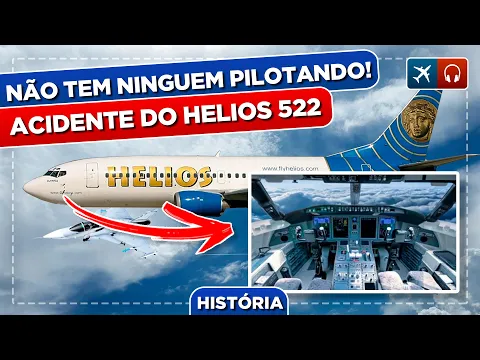
As a result, both the pilots and passengers gradually lost consciousness, leaving the aircraft without active human control.
Autopilot kept the aircraft on course and created the so-called “ghost flight”
Even with the incapacitation of the crew, the aircraft continued to fly thanks to the autopilot system, which maintained the previously programmed route. The Boeing 737 followed its flight plan towards Athens and entered a holding pattern upon arrival in the area.
This unusual behavior — a commercial airplane flying without human intervention — led the case to be known as “ghost flight”.
During this period, the aircraft remained in the air for more than two hours, maintaining stable altitude and trajectory, without any response to the attempts at contact made by air traffic controllers.
F-16 fighters intercepted the aircraft and confirmed the scenario of an unresponsive cabin
In the absence of communication, the Hellenic Air Force sent F-16 fighters to intercept the aircraft. Upon approaching the aircraft, the military pilots reported an unusual scene.
According to the records:
- the co-pilot was apparently unconscious
- the captain’s seat was empty
- oxygen masks were activated in the cabin
These observations confirmed that the aircraft was flying without effective crew control.
Flight attendant tried to take control of the aircraft in the final moments
Investigations revealed that a flight attendant managed to remain conscious longer by using a portable oxygen cylinder. This professional, later identified as Andreas Prodromou, even entered the cockpit.

There is evidence that he tried to take control of the aircraft in the final moments, possibly trying to prevent the crash. However, without complete pilot training and with fuel already running low, it was not possible to reverse the situation.
This detail is considered one of the most dramatic points of the case.
The crash occurred after total fuel exhaustion north of Athens
After remaining in flight for more than two hours, the aircraft began to lose altitude due to fuel exhaustion. Without engine power, the Boeing 737 went into a descent and collided with a mountainous area near Grammatiko, north of Athens.
The impact resulted in the death of all 121 people on board, including passengers and crew. The final report concluded that the accident was the result of a combination of factors, highlighting:
- incorrect configuration of the pressurization system
- failure to identify the problem by the crew
- misinterpretation of the aircraft’s alerts
There was no evidence of serious structural failure or external attack. The event was classified as an accident resulting from human error combined with operational factors.
The Helios 522 case became a global reference in safety studies and human factors in aviation
After the accident, the case began to be widely studied by air safety experts. It is frequently cited in training and analyses on:
- interpretation of alarms in aircraft
- cabin management and communication
- effects of hypoxia in flight
The aviation industry also revised protocols and procedures to prevent similar situations from occurring again.
The Helios 522 flight is considered one of the most extreme examples of how a seemingly simple failure can evolve into a critical scenario in just a few minutes. The lack of pressurization, although not externally visible, had a direct impact on the crew’s ability to react.
The fact that the aircraft continued flying for hours without human intervention underscores the complexity of modern systems and the importance of correct interaction between man and machine.
Have you ever heard of an airplane that continued flying with no one conscious on board?
The Helios 522 case remains one of the most impressive episodes in modern aviation, both for its impact and for the lessons it left for the industry.
In your view, are automated systems sufficient to prevent this type of situation, or is human presence still irreplaceable in critical scenarios? Leave your opinion in the comments.





Seja o primeiro a reagir!