





 Portuguese
  English
  Spanish
  2 min of reading
  0 comments


Long before the era of satellites and modern measurements, ancient scientists were already seeking to understand the circumference of the Earth. Using only basic concepts of geometry, Eratosthenes was able to calculate with remarkable precision the circumference of the Earth more than two thousand years ago.
In the 3rd century BC, a Greek mathematician made an impressive discovery. With a simple stick, Eratosthenes managed to calculate the circumference of the Earth with great precision.
His method, based on observations and mathematical calculations, anticipated modern measurements made by satellites by more than two thousand years.
The Simple and Genius Experiment to Measure the Circumference of the Earth
Eratosthenes was the head of the Library of Alexandria and had access to vast knowledge.
-
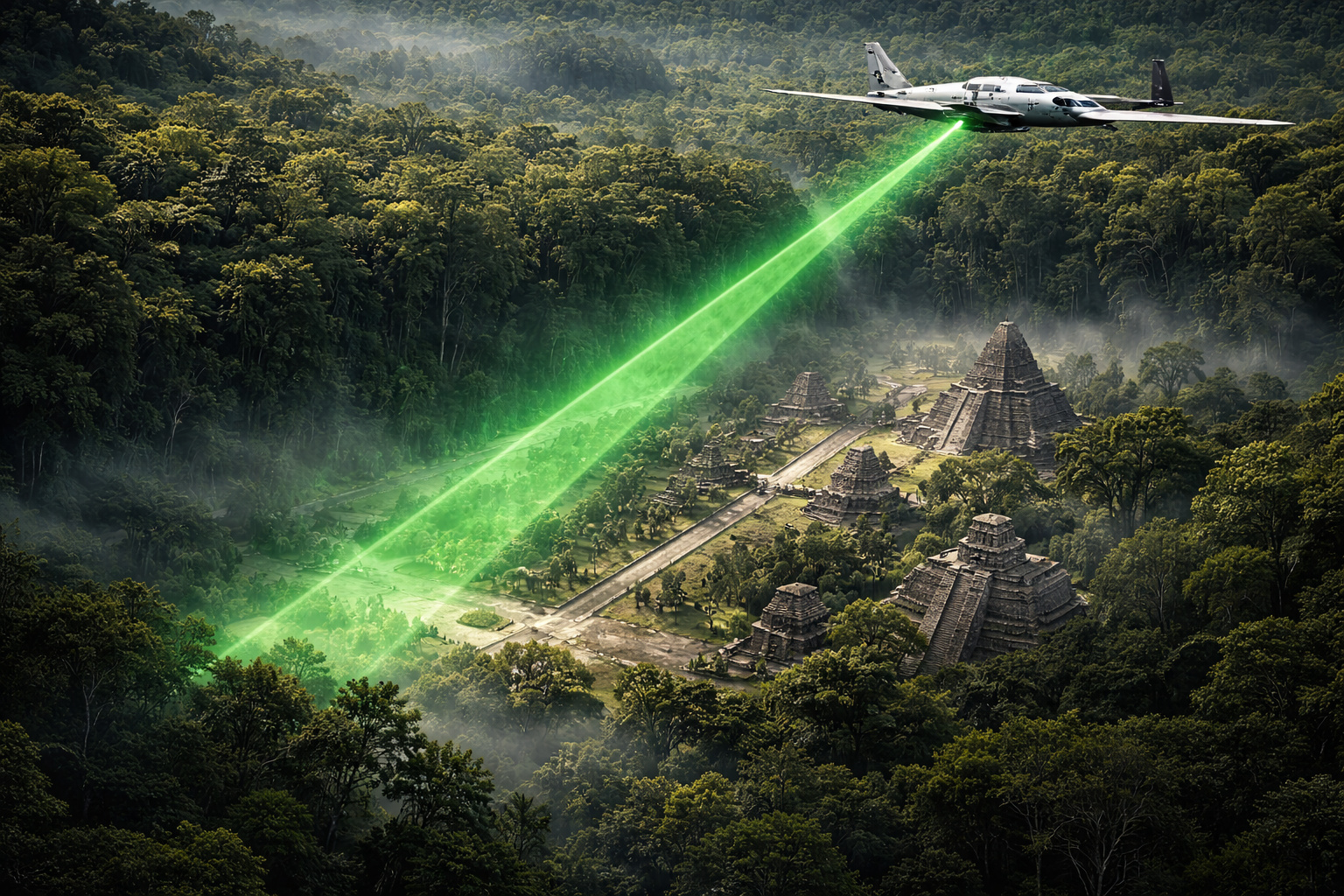
In 2016, a plane equipped with billions of laser pulses scanned 2,100 km² of jungle in Guatemala and revealed, beneath the tree canopies, a Maya megacity with 61,480 unknown structures, elevated roads spanning dozens of kilometers, industrial-scale irrigation systems, and a population of up to 15 million, three times more than any previous estimate.
-
Someone released 18 beavers in the upper Ebro River; it seemed like an isolated case, but no one knows who did it or how to stop their expansion, and now they have already reached Catalonia. And there’s a detail that changes the game: they can help restore rivers and even capture carbon.

-
ZCC 11000 crane lands at the port of Vitória and heads to Ceará in a convoy with 64 trailers: Zoomlion, founded in 1992, builds a monster that lifts over 600 compact cars to 93 m.

-
The biggest drama of being born on Mars is not breathing: Rice biologist says that colonists’ children may cease to be Homo sapiens, shaped by low gravity, radiation, and isolation that divides humanity.


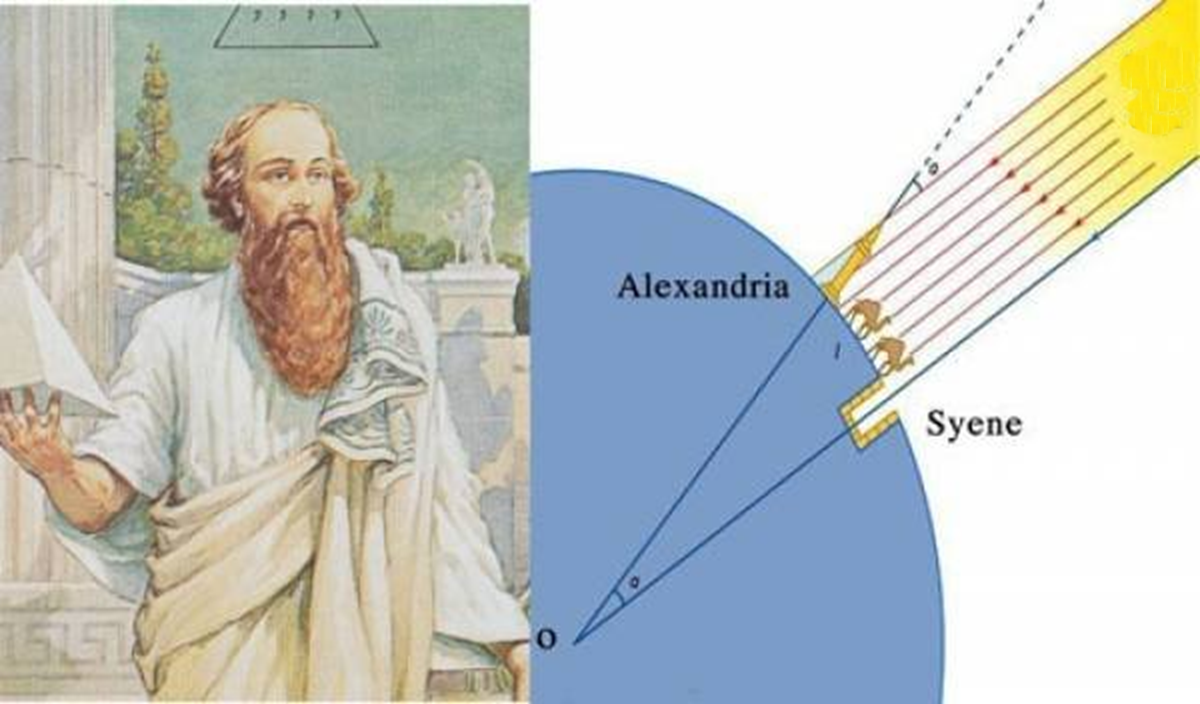
He learned that in Syene, a city south of Alexandria, the Sun was directly overhead at noon on the summer solstice. On that date, no object cast a vertical shadow.
Curious, he wanted to test if the same thing happened in Alexandria. On June 21, he stuck a stick in the ground and waited.
At noon, he noticed that the object cast a shadow at an angle of 7 degrees. This indicated that the Earth was not flat, but curved.

The Mathematical Reasoning
The idea that the Earth was spheroid had existed since Pythagoras, around 500 BC, and Aristotle had provided further evidence. But Eratosthenes went further and decided to measure the planet.
Knowing that Syene and Alexandria were at different latitudes, he deduced that the angular difference of the shadows could reveal the size of the Earth.
Since the shadow in Alexandria indicated an angle of 7.2 degrees, he compared this value with the complete division of a circle, which has 360 degrees.
The proportion was simple: 7.2 degrees correspond to 1/50 of the total circumference. Thus, it was just a matter of measuring the distance between Alexandria and Syene and multiplying by 50.
The Surprising Result
To obtain the distance between the cities, Eratosthenes hired a man to travel it. The messenger found a value of approximately 5,000 stadia, about 800 kilometers.
Multiplying 800 km by 50, Eratosthenes arrived at an incredible result: 40,000 kilometers. This measurement is extremely close to the actual circumference of the Earth, which we now know to be 40,030 km.
Eratosthenes’ method demonstrated that science can make great discoveries with simple tools and careful observation. With just a stick and his intelligence, he managed to calculate the size of the planet with astounding accuracy for his time.
With information from independent.






Seja o primeiro a reagir!