





 English
  Francês
  Alemão
  Italiano
  Japonês
  Norueguês
  Portuguese
  Spanish
  2 min of reading


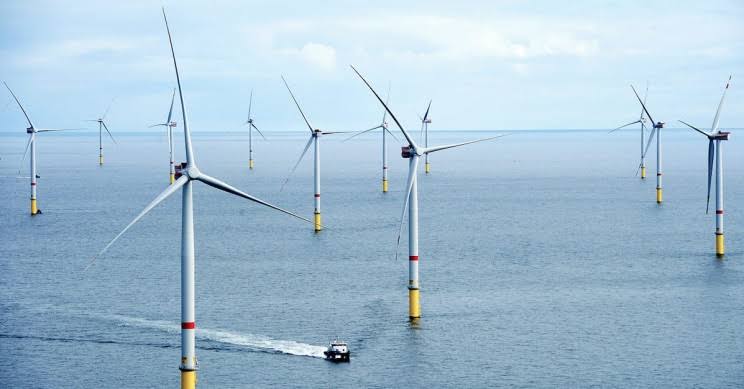
What Would Be the Advantage? The Speed of Installation Is the New Highlight of the Technology Implemented in This Wind Farm
The floating wind turbine located off the northern coast of Portugal has been inaugurated and is beginning to send electricity throughout the grid. This is a significant advancement, crucial for the new aspect of technology that can greatly increase the strength of offshore wind energy.
- Maritime Electrician Called for Activities on Offshore Oil Tanker by Log-In Logística
- Job Openings in Macaé and Porto do Açu for Assistant, Technician, Supervisor, and Much More
- Schulmberger and Subsea 7 Win Offshore Engineering Contract in the Pre-Salt of the Bacalhau Field
The large WindFloat Atlantic project is always financed by major energy companies in Europe, such as EDP, which operates with renewable energy, as well as Engie and Repsol, which use the floating platform developed by Principle Power.
There are exactly three large turbines, which have a capacity of up to 25 megawatts (estimated) and will be well connected, helping to enhance the significant economic potential of large floating wind farms. This wind energy market is becoming increasingly competitive.
-
With 160,000 m² of collectors, an area larger than 20 football fields, Silkeborg, in Denmark, hosts a solar thermal plant that heats 19,500 homes and could become the largest solar heating plant in the world.

-
A study reveals the expansion of renewable energy procurement in Brazil and shows how companies are taking advantage of opportunities to reduce expenses, ensure energy efficiency, and strengthen strategic environmental commitments.

-
Mato Grosso do Sul excels in the sugar-energy sector: the state reaches a milestone of 22 operating mills and accelerates the production of clean energy in MS with a focus on sustainability.

-
National energy dilemma: Brazilians support clean energy but reject increases in tariff costs to finance the sustainable transition.

All the large floating turbines will be well utilized alongside offshore platforms that have a much faster installation. In Portugal, the turbines can float up to 100 meters above the sea, well deep at about two-thirds greater than the maximum for fixed offshore farms.
In this sector, there are already several companies, such as Norway’s Equinor and Royal Dutch, that have invested heavily in this floating wind energy field. France, South Korea, and Japan have ambitions to increase and produce energy with low carbon content, thus securing limited areas with shallow seabeds, which could be one of the major markets for this great technology.
It is worth noting that the structures will be strategic for maritime transportation means. Increases in wind speed can lead to a much greater energy production. With all this happening, new projects and challenges can be conceived and put into practice.







Seja o primeiro a reagir!