





 Portuguese
  English
  Spanish
  4 min of reading
  0 comments


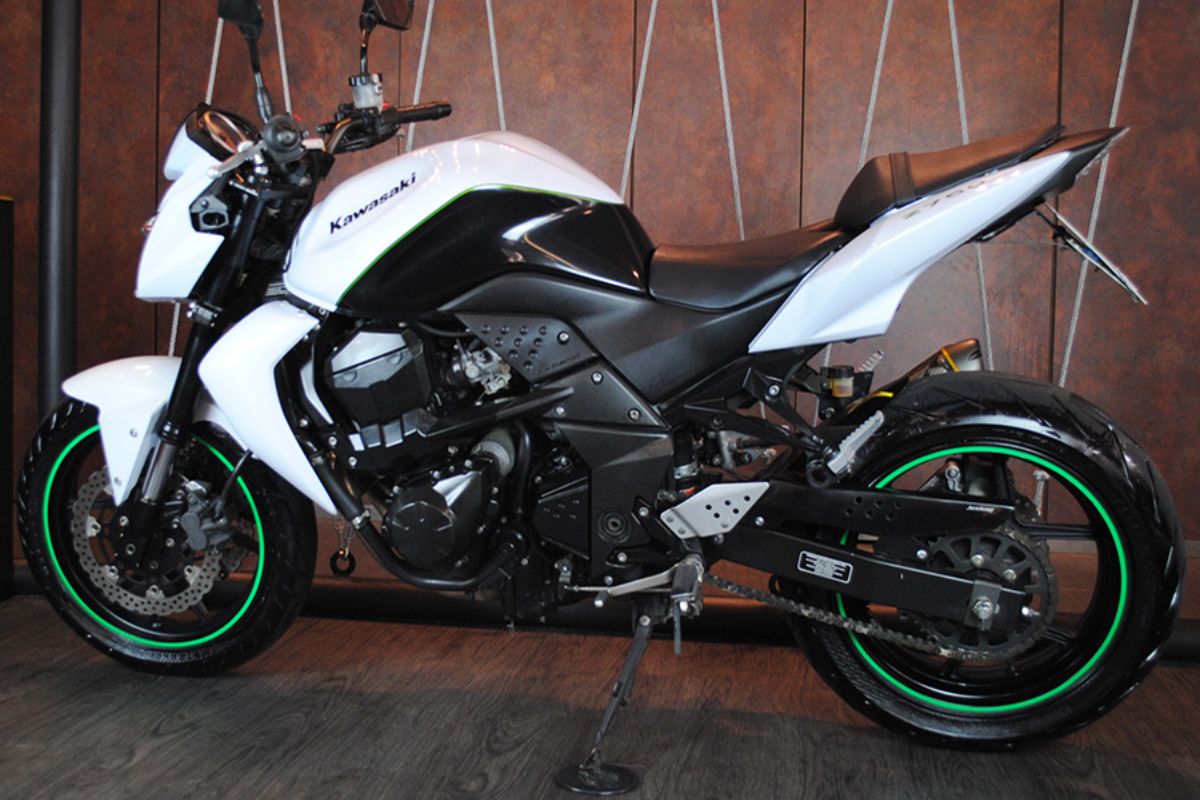
With Its 4-Cylinder Engine And Aggressive Design, The Naked Kawasaki Z750 Was Discontinued In 2012, But Left A Legion Of Orphan Fans That Its Successors Never Conquered.
Even more than a decade after its discontinuation, the Kawasaki Z750 remains one of the most revered names in Brazilian motorcycling. Launched in the country in 2010, it became a sales phenomenon and a true “object of desire,” but its production was halted in 2012 to make way for more modern models.
Despite its successors, the Z800 and Z900, being technically superior in every aspect, none managed to achieve the same iconic status. The question that remains is: did Kawasaki make a mistake by retiring the “Sete Galo”? The answer lies in the unique combination of engine, design, and attitude that turned a motorcycle into a legend.
How The Design And The 748cc Engine Made The Z750 A Phenomenon In 2010
The Kawasaki Z750 arrived in Brazil at a strategic moment. In 2009, the brand had opened its factory in Manaus (AM), and the Z750 became the first four-cylinder model from Kawasaki to be produced outside Japan. This allowed for a competitive price and demonstrated the company’s commitment to the national market.
-
After 14 years of waiting, a rammed earth mansion built in 1702 in the North Zone of São Paulo will become a park with leisure facilities and green areas, with a million-dollar investment.
-
With 2 unfinished nuclear reactors, up to 25 billion in costs, and proven fraud, the Nukegate case has left 800,000 consumers still paying today for energy that will never be produced.

-
The household appliance that consumes the most energy in Brazilian homes is not the air conditioner; it is located in the smallest room of the house, is used daily, and can account for up to 25% of the electricity bill, while an alternative in the same outlet can reduce this cost by up to 75%.

-
Son of a seamstress from the rural area of Ceará who did not speak English wins a scholarship of over 2 million reais at Williams College, one of the top 10 universities in the United States, covering everything including dormitory, meals, and annual trips to Brazil.


Its success was built on two pillars:
Sugomi Design: even before Kawasaki officially coined the term, the Z750 personified it. Its muscular lines, aggressive low headlight, and minimalist tail gave it the aura of a predator. It was an intimidating and unmistakable design.
More Powerful Engine: the heart of the bike was an inline four-cylinder engine with 748 cc, delivering 106 hp and 8.0 kgf.m of torque. This extra displacement compared to the 600 cc rivals gave the Z750 more power at lower RPMs, making riding more vigorous without the need to shift gears constantly.
The “Anti-Hornet”: The Rivalry With The Honda CB 600F That Defined A Generation Of Motorcyclists
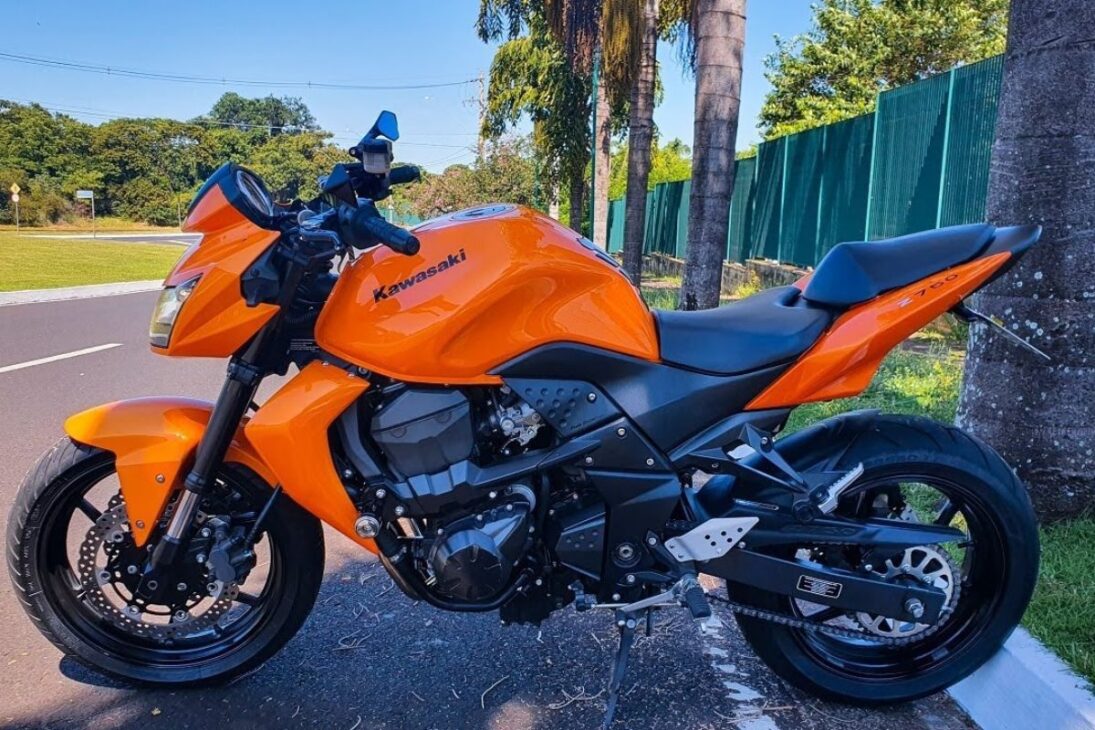
The Kawasaki Z750 was not meant to be a balanced bike; it was born to be the challenger. Its main target was the absolute segment leader, the Honda CB 600F Hornet. The rivalry between the two defined the market and created a clear choice for consumers.
While the Hornet was praised for its agility, lightness, and high-revving engine derived from the super sports CBR600RR, the Z750 offered a different proposition. It was heavier, yes, but its torquey engine provided a sense of raw power. The choice was between Honda’s refinement and agility or Kawasaki’s rebellious attitude and overwhelming torque. By positioning itself as the “anti-Hornet,” the Z750 solidified its identity.
The Failures In Suspension And Brakes That Fed Its Mystique
The legend of the Kawasaki Z750 was not built on perfection. On the contrary, its known flaws became part of its charm. The steel chassis, while cheap to produce, resulted in a high weight of 226 kg, which compromised its agility in corners.
The most common criticisms were:
Soft Suspension: the setup was considered too simple for the engine’s performance, bottoming out in tougher riding.
Only Average Brakes: while functional, they lacked the “bite” of more modern systems, requiring more force and anticipation from the rider.
Far from deterring buyers, these flaws created a strong culture of customization. Upgrading the suspension and installing better brakes became common upgrades, allowing each owner to create a unique machine and strengthening the community around the model.
The Successors Z800 And Z900: Why Did Technical Evolution Not Surpass The Charisma Of The Original?
Kawasaki did not stand still. In 2013, it launched the Z800, a direct evolution with an 806 cc engine and 113 hp, better brakes, and an even more radical design. However, it also became heavier, weighing 229 kg, which was a point of criticism.
Years later, the Z900 arrived like a revolution. With a new trellis frame, it became much lighter (212 kg), more powerful (125 hp), and received a complete electronic package with riding modes and traction control. Objectively, the Z900 is a much superior bike in every way.
So, why didn’t they become the “new Z750”? The answer lies in character. The Kawasaki Z750 represented the pinnacle of the analog era, a “raw” bike that demanded skill and respect. The safety and sophistication of the Z900, while making it a better machine, filtered the visceral experience that made the “Sete Galo” a legend.
The Legacy Of The “Sete Galo”: Why The Kawasaki Z750 Continues To Be An Object Of Desire To This Day


The decision to discontinue the Kawasaki Z750 was not a business mistake but a necessary evolution. Technology advances and environmental regulations become stricter. However, the “lightning in a bottle” that was the success of the Z750 was impossible to replicate.
Its legacy is enduring. It is a symbol of a golden era of four-cylinder nakeds, and its strong presence in the used market proves that it is still an object of desire. For many, it was the bike that established Kawasaki’s image in Brazil as synonymous with performance and attitude. In a world of increasingly digital motorcycles, the “Sete Galo” offers a pure mechanical connection, an experience that is becoming increasingly rare and valuable.







-

Uma pessoa reagiu a isso.