





 Portuguese
  English
  Spanish
  6 min of reading
  0 comments


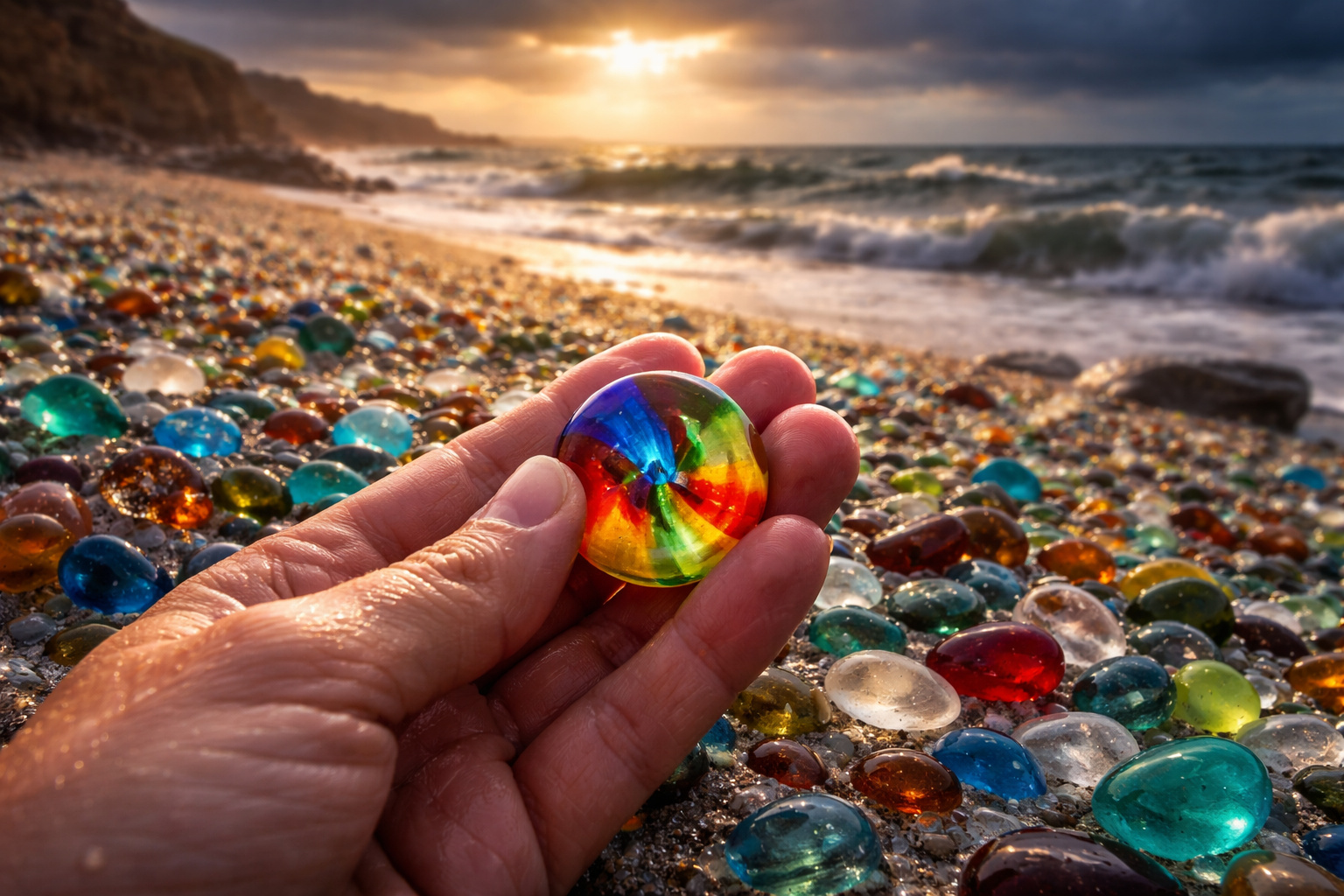
Seaham Beach in England reveals thousands of sea glass pieces polished by the sea, a result of industrial waste from the Industrial Revolution transformed into sea glass.
Walking along the Seaham beach in northeastern England, many visitors feel as if they are facing something improbable. Instead of finding just sand and common stones, what appears on the ground are thousands of small pieces of colored glass, perfectly rounded and polished by the waves of the North Sea. Shades of green, blue, amber, white, and even rare color combinations mix among the stones, forming a landscape that seems almost artificial.
This phenomenon did not arise from a common natural process. It is a direct result of a little-known chapter of the British Industrial Revolution. For decades, a bottle factory located in Seaham discarded production waste directly into the sea. More than a century later, the ocean returned this material transformed into something completely different: small pieces of glass smoothed by the constant action of water, known worldwide as sea glass.
Today, the beach has become one of the most famous destinations on the planet for collectors of this type of naturally polished glass. Among the common fragments, rare pieces called “multis” also emerge, multicolored fragments formed when different types of melted glass fused together during industrial disposal.
-
In a flooded well, archaeologists found a 1,700-year-old Roman egg that still contains clear and yolk intact inside the very thin shell.

-
Something is happening around the Earth: Inside the huge explosion of fireballs in 2026

-
A hot air bubble coming from Argentina expands over Brazil, causing thermometers to exceed 38 degrees with a thermal sensation of 40 degrees in late March, affecting 6 states at once.

-
The radish leaf that almost everyone throws away has more polyphenols, flavonoids, and fiber than the consumed root, and a 2025 study showed that the leaf contains compounds that protect the intestine, combat inflammation, and may inhibit the growth of cancer cells.


The Victorian factory that gave rise to the sea glass beach phenomenon in Seaham
The story begins in 1853, when the Londonderry Bottleworks was inaugurated in Seaham, a large bottle factory located in the county of County Durham, in northeastern England. The facility was part of the industrial growth that transformed several British coastal towns during the 19th century.
The factory produced a vast array of glass containers. Among the main products were bottles for beverages, pharmaceutical vials, chemical containers, and perfume bottles. As was common at that time, the production process generated a large amount of defective or broken pieces.
In the second half of the 19th century, environmental regulations practically did not exist. In many coastal regions of Europe, industrial waste was simply discarded into the sea. In Seaham, the waste from the Londonderry Bottleworks was thrown directly onto the cliffs near the factory, falling into the North Sea.
For decades, enormous quantities of broken glass were dumped into the ocean. Fragments of colored bottles, medical vials, and remnants of melted glass began to accumulate on the seabed.
How the ocean transformed industrial waste into polished glass
What happened to this material in the following decades is an impressive example of nature’s action over time.
The ocean currents, the constant impact of the waves, and the friction between stones and sediments slowly began to wear down the glass fragments. The process broke the sharp edges and polished the surfaces.
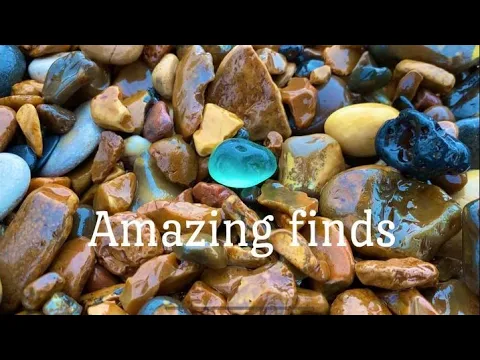

This phenomenon can take decades or even over a century to transform a common piece of glass into sea glass. Over time, the fragments become rounded, opaque, and smooth to the touch, acquiring an appearance reminiscent of small colored stones.
At Seaham beach, the process has been amplified by the enormous volume of glass discarded in the past. When storms or changes in currents move the sediments on the seabed, thousands of fragments end up being returned to the shore.
The result is a beach where hundreds of pieces of polished glass can be found within a few meters of walking.
What are the rare “multis,” the most valuable fragments of sea glass
Among the common fragments found on Seaham beach, there are some that immediately catch attention. These are pieces of glass that feature two, three, or even more different colors in the same fragment. These pieces are known among collectors as “multis”.
The multis formed when different types of colored glass were melted together during industrial disposal. When the material cooled and broke, fragments with layers or multicolored patterns emerged.

After decades of natural polishing in the ocean, these fragments began to exhibit unique color combinations. Therefore, they are considered the rarest and most valuable specimens in the world of sea glass. For many collectors, finding a multi is equivalent to discovering a natural jewel created by time and the sea.
Seaham has become one of the most famous destinations in the world for sea glass hunters
Over the years, the reputation of Seaham beach has spread among communities of sea glass collectors. Today, visitors come to the town from various parts of the world, especially the United States, Canada, and several European countries, to search for rare fragments among the stones on the beach.
On days of low tide or after storms, when new sediments are moved, the chances of finding interesting pieces significantly increase. Many collectors spend hours walking along the beach, carefully observing each fragment.

Some transform the found material into jewelry, necklaces, and decorative objects, while others prefer to keep the pieces in personal collections organized by color, shape, or origin.
The fame of Seaham as one of the best places in the world to find sea glass has also boosted local tourism. The town has begun promoting the phenomenon in official tourism materials and events related to the region’s industrial history.
The contrast between industrial pollution and natural heritage
The story of Seaham beach also illustrates a curious contrast. The phenomenon that today attracts tourists and collectors was born from a practice that would currently be considered a serious environmental problem.
During the 19th century and early 20th century, the disposal of industrial waste into the ocean was seen as a practical solution to deal with factory waste. There was no significant environmental legislation preventing such practices.
In the case of Seaham, the passage of time ultimately transformed an old waste dump into a scene considered beautiful and curious. Still, the phenomenon serves as a reminder of how the relationship between industry and the environment has changed over the last 150 years. Today, practices like those that occurred in Seaham would be prohibited by environmental laws in virtually every country.
The sea continues to return fragments of industrial history
Even after more than a century since the closure of the Londonderry Bottleworks, Seaham beach continues to reveal new polished glass fragments.
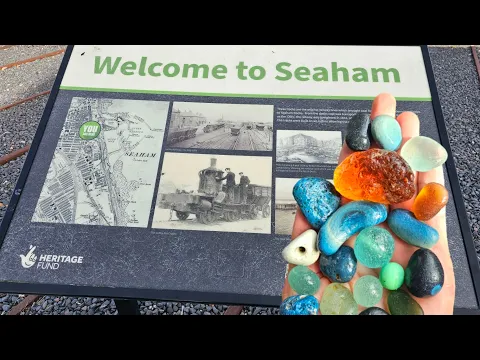
Storms, changes in currents, and the constant movement of the seabed cause new pieces to regularly appear on the shore. Each fragment is, in practice, a small trace of the industrial activity that marked the city’s history.
For those visiting the site today, walking along the beach is almost like exploring a natural archive of the Industrial Revolution. Among stones and shells, pieces of glass emerge that have spent over a hundred years being transformed by the waves. What was once industrial waste discarded into the sea has become one of the most curious examples of how time and nature can completely reconfigure the history of a place.






Seja o primeiro a reagir!