





 Portuguese
  English
  Spanish
  5 min of reading
  0 comments


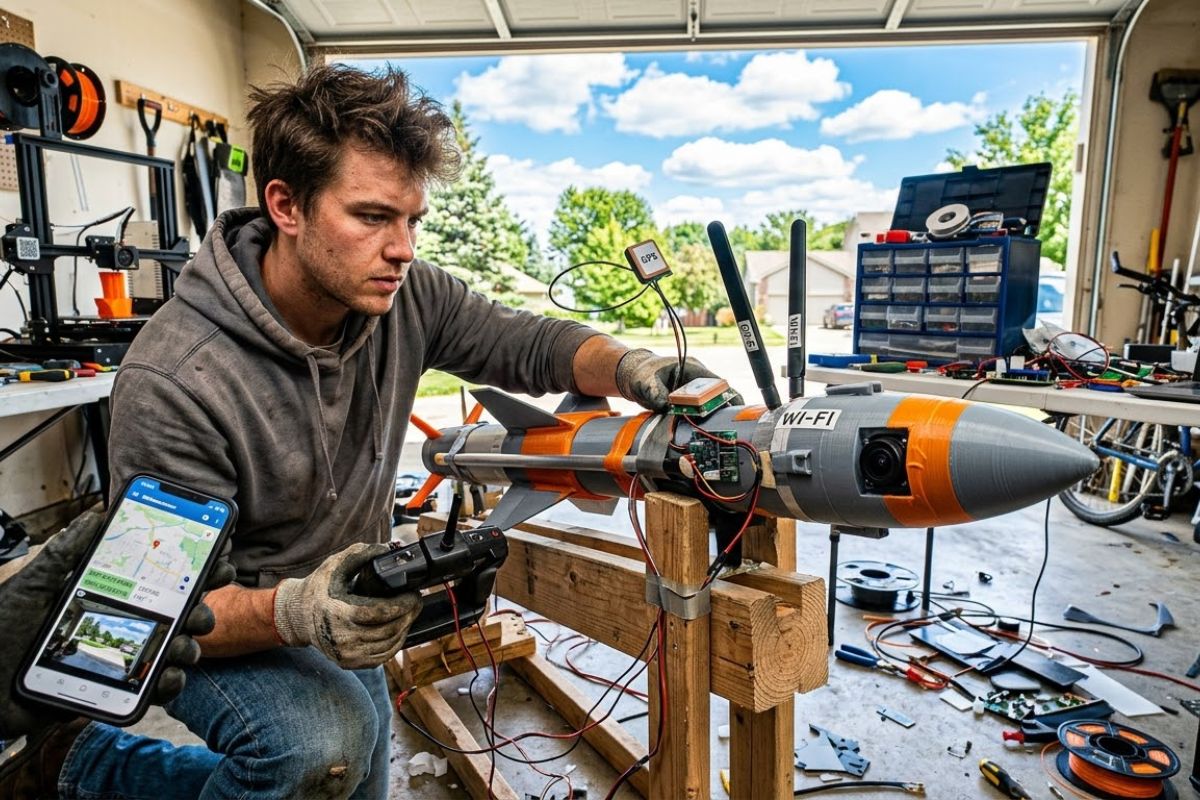
An enthusiast used a 3D printer and $96 worth of components to create a prototype of a guided missile with GPS, camera, and Wi-Fi guidance system. The project reignites the debate about the limits of 3D printing in weapon manufacturing and the security risks of this increasingly accessible technology.
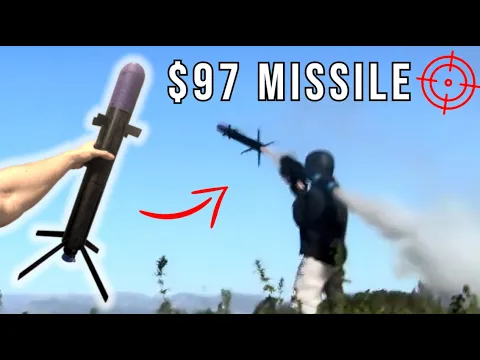
An amateur used a 3D printer and about $96 in commercially available electronic components to create a functional prototype of a homemade guided missile with GPS, camera, and Wi-Fi tracking system. The project, presented by enthusiast Alisher Khojayev in a five-minute video, includes a launcher, projectile, and electronic guidance systems that, at least in design, resemble portable surface-to-air missile systems used by military forces.
The case reignites a debate that was already raising concerns about 3D-printed guns, but now at a significantly more serious level. The combination of an affordable 3D printer, cheap components, and online shared designs is lowering barriers that previously limited the manufacturing of potentially dangerous devices, raising urgent questions about regulation, public safety, and the ethical limits of this technology.
What the amateur built with a 3D printer and $96
The prototype created by Alisher Khojayev is an assembly of three parts that the creator presents as a coordinated system. The launcher serves as the operational base, the projectile contains most of the components manufactured on the 3D printer, and an additional module with a camera can be incorporated to enhance target tracking.
-
The government will charge up to R$ 650 from pet owners in 2026, and tourists traveling with their dogs will have to pay a daily fee; the measure surprised thousands of pet ‘parents’ in Italy.
-
Man swaps his cellphone and modern life for a shelter in a tree to test the limits of mental sanity and physical preparedness.
-
In the USA, a city is considered the World Capital of the Horse due to having over 1,200 farms and around 75,000 horses. Understand how the soil of Ocala transforms horses into champions and generates over $190 million a year.

-
The United Kingdom is throwing six-ton concrete blocks to the bottom of the North Sea, and the reason is the opposite of what you might think, as each block carries 4,000 oysters capable of filtering millions of liters of water per day.


The total cost declared by the creator is about $96, equivalent to approximately R$ 495, using only 3D-printed parts and electronic components available in the common market.
The project includes ESP32 microcontrollers, GPS sensors, barometer, compass, and inertial measurement unit, all items sold openly in electronics stores and online commerce platforms.
How the guidance system of the 3D-printed missile works
The architecture of the project is based on connecting various devices through a Wi-Fi network that coordinates the flow of data between the launcher and the projectile. The first step involves connecting the launcher to a control computer via Wi-Fi, which analyzes the information from the sensors and calculates the trajectory in real-time.
In a second phase, the 3D-printed projectile becomes part of this network and receives instructions to adjust its orientation using movable surfaces.
The system combines data from GPS, barometer, compass, and inertial measurement unit to estimate variables such as speed, altitude, and position, creating a guidance mechanism that, although rudimentary compared to military systems, demonstrates a concerning level of sophistication for a low-cost amateur project.
The history of weapons manufactured with 3D printers
The debate about weapons manufactured with 3D printers is not new. In 2013, the organization Defense Distributed created the Liberator, the first fully 3D-printed gun whose files were made publicly available on the internet. Since then, 3D-printed firearm designs have multiplied, generating reactions from governments and security agencies in various countries.
Until then, the focus of concern was on portable firearms, such as pistols and rifles. The guided missile prototype presented by Khojayev shifts the debate to another level, demonstrating that the 3D printer can be used not only to manufacture the body of a projectile but to integrate navigation and guidance electronic systems at a negligible cost. This broadens the spectrum of potential threats associated with the technology.
Why the 3D printer makes this type of project possible

The 3D printer has democratized the manufacturing of complex objects that previously required industrial equipment, advanced technical knowledge, and high investment.
Today, anyone with access to a home 3D printer, which can cost less than R$ 1,500, can produce parts with sophisticated geometries from digital files shared online.
In the case of Khojayev’s prototype, the 3D printer was responsible for manufacturing the body of the projectile, the launcher, and structural components of the system.
The other elements, such as sensors, microcontrollers, and camera, are off-the-shelf items that anyone can buy without restriction. It is this combination of accessible manufacturing and cheap components that makes the project so disturbing from a security standpoint.
The legal and security issues raised by the case
Manufacturing devices like the prototype presented by Khojayev is likely illegal in most countries, including those with more permissive gun laws. Guided missiles are classified as controlled armament in practically all jurisdictions, and assembling or possessing devices of this nature can constitute serious crimes.
However, the difficulty lies in enforcement. The components used in the project are all civilian-use and sold freely, and the files for a 3D printer can be shared anonymously on the internet.
Regulating the technology without restricting its legitimate uses is a challenge that governments around the world have yet to resolve effectively. The case of the 3D-printed guided missile makes this discussion more urgent.
What this prototype reveals about the limits of 3D printing
The $96 prototype is not, by itself, a functional weapon ready for combat use. Experts point out that there is a considerable gap between an amateur technological demonstrator and a system capable of causing real harm in an operational scenario. Propulsion, the durability of printed materials, and the precision of the guidance system are significant limitations.
Still, the project demonstrates that the 3D printer is lowering barriers and costs in an increasing variety of applications that include everything from medical prosthetics and aerospace parts to potentially dangerous devices.
The speed at which technology evolves and becomes more accessible requires that governments, legislators, and society keep pace with this evolution just as quickly, at the risk of regulatory milestones becoming permanently outdated compared to what is already technically possible.
The guided missile prototype created with a 3D printer and $96 in commercial components shows that the boundary between technological innovation and security risk is becoming increasingly thin.
The case reignites the debate about the regulation of printed weapons and the ethical limits of a technology that, by its nature, is difficult to control.
With information from the Xataka portal.
What do you think about this case? Do you believe that the 3D printer needs stricter regulation, or would that limit innovation? Leave your opinion in the comments and share with those who follow the debates on technology and security.






Seja o primeiro a reagir!