





 Portuguese
  English
  Spanish
  4 min of reading
  0 comments



A Venezuelan Plane Invaded Brazilian Airspace and Ignored All Orders from the FAB. After Warning Shots, It Was Classified as Hostile and Shot Down. The Aircraft Crashed in the Jungle, and the Federal Police Found Drugs on Board. The Operation Integrates Efforts to Curb Trafficking at the Border.
An unknown aircraft illegally entered Brazilian national territory, without any identification or flight plan.
What could have been a navigation error soon revealed itself as a criminal operation, forcing a rapid response from the Brazilian Air Force (FAB).
The invasion of aircraft into Brazilian territory has been one of the challenges faced by security authorities, especially in border areas.
-
With emergency diversion to abandoned mining craters, engineers save villages from a devastating flood that was advancing through the desert and threatening to destroy entire communities in a matter of hours.

-
It seems simple, but it enriches: from R$ 500 to R$ 6,000 per piece and up to 10 days of handcrafted production, how is the couple from Praia Grande making a high income with hyper-realistic miniatures and turning a hobby into a money-making machine?

-
Artisanal well erupts with water in the sertão of Bahia, revealing a surprising flow with six active fissures underground and changing the landscape in the Bahian semi-arid region.

-
A Russian ship with 730,000 barrels of oil has just arrived in Cuba while Mexico negotiates fuel sales through private companies: the communist island is desperately seeking alternatives after losing its supply from Venezuela due to American military action.


These incursions are often linked to drug trafficking and smuggling, making it essential to enforce strict protocols to avoid risks to the country’s sovereignty.
Quick and Procedural Action
According to the FAB, the Venezuelan-origin plane invaded Brazilian airspace without permission and disobeyed all orders for a forced landing.
The interception occurred on Tuesday (11), but the official announcement was made only the next day.
According to CNN Brasil, the aircraft was detected by the Aerospace Operations Command (Comae), which immediately activated the protocols set forth in Decree No. 5,144/2004, which regulates the so-called “Law of Shootdowns”.
Initially, “verification measures” were conducted to confirm the identity and monitor the behavior of the plane.
The FAB followed all the established guidelines for this type of situation, aiming to ensure that the neutralization of the threat occurred within the parameters of the law.
These measures include attempts at communication via radio and visual signals, as well as observing any suspicious behavior from the occupants of the aircraft.
Escalation of the Operation: From Warning to Detention Shots
After confirming that the aircraft did not have permission to be in national airspace, intervention measures began.
The plane was directed to change its course and land at an airfield in the Amazon region, but the pilots ignored the orders.
In the next phase, the FAB fired warning shots, still without a response from the crew.
As a result, the aircraft was classified as hostile, and detention shots were fired, aiming to prevent the continuation of the flight.
The procedure is used as a last resort, being activated only when the intercepted aircraft ignores all previous attempts at communication and persists on the illicit trajectory.
This ensures that only high-risk targets are neutralized.

Crash in the Jungle and Discovery of Drugs
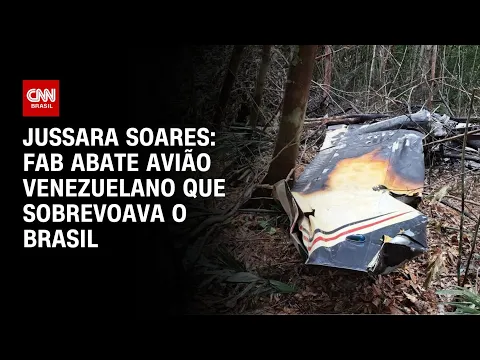
The plane lost control and crashed to the ground in a densely forested area near Manaus (AM).
The impact resulted in a fire, making it difficult to identify the aircraft model. Federal Police teams, which participated in the operation alongside the FAB, found both occupants deceased.
Inside the plane, drugs were located, the quantity of which is still being verified. The investigation seeks to determine the origin of the cargo and the traffickers’ connections with criminal networks operating at the border.
Aerial patrol operations play a fundamental role in the security of Brazilian territory, preventing the entry of illegal substances and strengthening the crackdown on international trafficking.
In recent years, several similar actions have been carried out, ensuring that suspicious aircraft cannot use the country’s airspace impunely.
Part of the FAB’s Strategy Against Trafficking
The action was part of Operation Ostium, which aims to intensify the fight against illicit activities at Brazil’s borders.
According to the FAB, the episode reinforces the effectiveness of the monitoring and interception strategy for suspicious aircraft.
This is not the first time that an operation of this type has resulted in the neutralization of aircraft involved in trafficking.
Brazilian security forces remain alert to any movements that threaten sovereignty and national security.
Operation Ostium has intercepted dozens of aircraft in recent years, being considered one of the main actions against aerial trafficking in South America.
With the increase in illicit routes used by criminals, the FAB has intensified patrols and improved the equipment used to detect possible invasions.
In addition to aerial patrols, coordinated actions with the Federal Police and other security agencies have enabled the identification of new strategies used by organized crime.
The fight against these practices requires continuous monitoring and rapid responses to prevent the consolidation of new trafficking routes through national airspace.







-

2 pessoas reagiram a isso.