





 Portuguese
  English
  Spanish
  5 min of reading
  0 comments


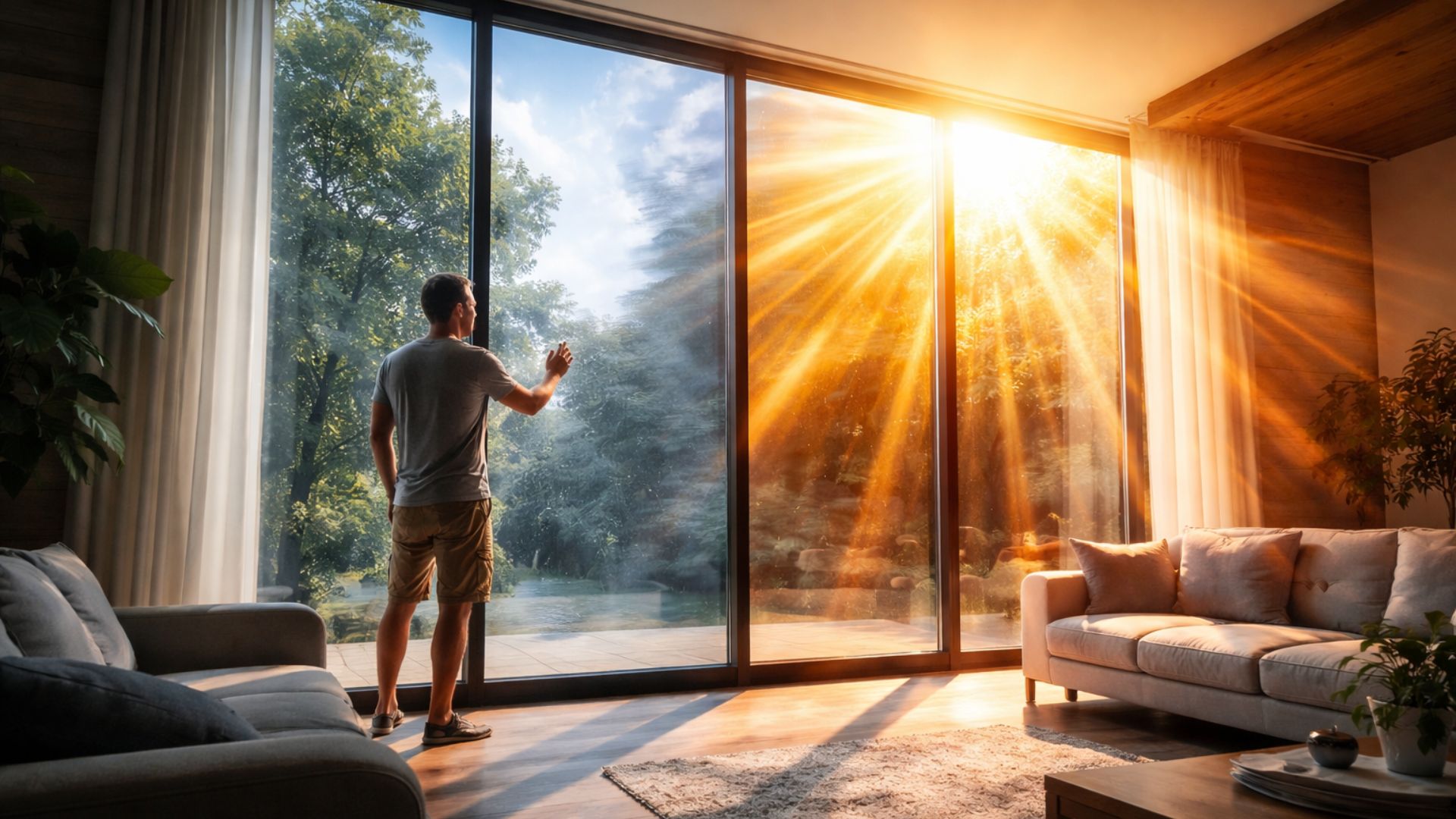
Low-emissivity technology gains space as an intermediate solution to reduce heat, improve thermal comfort, and cut energy costs without the need for complete window replacement, driven by proven performance and lower intervention costs compared to structural renovations.
Solutions with low-e, such as low-emissivity glass, technical films, and secondary overlay windows, have taken an intermediate position between complete frame replacement and the maintenance of inefficient openings, especially in properties where heat concentrates near the glass and increases the use of air conditioning.
Data from the U.S. Department of Energy indicates that windows made with low-e coating typically cost 10% to 15% more than conventional models, but can reduce energy loss by 30% to 50%, which helps explain the expansion of the technology beyond high-end projects.
How low-e glass improves energy efficiency and thermal comfort
The principle of low-e lies in a microscopic layer applied to the surface of the glass to alter how the material deals with thermal radiation, reflecting some of the heat without necessarily blocking the entry of natural light, which differentiates this solution from regular glass.
-
Italian researchers have detected what appears to be a second Sphinx buried under the sands of Egypt, and satellite scans reveal a gigantic underground megastructure hidden beneath the Giza Plateau for over 3,000 years.

-
There are 4,223 drums and 1,343 metal boxes concreted with 50-centimeter walls that store the radioactive waste from Cesium-137 in the worst radiological accident in Brazil, just 23 kilometers from Goiânia, with environmental monitoring every three months.

-
Giant Roman treasure found at the bottom of Lake Neuchâtel in Switzerland reveals an advanced trade system, circulation of goods, and armed escort in the Roman Empire about two thousand years ago.

-
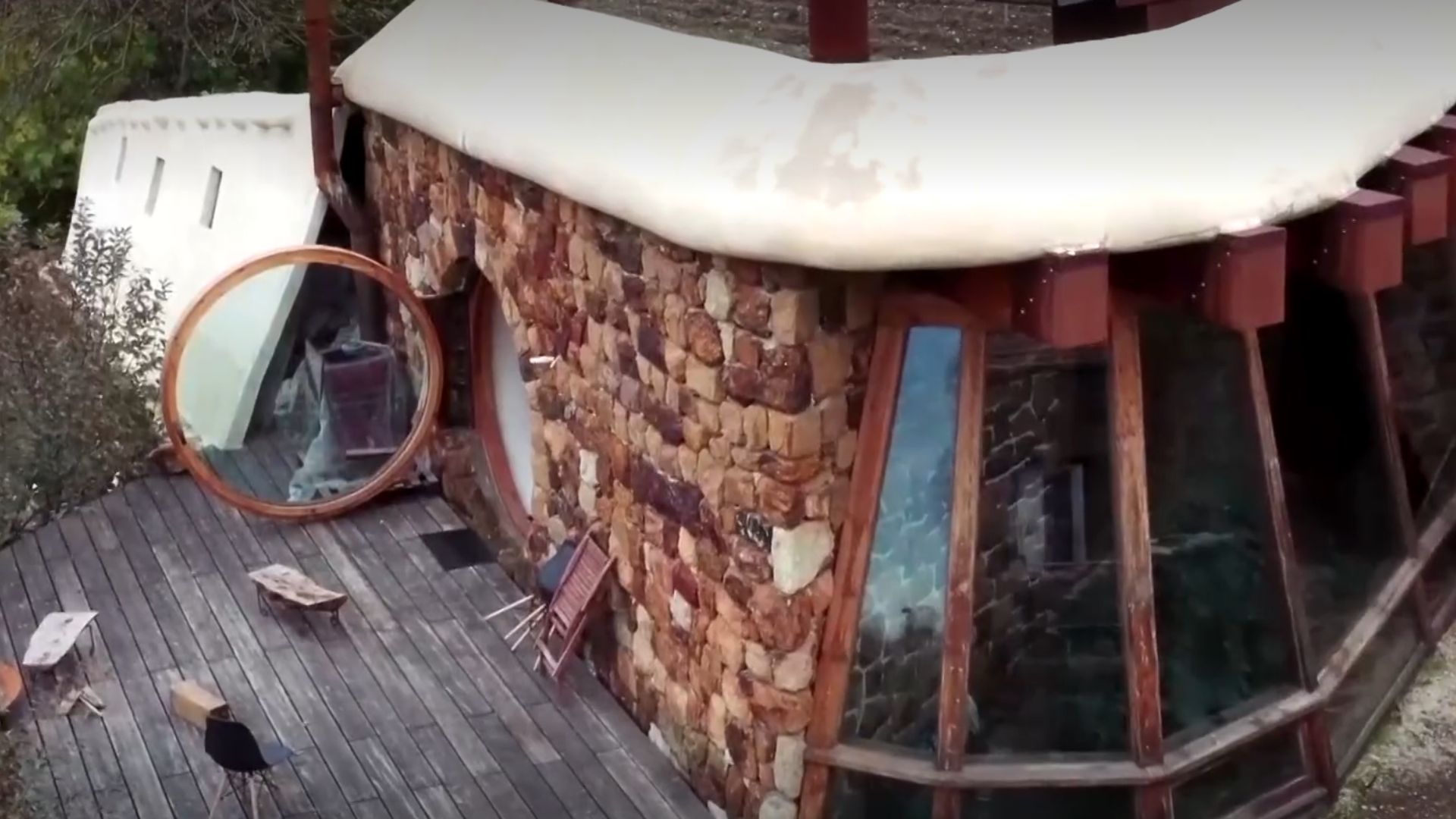
He buried 1,200 old tires in the walls to build his own self-sufficient house in the mountains with glass bottles, rainwater, and an integrated greenhouse.


This characteristic has a direct effect on two indicators used to measure efficiency in openings, the U-factor, which expresses the rate of non-solar heat transfer, and the SHGC, a coefficient that shows how much solar radiation passes through the window and turns into heat inside.
Therefore, the function of low-e is not limited to darkening the facade or reducing apparent reflection, as occurs with many conventional films, but to controlling the passage of thermal energy by blocking part of the infrared radiation and adjusting solar gain.
In technical materials from the American agency itself, the coating is associated with the reduction of the U-factor and the control of solar gain, which shifts the discussion from the aesthetics of the window to the realm of thermal comfort, useful lighting, and energy consumption.
Window retrofit grows as a cheaper alternative to renovation
In the daily routine of the house, this problem usually arises when a room receives strong sunlight for hours, remains stuffy even with the curtain closed, or requires air conditioning for longer, a situation that places the window among the most sensitive points of the thermal envelope of the property.
The Department of Energy states that heat gain and loss through windows account for about 25% to 30% of residential energy use for heating and cooling, a fact that supports the advancement of more specific interventions before heavy renovation.
In this context, updating existing openings has gained traction because the agency’s own guide lists improvement measures for windows in good condition, including sealing, solar control films, panels, and overlay windows, without treating complete replacement as an automatic response.

Moreover, the same set of guidelines notes that there are films with low-e coating capable of reducing heat loss in winter and also limiting some near-infrared radiation, paving the way for professional solutions applied directly to already installed glass.
The economic logic helps explain the growing adoption, as replacing the entire frame usually involves costs for materials, finishing, adjusting openings, and more complex labor, while complementary systems focus the intervention on the glazed unit and immediate thermal performance.
In the case of low-emissivity overlay windows, the Department of Energy reports potential savings of 12% to 33% in heating and cooling costs, depending on the type of existing window, a result that reinforces the appeal of retrofit as a technical and financial middle ground.
Factors that influence the choice of the ideal solution
Still, performance is not uniform and depends on climate, facade orientation, sunlight intensity, glass type, ventilation, and even the condition of the frame, which prevents treating any film or any glass as a universal answer for all properties.
In warmer regions, the priority tends to fall on products with lower solar gain, capable of reducing heat entry throughout the afternoon, while cold areas require more attention to thermal insulation to limit heat escape from the interior to the exterior.
Houses in mixed climates require a balance between these two behaviors, which is why the choice should not be based solely on the appearance of the glass, the tone of the film, or generic promises of comfort, but on the concrete problem that the window is causing in that environment.
When the main complaint is excessive heat near the openings, high cooling costs, or discomfort in areas very exposed to the sun, efficient attachments, low-emissivity films, and secondary windows begin to compete with complete replacement under more favorable conditions than in the past.
Popularization of low-e transforms construction standards
The advancement is also related to the maturity level of the technology itself, as reports from the Department of Energy indicate that about 80% of residential windows and 50% of commercial windows sold in the United States incorporate low-e coatings, a sign that the resource has entered the technical standard of the sector.
This does not mean that every retrofit will be simple, cheap, or equally effective, as compatibility with the existing structure, installation quality, sealing, and the condition of the frames continue to determine how much of the projected benefit effectively reaches the daily use of the house.
If the frame is compromised, there is very high air infiltration, or the unit already shows significant deterioration, complete replacement may still be the technically most suitable solution, even though the existence of intermediate solutions has greatly expanded the decision-making range for the homeowner.
The central point is that the window is no longer treated merely as an opening for light and ventilation and has taken on a direct role in the thermal control of the residence, which changes the logic of those who previously associated comfort only with the power of the air conditioning or the darkening of the environment.









Seja o primeiro a reagir!