





 Portuguese
  English
  Spanish
  5 min of reading
  0 comments


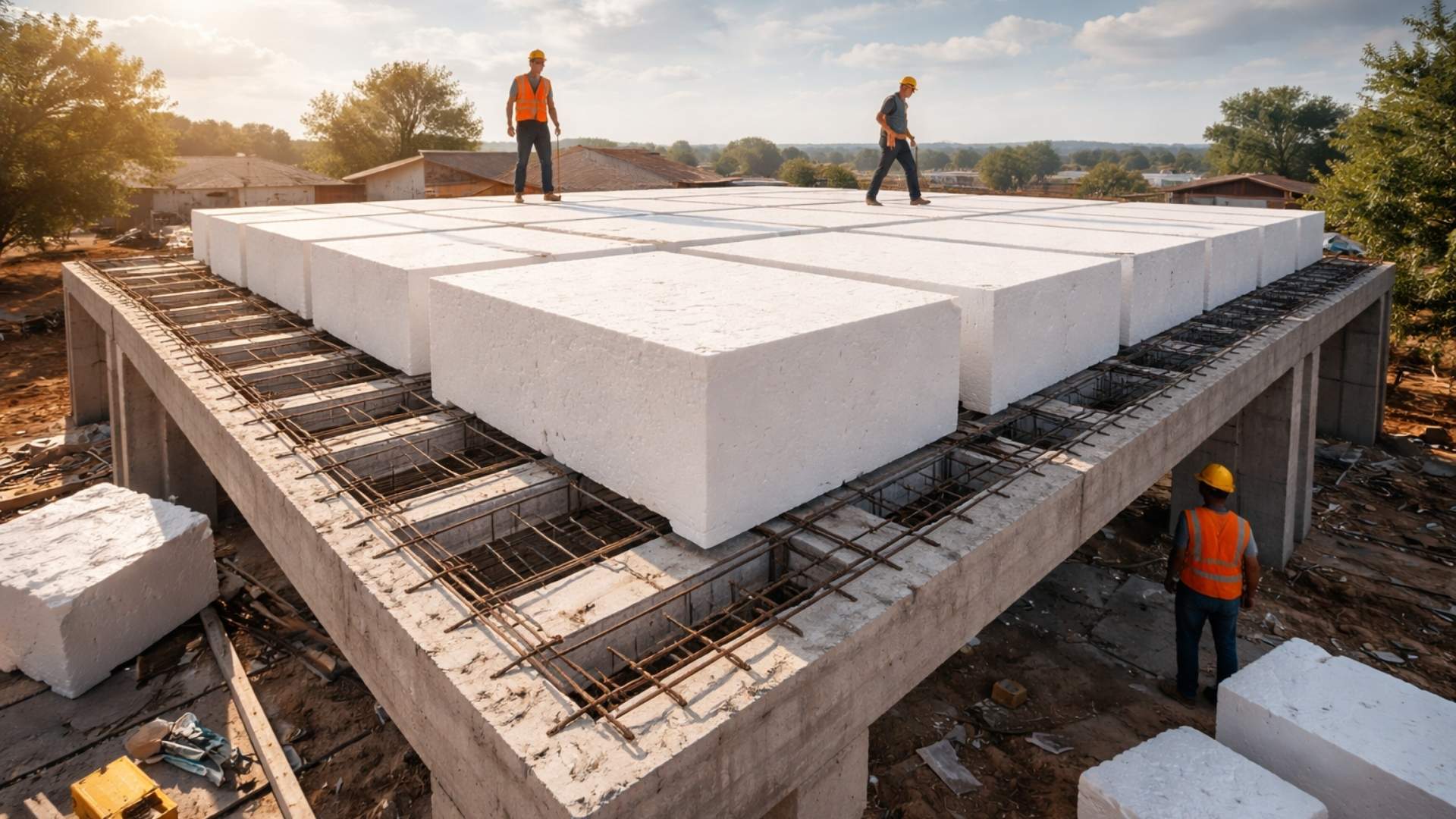
Constructive solution with EPS gains space by reducing structural weight, improving thermal comfort, and optimizing construction stages, without replacing the function of reinforced concrete in modern slabs.
The so-called slab with EPS, a material popularly known as Styrofoam, has gained space in residential and commercial projects by combining lower self-weight, faster assembly, and improved thermal performance.
In the most common system, EPS does not replace the reinforced concrete structure but acts as a filling element between beams or ribs, reducing the amount of concrete outside the structural regions and thereby relieving the loads transmitted to beams, columns, and foundations.
Manufacturers and technical manuals in the sector report significant weight reductions compared to conventional solutions, although this result varies depending on the project, span, thickness, and type of slab adopted.
-
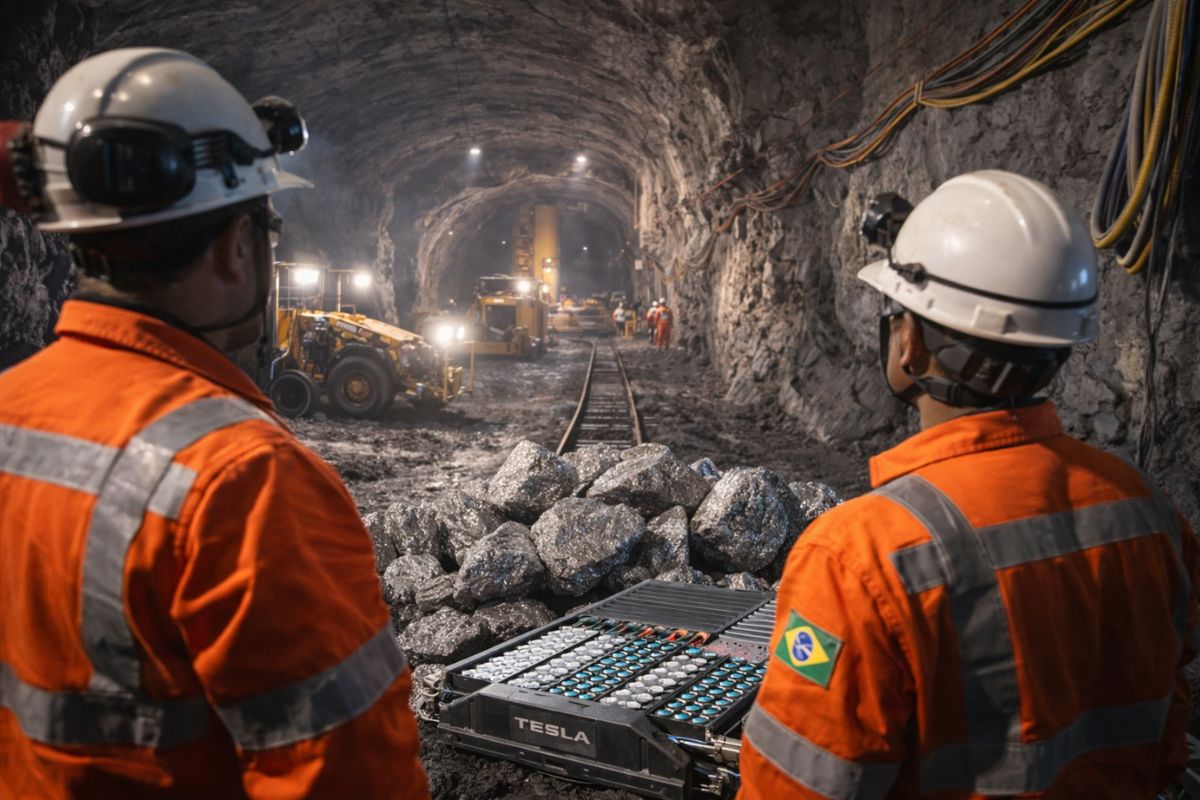
The Brazilian state enters the center of the global race for critical minerals by starting the construction of the largest underground nickel mine in Latin America, a mineral essential for electric car batteries that the entire world is competing for at this moment.
-
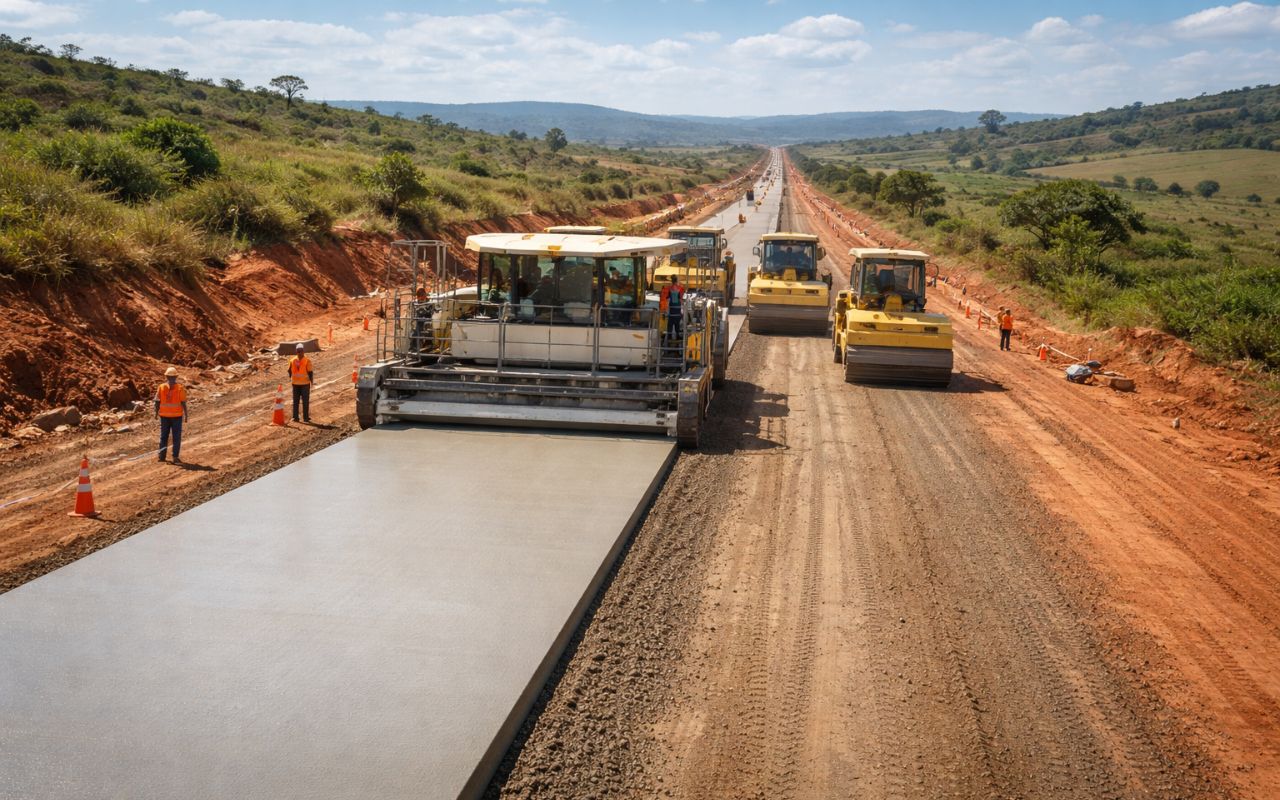
New CCR concrete paving technology promises roads up to 3x more durable, less maintenance, and cost reduction in Brazil.
-
Made from recycled plastic, plastic wood is gaining space in the construction industry because it does not rot, resists moisture, and reduces maintenance costs over the years.

-
Florianópolis will receive a million-dollar BRT that will begin construction in 2026 with nearly 400 million in funding from the federal government and the Inter-American Development Bank, and the map already shows the routes for the exclusive bus corridors.

How the EPS slab works in the structure
In practice, the performance of the slab does not depend on a supposed resistance of EPS to support the house alone.
The structural capacity comes from the combination of precast beams, the complementary reinforcement, and the concrete cover executed on-site, according to the applicable Brazilian standards for precast slabs and structural concrete.
In ribbed slabs, the technical literature itself describes that the material placed between the ribs acts as inert filling or form, while the strength is concentrated in the structural elements of the assembly.
Cost reduction and productivity on site
This configuration helps explain why the system has become common in projects seeking rationalization.
Since EPS has a much lower density than ceramic and concrete pieces used as filling, internal transportation on the construction site tends to require less effort and time.
Manuals and manufacturers also associate the material with reduced losses due to breakage, less leakage of cement slurry between the pieces, and the possibility of simpler cuts for installation passages, factors that usually directly influence productivity.
The effect on costs exists, but it should not be treated as automatic or uniform.
Instead of a fixed saving for any project, what the consulted documents point out is a combination of factors that can reduce the overall cost: lower self-weight of the slab, lower shoring demand in some systems, fewer material losses, and simpler logistics on-site.
There are technical catalogs that mention a reduction of up to 40% in the self-weight of the slab compared to solid slabs and a decrease of up to 50% in shoring, while other materials in the sector mention up to 50% reduction in self-weight in specific configurations.
However, these numbers depend on the type of comparison and cannot be generalized without structural calculation.
Thermal insulation and internal comfort
The thermal gain is one of the most recurring arguments for the use of EPS.
The material is predominantly composed of air and is classified by ABNT as a product for thermal insulation in civil construction.
This characteristic hinders heat transfer and helps reduce the temperature incidence on the inner face of the roof, which can improve the comfort of the spaces just below the slab.
In terms of everyday use, this usually means less overload on air conditioning units, especially in regions of intense heat, although the final result also depends on solar orientation, ventilation, roof type, and other materials used in the building’s closure.
In addition to thermal behavior, EPS appears in studies and technical materials associated with acoustic insulation, although this benefit varies depending on the complete system composition.
The most recent academic literature on the use of expanded polystyrene in civil construction highlights the advancement of the material due to its thermal-acoustic insulation properties, lightness, and durability.
Fire safety and technical standards
Fire safety is another point that often raises questions.
The use of EPS in civil construction does not mean using any piece of the material.
Technical manuals and sector references inform that, for this application, a flame-retardant product must be specified, identified in classifications such as class F.
The EPS usage manual in civil construction also describes the identification by a red stripe for flame-retardant materials, reinforcing that the correct specification is part of the technical control of the system.
This does not exempt compliance with the design, coating, and execution requirements specified for each project.
Types of finishing and practical application
In finishing, the EPS slab does not prevent the use of the most common solutions on the market.
The system can receive a lower coating after the concreting and curing stage, as long as the execution follows the manufacturer’s and project’s recommendations.
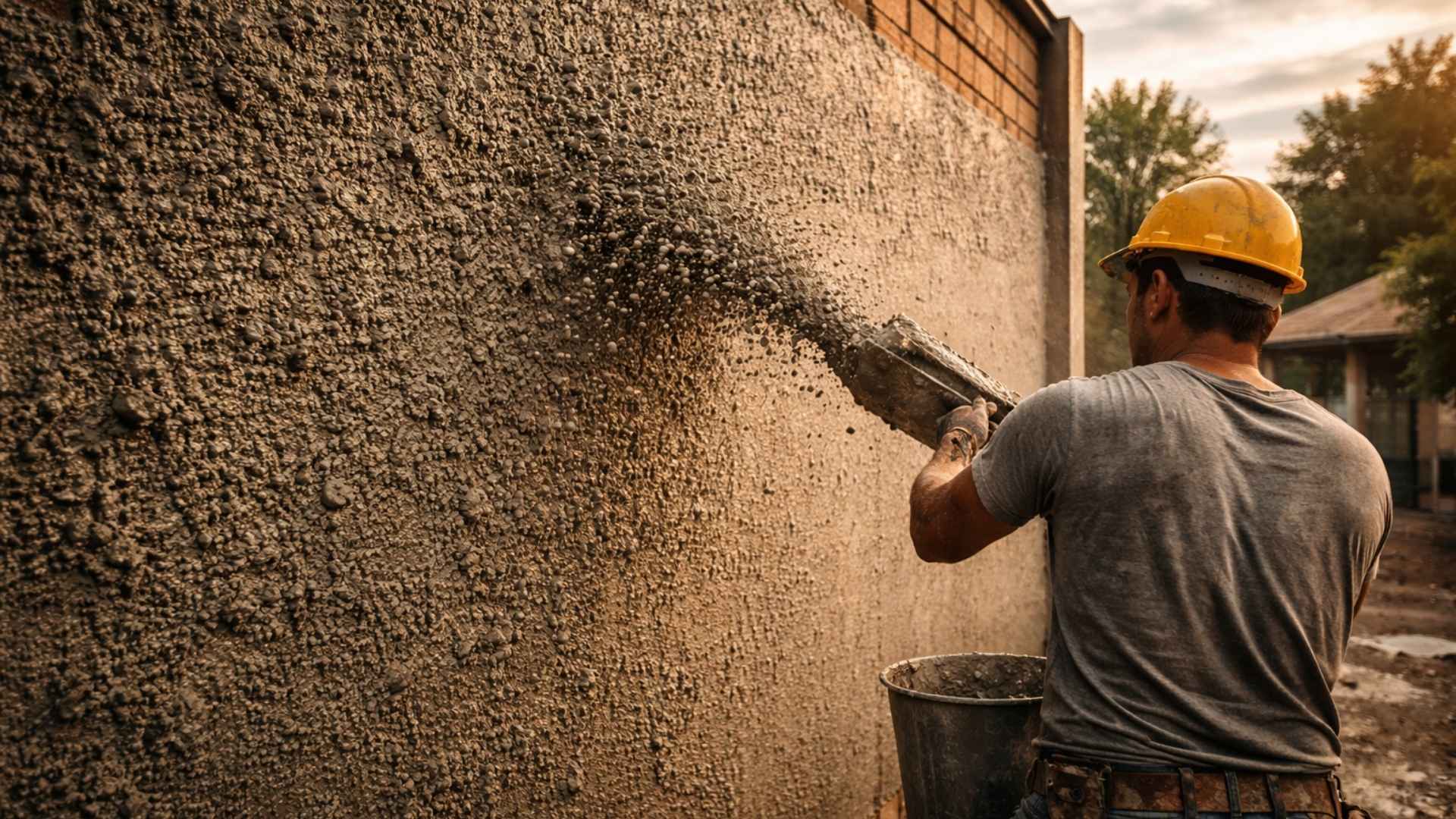
There are applications with roughcasting and plaster, in addition to the adoption of ceilings and gypsum boards, always paying attention to the type of fastening and adhesion required in each case.
The finishing flexibility helps explain why the method has consolidated in both single-story houses and multi-story buildings, within the conditions provided for each construction system.
Advancement of EPS use in civil construction
The expansion of this type of solution also goes through the regulatory environment.
An academic survey published in 2024 shows that the country has recent ABNT standards aimed at the characteristics of EPS, such as NBR 11752:2024 for cellular polystyrene materials aimed at thermal insulation.
The same study also records technical documents and guidelines from SiNAT for systems that use EPS in panels and walls.
In residential projects, the main practical effect of the EPS slab is the combination of lightness, rationalization, and thermal comfort, without eliminating the need for structural design, correct specification of components, and controlled execution.
The material does not alone transform a slab into a cheaper or safer solution; these results depend on sizing, concrete quality, reinforcement, shoring, and compliance with the standards and technical guidelines of the chosen system.
However, when well specified, EPS ceases to be just a lightweight filling and becomes part of a more efficient construction strategy, with lower self-weight and potential for better performance in the covering.







Seja o primeiro a reagir!