





 English
  Francês
  Alemão
  Italiano
  Japonês
  Norueguês
  Portuguese
  Spanish
  4 min of reading
  0 comments


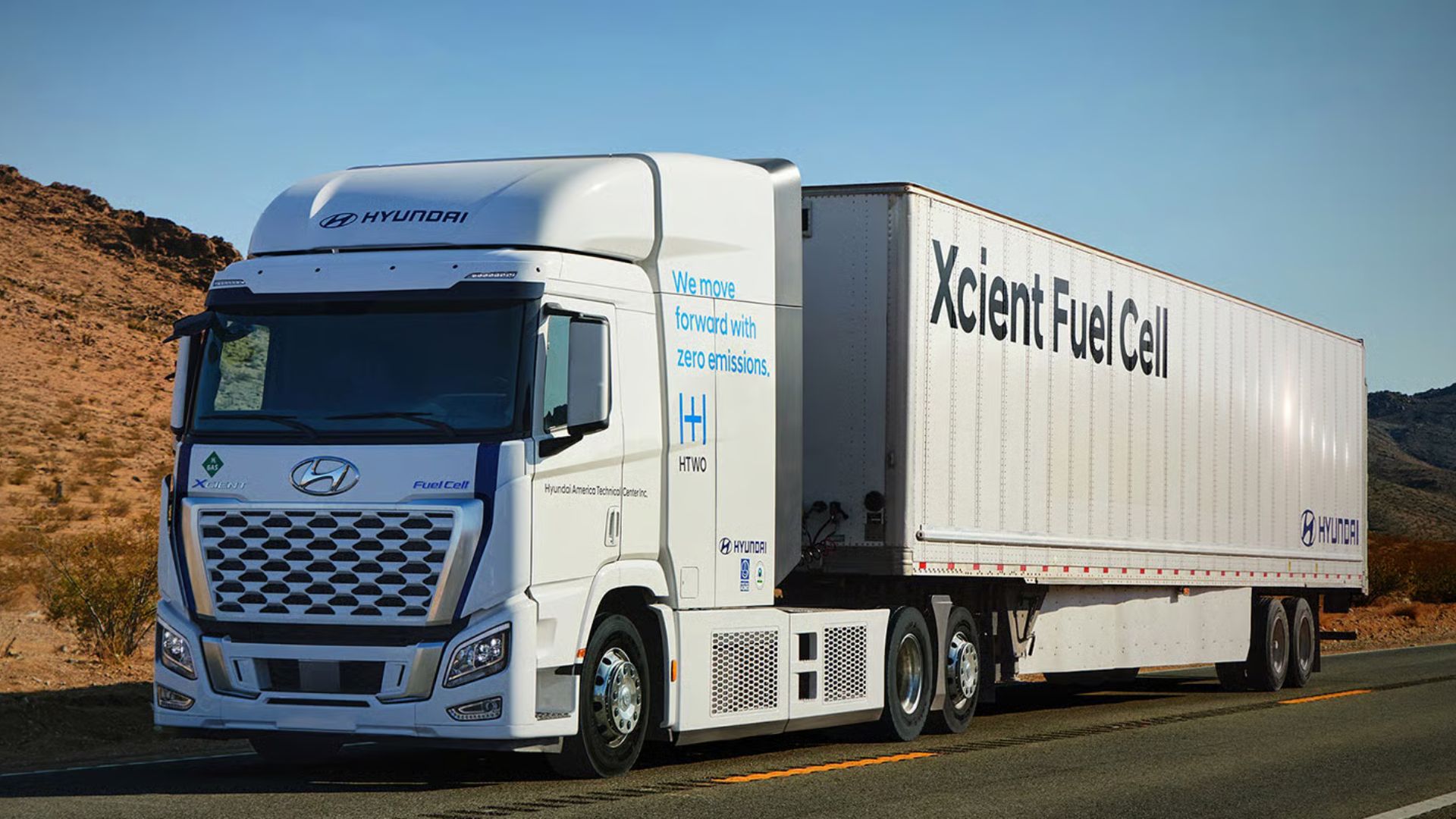
Hydrogen technology advances in heavy transport in South America with a pioneering project in Uruguay, integrating local production of renewable fuel and large-scale logistical operation, while the manufacturer expands global presence in zero-emission solutions for long distances.
Hyundai confirmed Uruguay’s entry into the heavy-duty hydrogen truck route by announcing the deployment of eight units of the XCIENT Fuel Cell in the country.
The operation is linked to the Kahirós Project, an initiative created to decarbonize wood logistics with green hydrogen, and is presented by the manufacturer as the first regular, commercially scaled operation of heavy-duty fuel cell trucks in South America.
Activities are expected to begin in November 2026, with a local structure for production and supply of the fuel.
-
Engineers propose a fourth traffic light for intersections – the change promises to affect crossings, queues, and waiting times.

-
Chevrolet Suburban Z71 lands in Brazil with a V8 engine, off-road design, air suspension, seven seats, and colossal size, a rare version imported for around R$ 1.3 million with luxury and exclusivity.

-
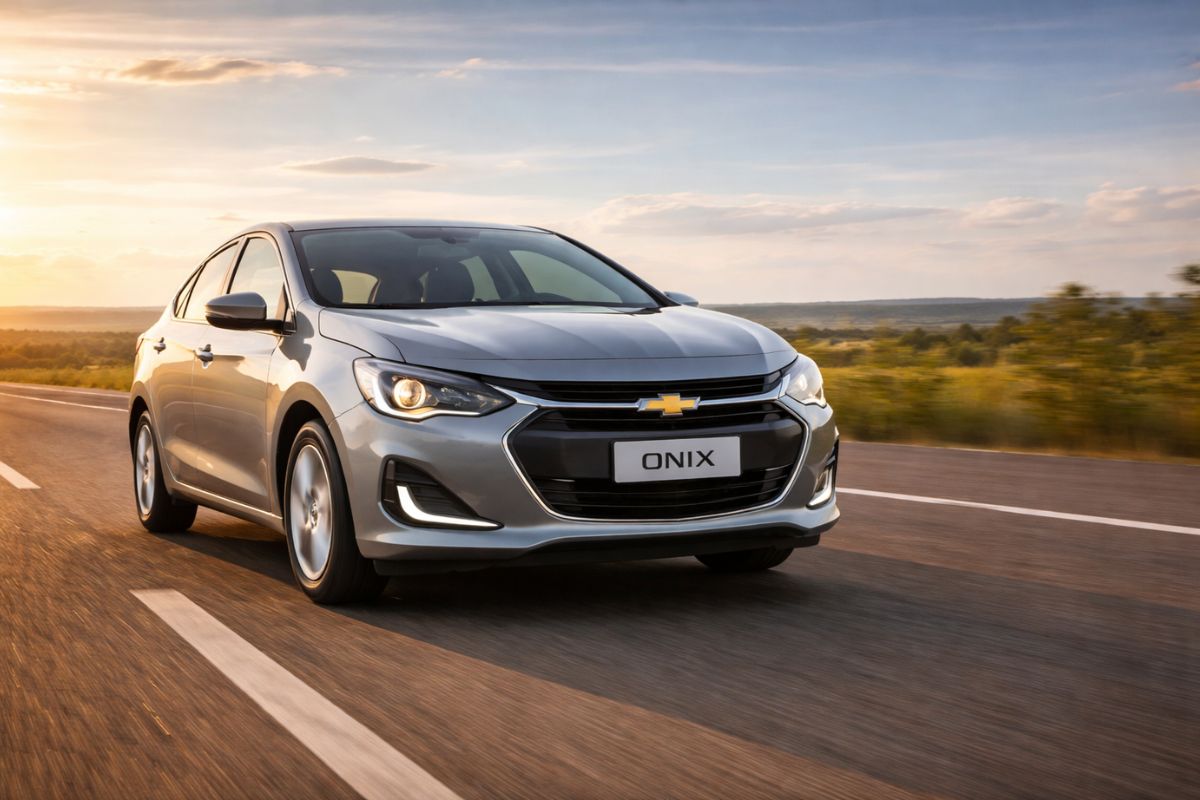
The Chevrolet Onix 1.0 turbo achieves 17.7 km per liter on the highway and ranks among the three most economical cars in Brazil in 2026, alongside two more expensive Toyota hybrids available at dealerships.
-
Little sister of the Hilux: Toyota launches Land Cruiser FJ with 4 radical versions, 2.7 engine with 166 hp and 4×4 traction with locking.

Hydrogen truck operation in Uruguay
The measure places Uruguay in a strategic position within the expansion of hydrogen technology in heavy road transport.
Instead of relying solely on external supply, the project envisions local production of fuel from renewable sources, which reduces the carbon footprint of the operation and brings forest logistics closer to stricter decarbonization targets.
The proposal also takes advantage of a condition already established in the country: about 99% of Uruguayan electricity comes from renewable sources.

Structure of the Kahirós Project and green hydrogen production
The consortium behind Kahirós includes Fidocar, Fraylog, and Ventus, with investment from the Santander Group.
According to Hyundai and the project organizers, the structure will be installed in Fray Bentos, focusing on the wood logistics chain.
The initial operation plans for six trucks in continuous use and two additional support units for service reserve and expansion, totaling the eight announced by the manufacturer.
In the regular phase, the expectation is that the main fleet will travel close to 1 million kilometers per year.
The project includes a solar park of 4.8 MW and an electrolysis plant capable of producing about 77 tons of green hydrogen per year.
On the Kahirós institutional website, the configuration is detailed with a 2 MW electrolyzer, a hydrogen station for storage and supply, and plans for operation in the second half of 2026.
Performance of the XCIENT Fuel Cell truck
At the center of the operation is the XCIENT Fuel Cell, Hyundai’s heavy model developed for long distances with zero emissions at the exhaust.
The truck uses two fuel cell stacks of 90 kW each, totaling 180 kW of power in the hydrogen system.
The traction is provided by an electric motor of 350 kW, equivalent to 469 hp, with a torque of 2,237 Nm, figures aimed at high-demand logistical applications.

The storage capacity reaches 68 kilograms of hydrogen in ten tanks, supported by a 72 kWh battery.
In this configuration, the range reported by Hyundai reaches up to 720 kilometers under ideal operating conditions.
The company itself emphasizes that this range may vary depending on load, terrain, weather, and other external factors.
In the Class 8 tractor configuration, the vehicle supports a gross combined weight of up to 37.2 tons.
Application in wood logistics and environmental impact
Although the announcement has resonated as an unprecedented move in the region, Kahirós was not designed as a symbolic demonstration.
The initiative is linked to a real wood transport operation and presents itself as Uruguay’s first integrated green hydrogen project.
The plant will initially supply six trucks and estimates an annual saving of 870 tons of CO2, in addition to serving operations related to the forestry sector.
In addition to replacing diesel, the project has a relevant industrial component.
The local production of hydrogen, coupled with a dedicated supply station, serves as a test for a broader infrastructure model in heavy transport.
In long-distance sectors, the comparison with purely electric vehicles often stumbles on recharge time and operational availability.
In this context, hydrogen trucks stand out by offering fast refueling and a range exceeding 700 kilometers per refill.
Hyundai’s global expansion in hydrogen

The move in Uruguay also reinforces Hyundai’s global strategy for hydrogen.
According to the company, the South American operation adds to ongoing programs in North America and Europe.
The manufacturer claims to have 63 XCIENT Fuel Cell trucks in circulation in North America, with over 1.6 million kilometers accumulated.
In Europe, there are 165 units in operation, with over 20 million kilometers driven since their debut in Switzerland in 2020.
This history helps to understand why the company treats the Uruguayan project as more than just a technological showcase.
The bet is to use a local operation, associated with renewable generation and dedicated refueling, to demonstrate commercial viability in a region where hydrogen infrastructure is still under development.
At the same time, the Uruguayan case can serve as a reference for other logistical corridors in Latin America, especially in activities with repetitive routes, high loads, and the need for high operational predictability.







Seja o primeiro a reagir!