





 Portuguese
  English
  Spanish
  6 min of reading
  0 comments


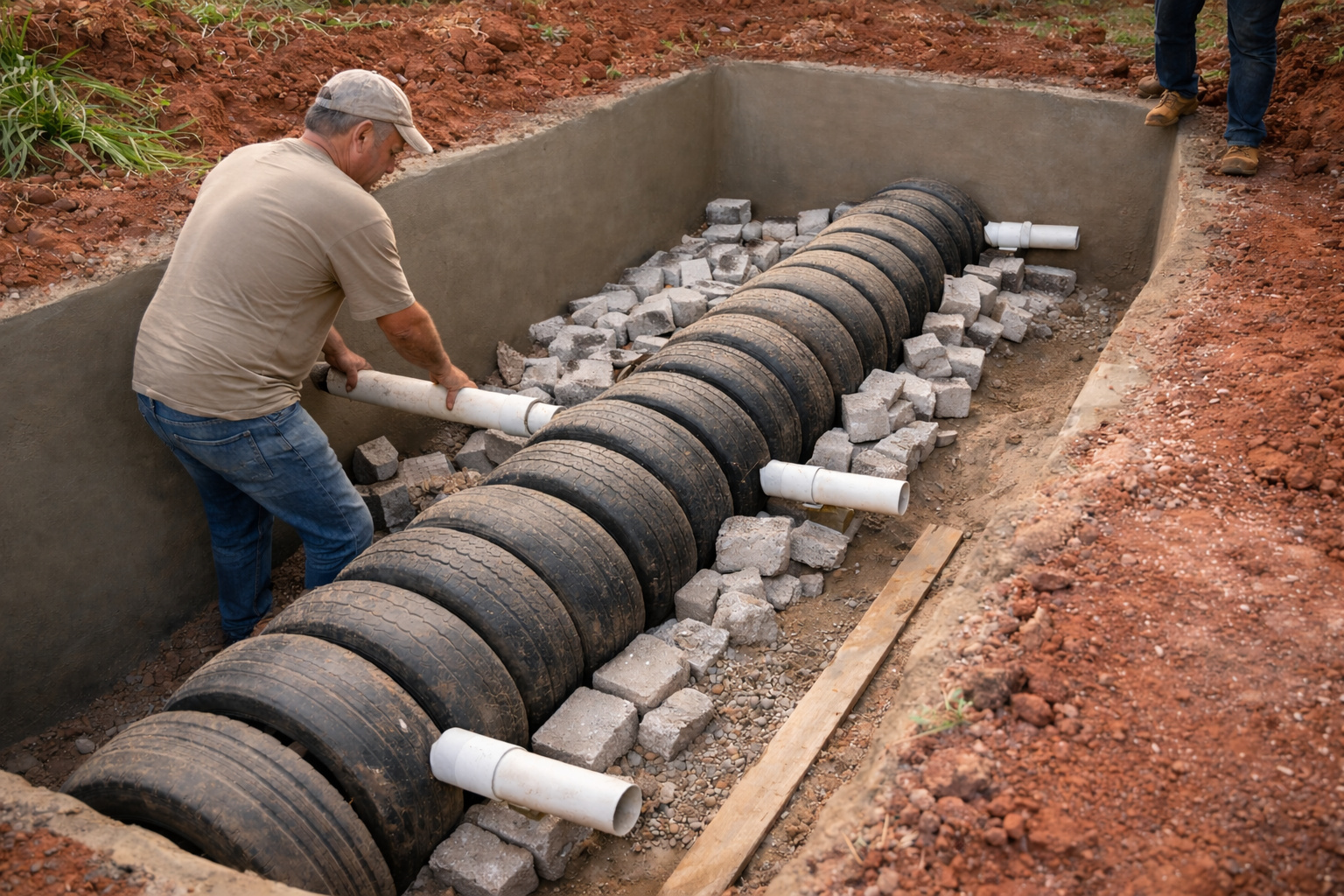
Ecological Pit Made With Truck Tires Can Cost Less Than R$ 200, Treats Domestic Sewage With Bacteria and Natural Filtration and Emerges As A Cheap Alternative To Rural Sanitation.
The conventional septic tank can cost between R$ 800 and R$ 2,000 considering materials and labor. An ecological pit made with stacked truck tires can be built for less than R$ 200, mainly because used tires are often discarded for free by tire shops and transport companies. This simple solution has been used in rural areas and isolated properties as a low-cost domestic sewage treatment alternative, reducing soil and groundwater contamination compared to what are called black pits.
Lack Of Basic Sanitation In Brazil: More Than 90 Million Without Sewage Collection
The deficit of basic sanitation in Brazil remains one of the country’s biggest infrastructure challenges. According to data from the Trata Brasil Institute, more than 90 million Brazilians still do not have access to sewage collection and treatment.
In rural areas, the situation is even more critical. Information from the IBGE released in 2023 indicates that only 9.6% of rural households are connected to the sewage network or use an adequate septic tank.
-
New CCR concrete paving technology promises roads up to 3x more durable, less maintenance, and cost reduction in Brazil.
-
Made from recycled plastic, plastic wood is gaining space in the construction industry because it does not rot, resists moisture, and reduces maintenance costs over the years.

-
Florianópolis will receive a million-dollar BRT that will begin construction in 2026 with nearly 400 million in funding from the federal government and the Inter-American Development Bank, and the map already shows the routes for the exclusive bus corridors.

-
Without a blueprint, without an engineer, and using scrap from the dump, a father spends 15 years building an 18-room castle for his daughter, featuring tram tracks, 13 fireplaces, and over 700 m², which may now be demolished.


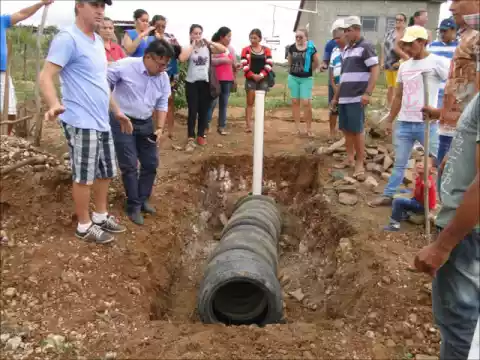

When there is no public sanitation network, the most common destination for domestic sewage is the so-called black pit, a hole dug in the ground where waste is dumped without any treatment. This type of makeshift solution can cause soil contamination, reach the groundwater, and spread microorganisms that cause diseases.
The traditional technical alternative is the concrete or masonry septic tank, which performs anaerobic treatment of domestic sewage. However, this model requires greater excavation, structural materials, and specialized labor, which increases the final cost of installation. In this scenario, low-cost ecological pit models have emerged, including systems that use recycled truck tires as treatment chamber structures.
Ecological Pit With Tires: Low-Cost Sewage Treatment System
The so-called ecological pit with truck tires is a simple domestic sewage treatment system based on the same principle as traditional septic tanks: the decomposition of organic matter by anaerobic bacteria present in the sewage itself.
The concept has been documented and disseminated in technical manuals on rural sanitation, including guidelines released by the Municipal Department of Water and Sewage (DMAE) of Uberlândia in Minas Gerais.
The Operation Occurs In Stages:
In the first compartment, formed by stacked tires, the solids present in the domestic sewage settle to the bottom and initiate the process of anaerobic digestion, in which bacteria degrade the organic matter.
In the second compartment, biological treatment continues. The resulting liquid passes through filtering layers of gravel and sand, which help retain particles and reduce the organic load before it infiltrates the soil.
When well-sized, this system can reduce about 90% to 95% of the contaminating organic matter, depending on soil conditions and the amount of sewage generated.
TEvap System: Plants Help Absorb Nutrients From Treated Sewage
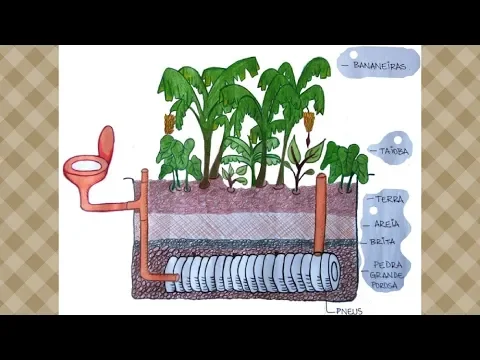
A more advanced variation of the system is known as TEvap (Evapotranspiration Tank), widely used in ecological sanitation projects. In this model, the system is covered with soil and receives the planting of banana plants or other large plants, whose roots absorb nutrients present in the treated effluent.
The plants use this nutrient-rich water for growth and release moisture into the atmosphere through leaf transpiration, further reducing the risk of contaminating infiltration. This method combines biological treatment, natural filtration, and plant absorption, creating a simple and efficient domestic sanitation system in rural areas.
Why Truck Tires Are Used In The Construction Of The Ecological Pit
The use of truck tires in the construction of the ecological pit occurs for three main reasons: dimension, resistance, and availability.
Truck tires have a large enough diameter to function as small treatment chambers. When stacked, they create an internal space suitable for the deposition of solids and circulation of liquid. The rubber used in these tires also has high chemical resistance, enduring continuous contact with sewage without quickly degrading.
Another important factor is availability. Tire shops, transport companies, and workshops often regularly discard used tires. Since the proper disposal of this material has a cost for companies, tires are often given away for reuse.
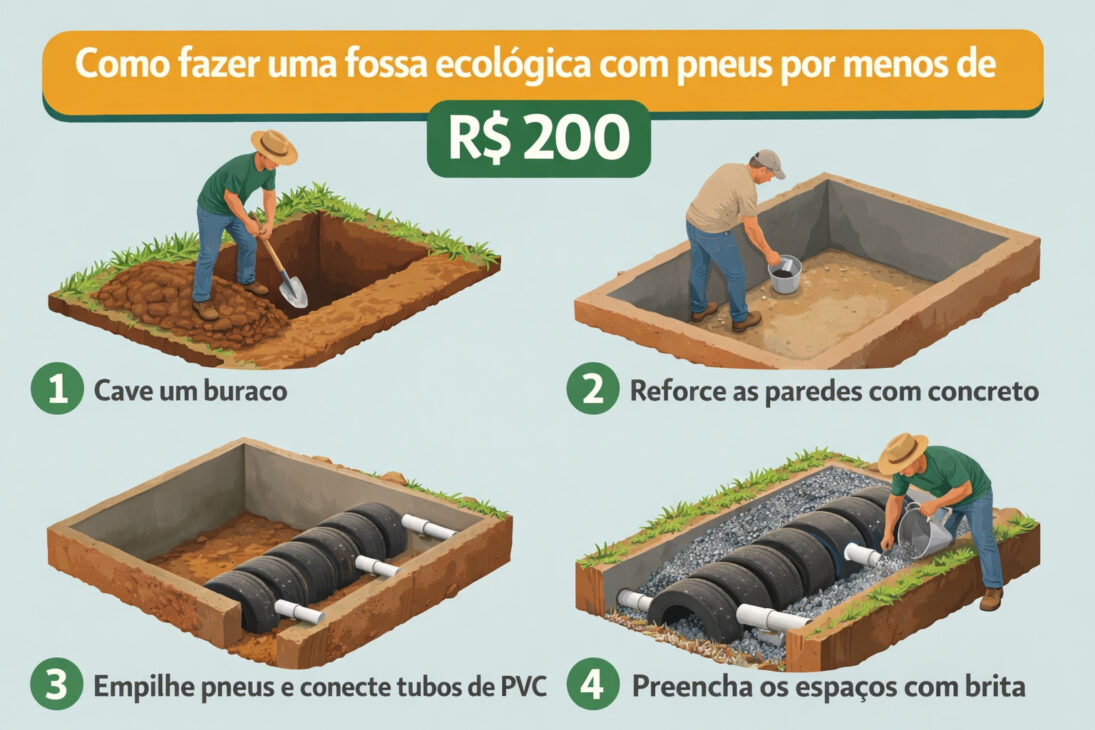
How To Build An Ecological Pit With Truck Tires
Building an ecological pit with truck tires follows relatively simple steps but requires basic care to avoid environmental contamination.
Site Selection For Installing The Ecological Pit
The location must be at least 3 meters from the house walls and 15 meters from wells, springs, or watercourses. It’s also important to avoid areas prone to flooding or with permanently saturated soil.
Excavation Of The Septic Tank System With Tires
A hole approximately 1.5 meters deep should be dug, with a diameter sufficient to accommodate the tires.
For systems with two treatment modules, two separate holes are made, connected by a PVC pipe that directs the effluent from the first to the second compartment.
Base Preparation With Filter Layer
A layer of gravel about 20 centimeters thick should be placed at the bottom of the excavation, which serves as a drainage base and prevents sludge buildup at the bottom of the pit.
Stacking Of Truck Tires
In each module, three or four tires are stacked, forming a vertical column that will function as a treatment chamber.
Small holes can be made in the sides of the tires to allow the treated liquid to gradually pass into the surrounding soil.
Installation Of Inlet And Outlet Piping
The PVC pipe coming from the house should be connected at the top of the first module.
Another pipe is installed in an intermediate position between the first and second modules, ensuring that only the treated liquid passes to the second stage while the solids remain in the first compartment.
Filling With Gravel, Sand, And Geotextile Cloth
The external space between the tires and the wall of the excavation is filled with gravel and sand, forming a filtering system.
A geotextile cloth or filter mat can be placed over this layer to prevent soil from mixing with the draining material.
Covering The System And Planting Vegetation
After assembly, the system is covered with soil. If the TEvap model is adopted, banana plants or other deep-rooted plants can be planted, which help absorb nutrients and complete the natural treatment cycle.
Cost Of An Ecological Pit With Tires
The cost of this type of system tends to be quite low, especially when the tires are obtained for free.
The most common materials include:
- Truck Tires (6 to 8 units) – generally free at tire shops
- Gravel – approximately R$ 40 to R$ 60
- Sand – between R$ 15 and R$ 25
- PVC Pipes And Fittings – about R$ 60 to R$ 80
- Geotextile Cloth – between R$ 30 and R$ 40
The total cost usually ranges between R$ 145 and R$ 205, well below a conventional concrete septic tank, which can cost between R$ 800 and R$ 2,000, depending on the size of the system and the region.
Maintenance Of The Ecological Pit And Useful Life Of The System
An ecological pit with tires that is well built can last over 20 years, since the rubber from the tires resists chemical corrosion and degradation in the soil. The necessary maintenance is simple. A inspection every six months is recommended to check for clogs in the piping or drainage issues.
It is also important to avoid disposing of substances that harm the bacteria responsible for treatment, such as:
- Large amounts of bleach
- Medications
- Cooking oil
- Aggressive chemical products
The ideal solution is to install a grease box before the pit, preventing grease and solid waste from harming the system’s operation.
Limitations Of The Ecological Pit With Tires And Legal Cautions
Despite being effective in small homes, this type of system has limitations. It is more suitable for houses with up to five residents and on land with permeable soil, which allows the absorption of treated effluent.
Very clayey or compacted soils hinder infiltration and may compromise the functioning of the pit. It is also essential to check the municipal and state legislation, as some places have specific regulations for individual sewage treatment systems.
The technical manual from DMAE of Uberlândia is frequently used as a reference for low-cost rural sanitation systems, but adaptations may be necessary depending on the characteristics of the land and the amount of sewage generated.
Even being a simple solution, the ecological pit with tires represents a viable alternative to reduce environmental contamination in regions without access to basic sanitation, offering an affordable and technically functional domestic treatment system when built correctly.









Seja o primeiro a reagir!