





 Portuguese
  English
  Spanish
 3 min of reading
  0 comments


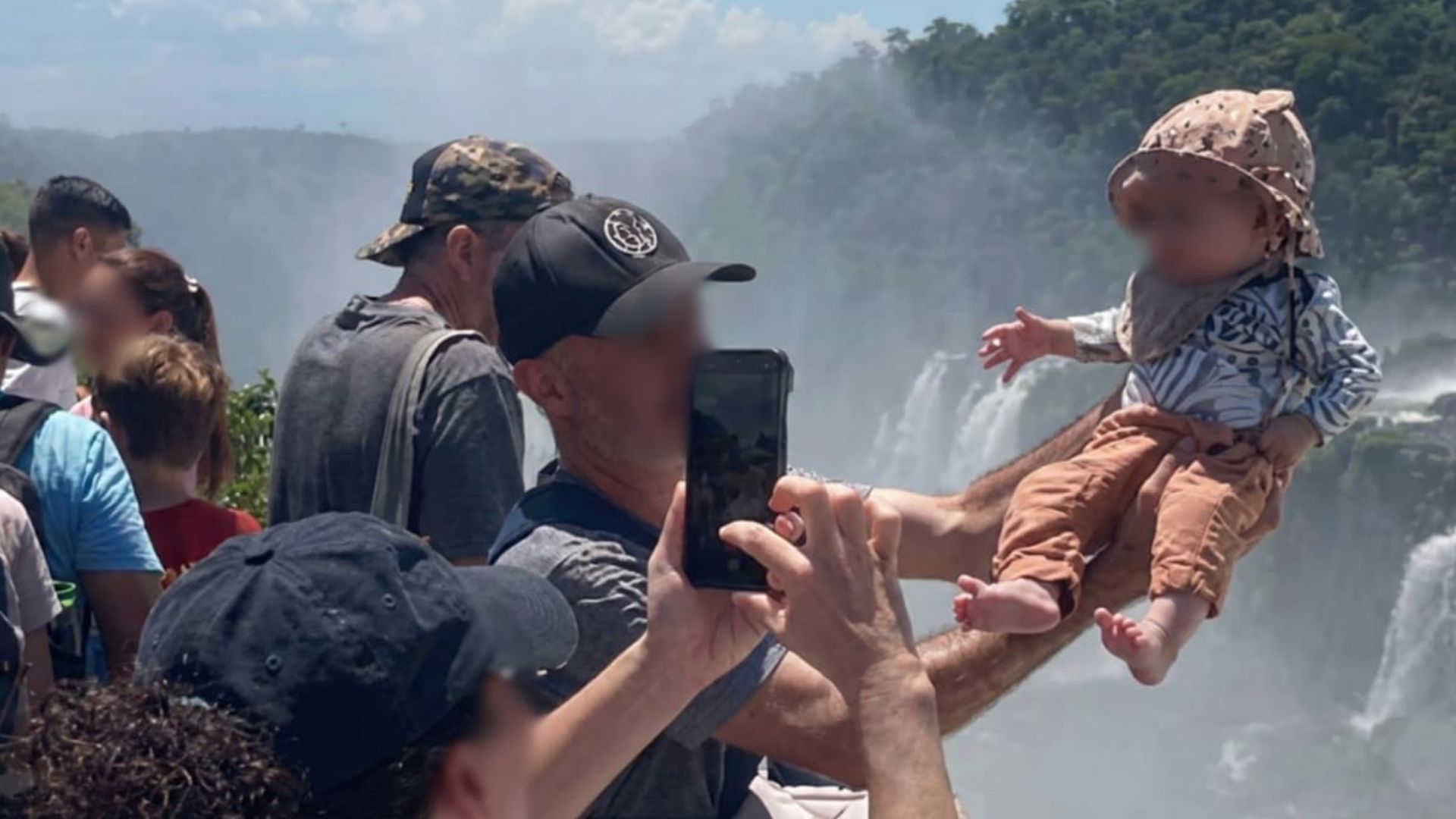
Scene Registered On The Argentinian Side Of The Park Rekindled Discussions About Safety Limits, Parental Responsibility, And Extreme Risks In High-Traffic Natural Areas
An image registered last Tuesday (17) on the Argentinian side of the Iguazu Falls sparked strong reactions on social media and raised an intense debate about tourist recklessness and safety in high-risk natural areas. The photograph shows a father holding a baby just a few months old over the protective railing of the Devil’s Throat, the highest and most dangerous point of the waterfall complex.
The information was initially disseminated by news portals in the province of Misiones, after tourists who witnessed the scene shared the record with the local press. Although the episode lasted only a few seconds, the visual impact of the image was sufficient to cause perplexity among visitors and generate a wave of criticism on digital platforms.
Record Lasted A Few Seconds, But Shocked Visitors

According to reports, the father lifted the child above the protective barrier only to take a photo, completely ignoring the park’s safety protocols. Although the walkways of the Devil’s Throat are considered safe for regular visitor circulation, they were not designed for extreme behaviors or risky maneuvers.
-
Friends have been building a small “town” for 30 years to grow old together, with compact houses, a common area, nature surrounding it, and a collective life project designed for friendship, coexistence, and simplicity.

-
This small town in Germany created its own currency 24 years ago, today it circulates millions per year, is accepted in over 300 stores, and the German government allowed all of this to happen under one condition.

-
Curitiba is shrinking and is expected to lose 97,000 residents by 2050, while inland cities in Paraná such as Sarandi, Araucária, and Toledo are experiencing accelerated growth that is changing the entire state’s map.

-
Tourists were poisoned on Everest in a million-dollar fraud scheme involving helicopters that diverted over $19 million and shocked international authorities.

“To take a picture, risking sending your child to the bottom of the Devil’s Throat…,” criticized a reader who sent the image to the portal Misiones Online. According to the site, the internal regulations of Iguazu National Park expressly prohibit crossing protective barriers or lifting people, specifically to prevent fatal accidents.
Furthermore, tourism and safety experts warn that gusts of wind, wet surfaces, and the constant flow of water make the location even more unpredictable, increasing risks even in seemingly brief situations.
Park Regulations Prohibit Crossing Barriers And Risky Conduct
The episode was also reported by the portal La Voz de Cataratas, based in Puerto Iguazú, which highlighted the widespread concern among tourists present. According to the outlet, “the park’s rules prohibit climbing over or crossing the barriers, precisely to avoid accidents in a high-risk natural environment.”
Still, according to the portal, although the park has high safety standards, the individual responsibility of visitors is essential to avoid tragedies. The structures are designed for the normal flow of people, not for behaviors that challenge the safety logic of the location.
So far, the couple responsible for the action has not been identified. There is no official information regarding the nationality or origin of the tourists, nor whether any sanctions were applied after the incident.
Debate On Social Media Rekindles Discussion On Tourist Recklessness
On social media, the reaction was mostly one of outrage. Many users classified the attitude as irresponsible and questioned the exposure of the child to extreme risk just to obtain a photograph. Others advocated for harsher punishments for visitors who violate basic rules in natural parks.
Despite the negative backlash, witnesses reported that after the incident, the family continued their outing along the Argentinian trails of the Iguazu Falls without immediate intervention from the authorities at the scene.
The case rekindles an ongoing debate about the limits of experiential tourism, the quest for impactful images for social media, and the need for stricter enforcement at high-risk tourist spots.
To what extent can the pursuit of an impactful photo on social media exceed the limits of responsibility and put lives at risk at extreme tourist sites?









-

-

-

-

-

13 pessoas reagiram a isso.