





 Portuguese
  English
  Spanish
  3 min of reading
  0 comments


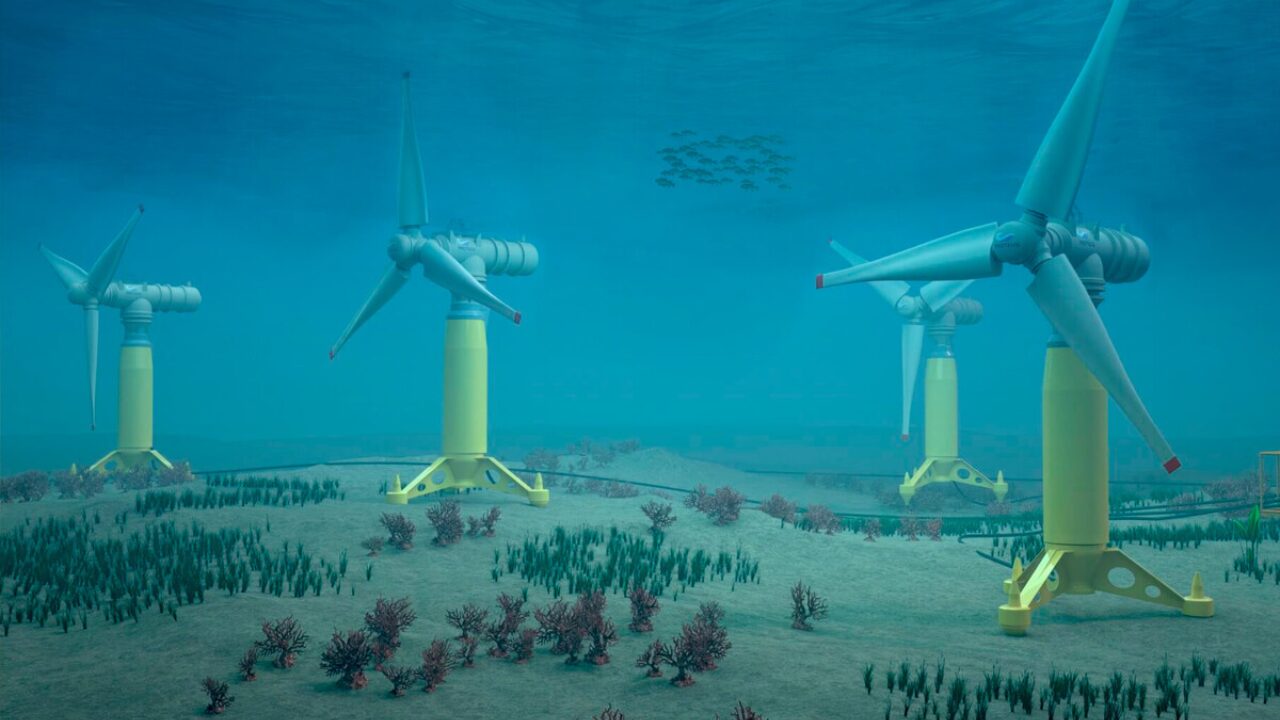
With Innovative Technology And Low Environmental Impact, France Bets On Renewable Tidal Energy, Installing Submarine Turbines To Ensure Energy Stability And Sustainable Leadership In Europe.
France is moving towards a more sustainable energy future by investing in an innovative project that harnesses the constant power of the tides. Utilizing high-power submarine turbines installed on the seabed, the technology promises to provide a continuous and predictable source of electricity, surpassing the challenges of intermittent sources like solar and wind.
The initiative, led by the company Normandie Hydroliennes, aims to transform the country’s energy matrix and strengthen Europe’s position in the renewable energy sector.
NH1 Project Transforms Maritime Currents Into Electricity
In one of the busiest points of the French coastline, the Raz Blanchard strait, Normandie Hydroliennes will install four state-of-the-art submarine turbines.
-
Renewable energy advances over protected areas in Brazil, and a survey by the Energy Transition Observatory reveals silent impacts that challenge environmental conservation and pressure sensitive traditional territories.

-
Rio Grande do Sul accelerates energy transition: State invests in renewable technologies and consolidates decarbonization strategies and pathways to attract billions in new industrial investments.

-
With 160,000 m² of collectors, an area larger than 20 football fields, Silkeborg, in Denmark, hosts a solar thermal plant that heats 19,500 homes and could become the largest solar heating plant in the world.

-
A study reveals the expansion of renewable energy procurement in Brazil and shows how companies are taking advantage of opportunities to reduce expenses, ensure energy efficiency, and strengthen strategic environmental commitments.


This region is known for its strong currents, generated by lunar gravity, making it ideal for generating energy from the tides.
The project, dubbed NH1, received funding of €31.3 million from the 2023 European Innovation Fund, reflecting the interest in strategically integrating tidal energy into the electric system of France and the continent.
The expectation is that the renewable energy extracted from these currents will reduce dependence on unstable sources and contribute to a more secure and continuous supply.
AR3000 Turbines: Power And Efficiency Underwater
The main highlight of the project is the AR3000 turbines, considered the most powerful in the world for generating tidal energy.
Each turbine will have the capacity to generate 3 megawatts (MW) of energy, with rotors reaching 24 meters in diameter.
To optimize electricity production, an intelligent system will automatically adjust the speed and angle of the blades according to marine conditions.
Another notable aspect is the speed of installation: each unit can be positioned on the seabed in about 20 minutes, reducing costs and operational risks.
Efficient Connection And Environmental Concerns
The electricity generated by the turbines will be transported to shore via a single export cable.
This technology, already established in European projects such as interconnections between England and Denmark, facilitates the connection of multiple turbines to a single network, increasing system efficiency.
Despite the optimism, the company acknowledges that there are challenges. The extreme conditions of Raz Blanchard may complicate the installation process, and there are still concerns about the impact on marine fauna and flora.
To minimize these effects, the project was developed with solutions aimed at reducing environmental impact and maintaining local biodiversity.
Prospects For The Future Of Renewable Energy
According to Normandie Hydroliennes, the NH1 project is expected to supply 34 GWh per year to the French electric grid starting in 2028.
In a broader view, experts project that tidal energy could reach a capacity of up to 100 GW by 2050, sufficient to power about 94 million European households.
With this initiative, France reinforces its commitment to innovation in renewable energy, demonstrating that the natural forces of the sea can be great allies in combating climate change and building a more sustainable future.






Seja o primeiro a reagir!