





 Portuguese
  English
  Spanish
  3 min of reading
  1 comment


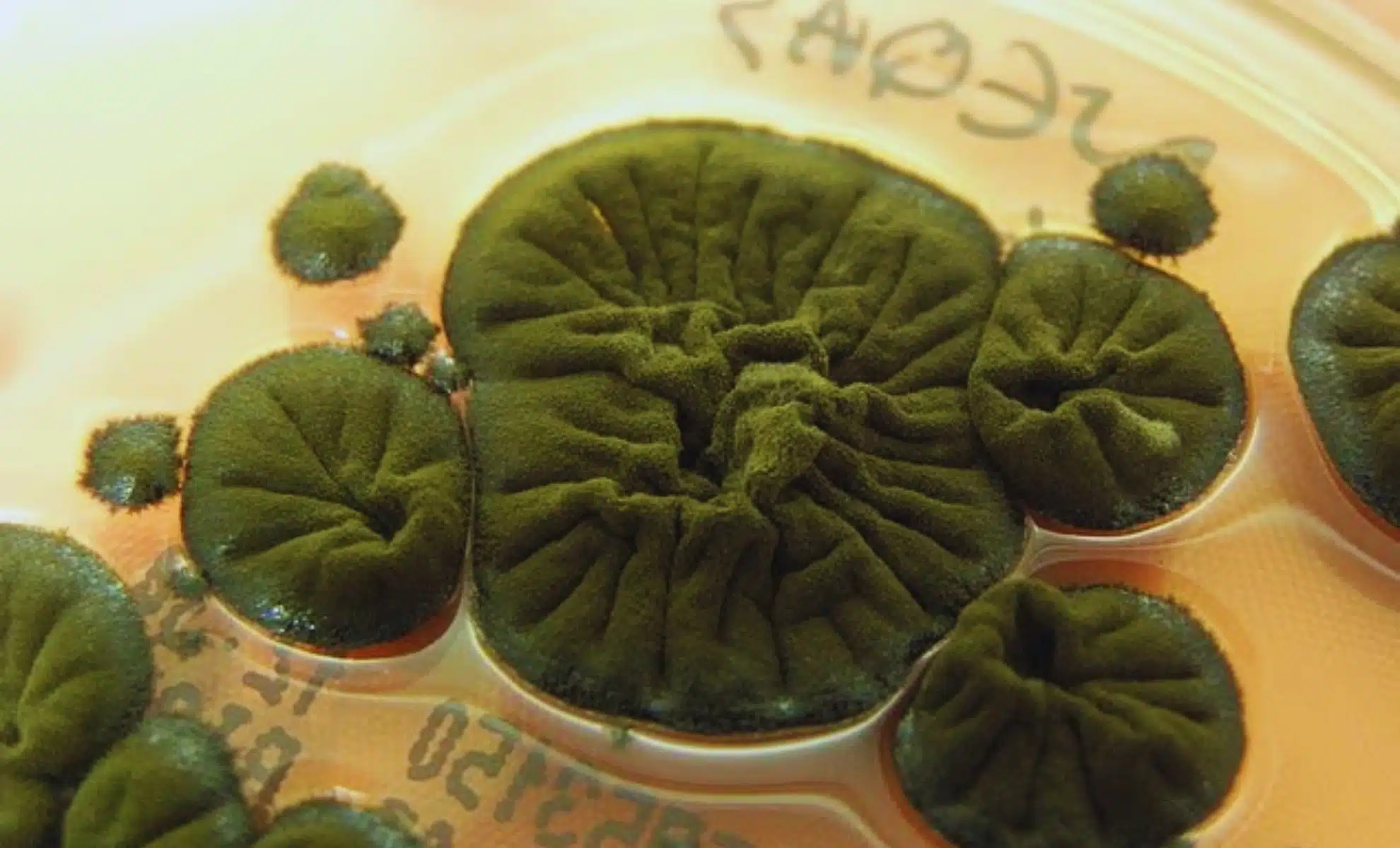


Almost Four Decades After the 1986 Nuclear Accident, Researchers Identified Inside the Destroyed Reactor of Chernobyl a Fungal Community Capable of Surviving in Extreme Levels of Radiation, Including a Species That Showed Accelerated Growth Under Ionizing Exposure and Raised New Scientific Hypotheses About Biological Adaptation
Almost four decades after the 1986 nuclear accident, researchers identified in Chernobyl a fungus capable of growing in the presence of ionizing radiation, a discovery that expands scientific interest in the adaptation of microbial life in highly contaminated environments.
Microbial Community Establishes Itself Inside the Destroyed Reactor in Chernobyl
In the remaining structures of Reactor Four of Chernobyl, scientists found the black fungus Cladosporium sphaerospermum living directly in areas exposed to ionizing radiation. The organism not only survives but demonstrates growth associated with the presence of this type of radiation.
Nearly 40 years after the 1986 nuclear disaster, the Chernobyl exclusion zone remains largely inaccessible to human presence. Nonetheless, microorganisms have gradually begun to occupy spaces considered extremely hostile to life.
-
Motorola launched the Signature with a gold seal from DxOMark, tying with the iPhone 17 Pro in camera performance, Snapdragon 8 Gen 5 that surpassed 3 million in benchmarks, and a zoom that impresses even at night.

-
Satellites reveal beneath the Sahara a giant river buried for thousands of kilometers: study shows that the largest hot desert on the planet was once traversed by a river system comparable to the largest on Earth.

-
Scientists have captured something never seen in space: newly born stars are creating gigantic rings of light a thousand times larger than the distance between the Earth and the Sun, and this changes everything we knew about stellar birth.

-
Geologists find traces of a continent that disappeared 155 million years ago after separating from Australia and reveal that it did not sink, but broke into fragments scattered across Southeast Asia.

In the late 1990s, microbiologist Nelli Zhdanova from the National Academy of Sciences of Ukraine led a scientific survey in the shelter built around the destroyed reactor in Chernobyl.
The research identified 37 species of fungi living in the contaminated environment. Many exhibited dark coloration and high concentrations of melanin, a pigment known to absorb radiation and reduce cellular damage.
Among the analyzed species, Cladosporium sphaerospermum dominated the collected samples and recorded some of the highest levels of radioactive contamination observed by researchers.
Experiments Show Accelerated Growth of the Fungus Under Radiation in Chernobyl
Ionizing radiation has enough energy to remove electrons from atoms, break molecular bonds, and cause DNA damage. In humans, this exposure is associated with an increased risk of cancer and cellular destruction.
Despite these known effects, experiments conducted by Ekaterina Dadachova and Arturo Casadevall at the Albert Einstein College of Medicine revealed different behavior in the fungus found in Chernobyl.
According to a study published in the journal PLOS One, exposure to ionizing radiation did not inhibit the development of Cladosporium sphaerospermum. The organism exhibited accelerated growth when subjected to radioactive environments.
The results also indicated changes in the behavior of the melanin present in the fungus cells during exposure to radiation.
Radiosynthesis Hypothesis Raises New Scientific Possibility
In a paper published in 2008, Dadachova and Casadevall proposed that melanin could allow a process similar to photosynthesis, termed radiosynthesis.
According to this hypothesis, the fungus found in Chernobyl could absorb ionizing radiation and convert it into chemical energy, while the pigment itself would continue to act as protection against cellular damage.
The scientific proposal suggests a possible unprecedented interaction between complex organisms and highly radioactive environments, although the mechanism has yet to be experimentally proven.
Scientists Argue That the Mechanism Has Not Yet Been Confirmed
The concept of radiosynthesis remains under scientific investigation. To date, researchers have not demonstrated carbon fixation driven by ionizing radiation nor identified a metabolic pathway capable of confirming the direct conversion of radiation into usable energy.
According to engineer Nils Averesch from Stanford University, radiosynthesis still needs to be conclusively demonstrated, including the reduction of carbon compounds or the fixation of inorganic carbon associated with radiation.
Additional studies show that the response to radiation varies among different pigmented fungi. The black yeast Wangiella dermatitidis exhibits enhanced growth under ionizing radiation.
Conversely, the fungus Cladosporium cladosporioides increases its melanin production when exposed to gamma or ultraviolet radiation, without recording proportional growth.
From the damaged structures of Chernobyl to experiments conducted off-site, the behavior of Cladosporium sphaerospermum continues to be the subject of scientific investigation.
The exact functioning of the interaction between the fungus and ionizing radiation remains undefined, keeping the debate open about the limits of biological adaptation in extreme environments like Chernobyl.








Lembro uma boa oportunidade de testarmos no combate a este fungo, o uso da água ionizada que já provou ser atuante e aniquilizadoras das 3 super bactérias em humanos.