





 Portuguese
  English
  Spanish
  6 min of reading
  0 comments


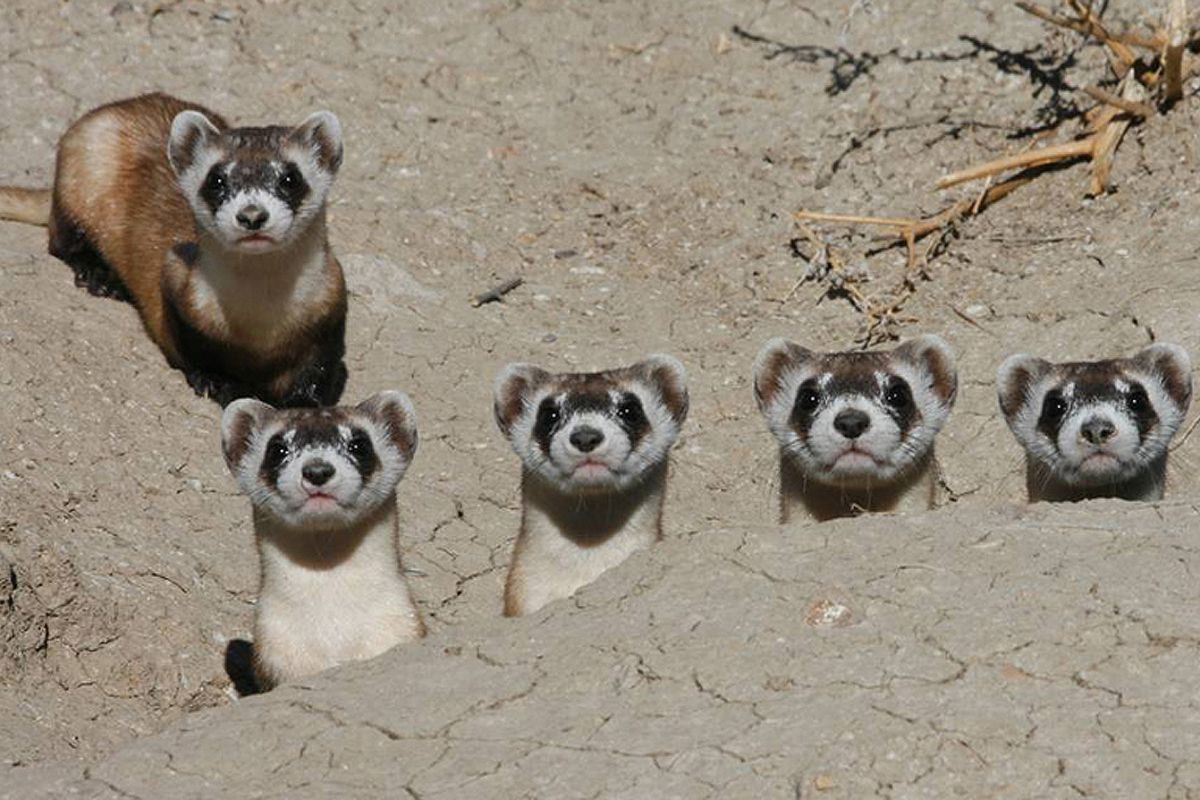
Black-Footed Ferrets, Once Considered Extinct in the Wild, Have Resumed Hunting Rodents and Reorganizing Prairie Dog Colonies in Areas Like Wyoming, South Dakota, and Arizona. By Using Tunnels, They Maintain Water Infiltration, Reduce Erosion, and Increase Soil Carbon, While Drones Launch Vaccines Against Plague in 2026 in the American Interior
In the interior of the United States, in the prairies of the Great Plains, black-footed ferrets have returned to occupy a place thought to be lost forever, and in 2026, they are treated as living proof that a single species can turn the tide for an entire biome. The animal, specialized in hunting prairie dogs, regains control of colonies that sustain local biodiversity.
In states like Wyoming, South Dakota, and Arizona, the presence of black-footed ferrets has become associated with a package of practical effects: less soil degradation, more hydrological stability in native grassland areas, and a cascading recovery of the food chain, monitored with technology and sanitary interventions to prevent relapses.
Who Are Black-Footed Ferrets and Why Are They Different

Black-footed ferrets are mustelids, relatives of weasels, badgers, and otters, and the only ferret species native to North America.
-
Archaeologists discover a 100-meter ship graveyard in a submerged Greek city, and what has appeared on the seabed of Libya could change what was known about this ancient port.

-
You buy the refrigerator and still have to see ads: Samsung starts displaying advertising on appliances and generates negative reactions among consumers.

-
What can really trigger large volcanic eruptions? Research suggests that gas returning to the magma may be more dangerous than gas escaping from it.
-
Found in one of the most radioactive places on Earth, this Chernobyl fungus may be doing something with radiation that no one has been able to explain to this day.





They measure between 45 and 60 cm, weigh around 0.6 to 1.1 kg, have yellowish or bronze fur, and carry unmistakable marks: black feet, black tail tip, and a dark mask around the eyes.
Behavior also explains the impact: they are solitary, predominantly nocturnal, and spend a large part of their time underground.
The diet is almost entirely dependent on prairie dogs, with over 90% of their consumption concentrated on these rodents. This makes the predator a highly effective biological tool, with a direct effect on the density of the colonies.
From Limbo to Turnaround: Extinct in the Wild, Rediscovered in 1981 and Released Again

Black-footed ferrets were once considered extinct in the wild until their rediscovery in 1981, near Meeteetse, Wyoming, in a prairie dog colony.
From then on, the species entered an intensive captive breeding program coordinated by a federal agency, focusing on recovering numbers, reducing the risk of disappearance, and reoccupying their historical habitat.
In 2026, the return is not symbolic; it is operational: releases in the field and monitoring results in multiple areas show greater stability where the predator is able to establish itself.
The recovery also carries a genetic limit since the modern population descends from just seven original individuals, a factor that has elevated the importance of diversity strategies for the next steps.
What They Do in Practice: Biological Control That Reorganizes the Prairie Below Ground
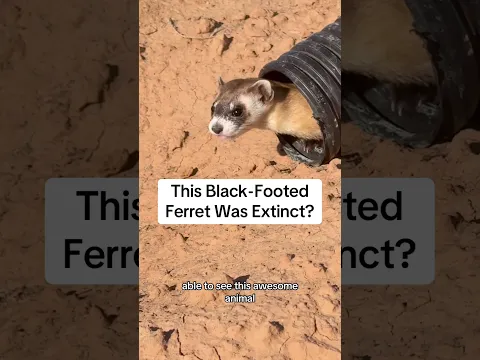

The impact of black-footed ferrets begins with biological control.
Without predators, prairie dog colonies can grow unchecked and degrade the ground vegetation.
A single ferret can consume over 100 to 150 prairie dogs per year, reducing pressure on grasses and helping to curb erosion and the loss of ground cover.
The difference lies in where the hunting occurs.
Black-footed ferrets enter tunnels and hunt rodents in their own underground refuge, something predators like coyotes and raptors do not do with the same efficiency.
This detail creates the effect of an “irreplaceable species,” because it fills an ecological void that other predators cannot fully fill.
Soil and Water: Tunnels, Infiltration, and an Indirect Engineering That Holds the Ecosystem
The relationship is one of interdependence.
Black-footed ferrets depend on prairie dogs for food and shelter, and at the same time prevent the rodent population from growing to the point of degrading the soil.
By using tunnels and moving underground, the predator helps maintain the dynamics of the colonies and favors soil aeration and water infiltration, essential for the resilience of the prairies in 2026.
When infiltration improves and native vegetation recovers, the system begins to lose less water through surface runoff and better supports the grass growth cycle.
It is a silent stabilization, but with a broad effect, as water and soil determine the prairie’s capacity to endure shocks and recover.
Carbon in the Ground: Why the Return of the Predator Affects Even the Local Climate
The return of black-footed ferrets is also described as a push for carbon stability.
The logic is indirect, but consistent within the ecosystem itself: by controlling the overpopulation of rodents that remove vegetation and expose soil, the predator helps maintain more plant cover and more organic matter associated with the soil.
With better-protected soil and more stable vegetation, the chances of retaining carbon stored in the environment increase rather than losing biomass due to accelerated degradation.
The prairie stops being a system in continuous erosion and begins to operate with greater retention of structure, water, and carbon.
Where Reintroductions Occur: Eight States and About 30 Locations on the Map of Recovery
In 2026, black-footed ferrets were reintroduced in approximately 30 locations in the United States, as well as areas in Canada and Mexico, covering a broad range of the Great Plains.
In the U.S., reintroductions occurred in eight states, featuring sites described as the most successful in the Conata Basin, in areas connected to Badlands and Buffalo Gap in South Dakota, and in southeastern Wyoming.
The list of mentioned states and territories includes Arizona, Colorado, Kansas, Montana, New Mexico, South Dakota, Utah, and Wyoming.
Specific areas mentioned include Soapstone Prairie Natural Area in Colorado, Fort Belknap Indian Reservation in Montana, the Shirley Basin in Wyoming, and the rediscovery region in Meeteetse.
These locations are chosen based on a central criterion: the presence of prairie dog colonies, which are food and habitat.
The Ecological Cascade: When a Predator Pulls the Entire Chain Back
The effect does not end with rodent control.
The presence of black-footed ferrets can attract other predators and raptors, stabilizing the food chain and recovering part of the balance lost over decades of absence.
This is called the cascade effect, when a change at one level of the food web reorganizes the others.
In practice, colonies with more controlled density tend to better sustain the mosaic of vegetation, openings, tunnels, and refuges that many species use.
The result is a less fragile prairie, with more predictable recovery between seasons, especially in already degraded areas.
The Threat That Still Hovers in 2026: Sylvatic Plague and the Fight With Drones, Satellites, and AI
Despite the advances, the full recovery of black-footed ferrets still faces the threat of sylvatic plague, described as the primary risk.
To mitigate this bottleneck, researchers use drones to distribute vaccines in bait and expand satellite monitoring of the reintroduced populations.
In 2026, management also includes the use of artificial intelligence to map rodent colonies and predict outbreaks before they decimate entire areas, allowing faster and less presence-dependent interventions on the ground.
The goal is to maintain balance without losing scale, as the areas are extensive and often remote.
Next Steps: Clones, Genetic Diversity, and Numerical Goals to Get Off the Threat List
The focus from 2026 enters a critical phase of genetic expansion and technology.
A recent milestone mentioned is the birth of puppies from cloned females, such as Antonia, and the intention to integrate this offspring into the release programs to increase diversity in a species with a narrow genetic base.
Projected goals include establishing at least 1,500 breeding adults in the wild, expanding to at least 10 self-sustaining populations in 6 states, and strengthening international collaboration with Canada and Mexico to recover the historical range.
The desired outcome is removal from the endangered species list, should population stability and habitat management achieve these milestones this decade.
Do you believe that black-footed ferrets can become the best example of environmental restoration in the interior of the United States in 2026, or is it still too early to call it a definitive turnaround?







-

-

-

-

-

-

57 pessoas reagiram a isso.