





 Portuguese
  English
  Spanish
  3 min of reading
  0 comments


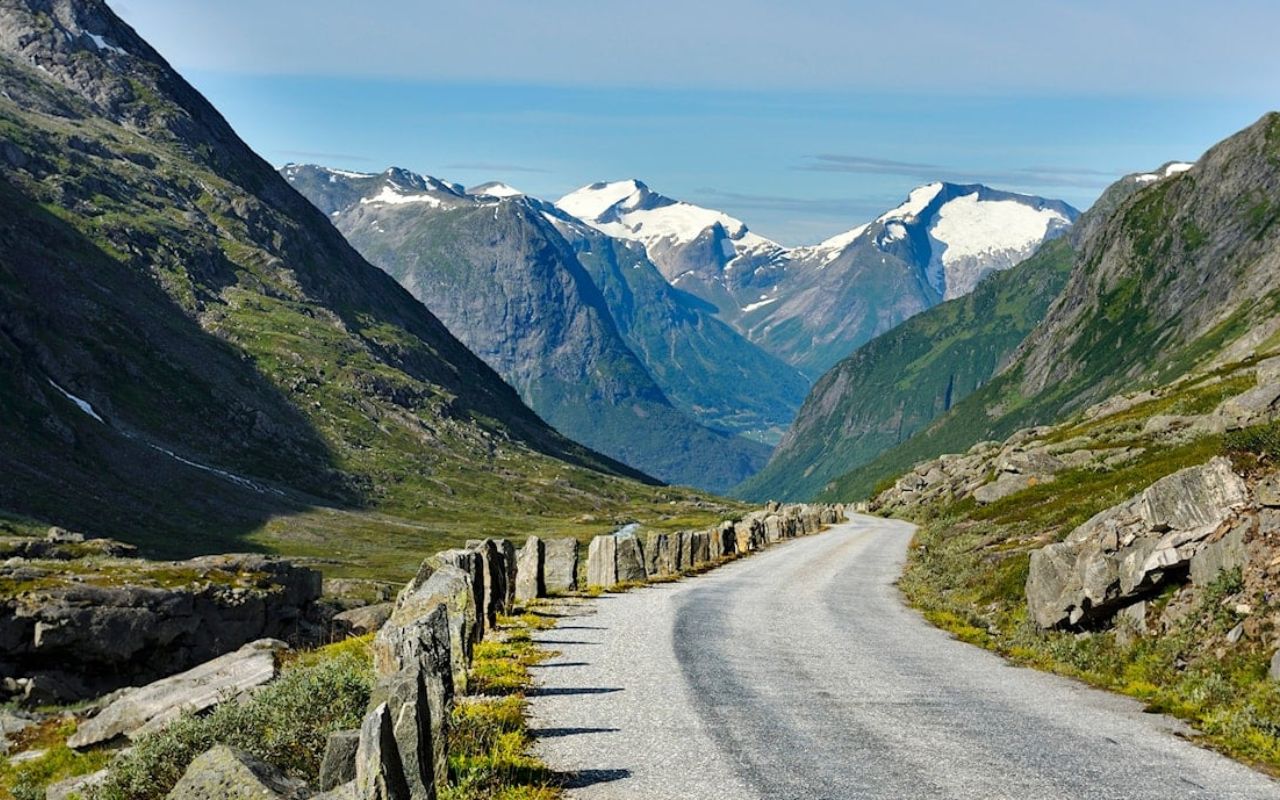
The Gamle Strynefjellsvegen Is a Historical Road in Norway Built in 1894. The 27 km Route Crosses the Nordic Alps, Reaches 1,139 Meters in Altitude, and Reveals Landscapes Surrounded by Glaciers.
Between mountains and glaciers of Norway, a road built in the 19th century continues to attract the attention of travelers. The Gamle Strynefjellsvegen, inaugurated in 1894, stretches 27 kilometers through the Nordic Alps and reaches 1,139 meters in altitude, offering one of the most striking sceneries in the country.
Created at a time when mountainous regions were difficult to access, the road was essential for connecting different areas of Norwegian territory.
For decades, it served as one of the main links between the eastern and western parts of Norway, allowing for the movement of people and goods.
-
The government will charge up to R$ 650 from pet owners in 2026, and tourists traveling with their dogs will have to pay a daily fee; the measure surprised thousands of pet ‘parents’ in Italy.
-
Man swaps his cellphone and modern life for a shelter in a tree to test the limits of mental sanity and physical preparedness.
-
In the USA, a city is considered the World Capital of the Horse due to having over 1,200 farms and around 75,000 horses. Understand how the soil of Ocala transforms horses into champions and generates over $190 million a year.

-
The United Kingdom is throwing six-ton concrete blocks to the bottom of the North Sea, and the reason is the opposite of what you might think, as each block carries 4,000 oysters capable of filtering millions of liters of water per day.


Today, in addition to its historical function, the Gamle Strynefjellsvegen has become a sought-after destination for those wishing to explore one of the most scenic routes in Scandinavia.
How Manual Engineering Shaped the Gamle Strynefjellsvegen
The construction of the Gamle Strynefjellsvegen required great human effort and traditional engineering techniques.
The workers used stones taken from the region itself to build structures such as retaining walls and small bridges along the road.
In many cases, these constructions were made without the use of mortar, only with carefully positioned joints.
This technique ensured the structures’ durability, allowing them to remain stable even in the face of the harsh weather conditions of the Norwegian mountains.
Norwegian Road Preserves Original Elements of Its Construction
One of the most curious aspects of the Gamle Strynefjellsvegen is the fact that a large part of the road retains characteristics very close to the original.
Along the route, it is still possible to see stone markers installed in 1894, as well as several sections with gravel surfaces.
These elements help preserve the historical aspect of the road.
This conservation allows visitors to have an experience similar to that of travelers who crossed the mountainous region of Norway over a century ago.
Opening Season of the Road Depends on Norwegian Weather
Despite its historical and tourist importance, the Gamle Strynefjellsvegen does not remain open year-round.
The intense winter in the region covers the road with large volumes of snow. Therefore, the route is usually opened for circulation only between June and September.
Even after the opening, it is common for drivers to encounter snow walls accumulated on the sides of the road, creating an impressive scene.
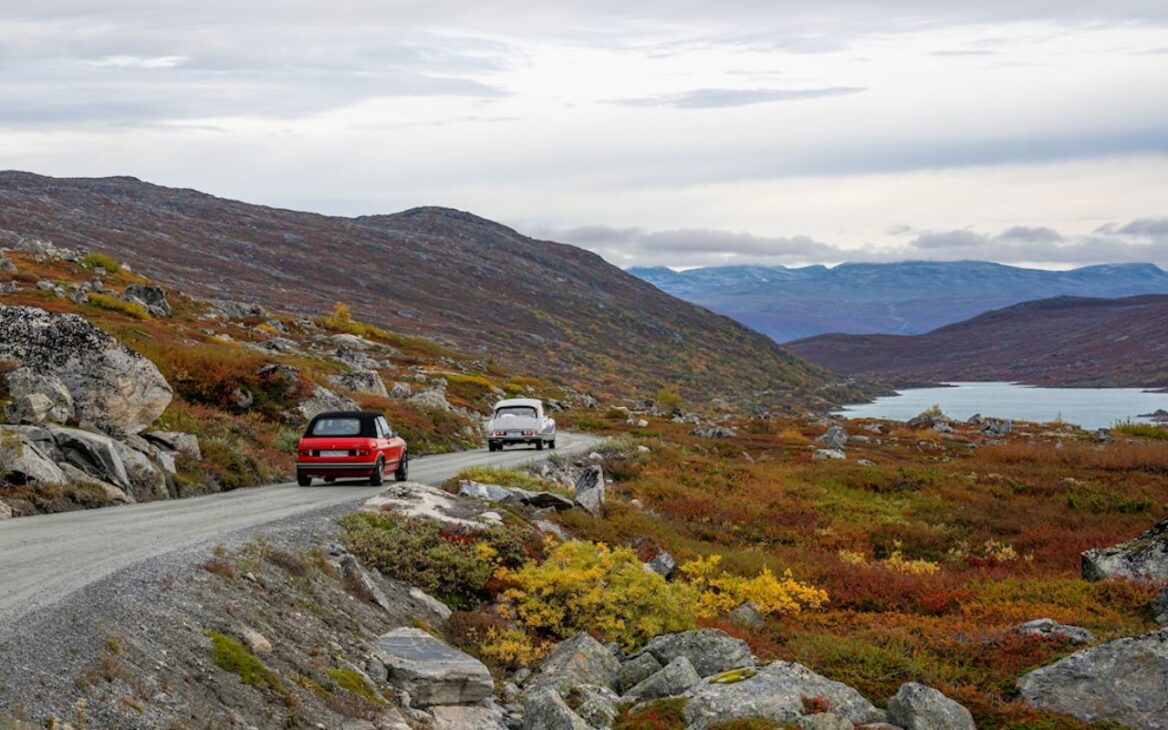
Landscapes of the Gamle Strynefjellsvegen Change Throughout the Summer
Those who travel the Gamle Strynefjellsvegen at different times of the season encounter quite distinct sceneries.
In June, when the road is usually reopened, large walls of snow still dominate the landscape.
In some places, it is also possible to see partially frozen lakes.
By August, considered the peak of summer, the road is generally dry, and the environment reveals low vegetation and turquoise-colored lakes.
Finally, in September, the first frosts begin to appear, and the mountains start showing typical autumn colors, transforming the scenery once again.
Historic Road of Norway Symbolizes Overcoming in an Extreme Environment
The Gamle Strynefjellsvegen is not just a tourist route, but also an important landmark in the history of Norwegian infrastructure.
Building a road amidst mountains, intense cold, and uneven terrain at the end of the 19th century was a significant challenge.
Even so, the workers managed to create a functional path that remained relevant for decades.
Today, the stone walls and original structures remain, showcasing how the engineering of the time was able to adapt to the extreme environment of the Norwegian mountains.
Thus, the Gamle Strynefjellsvegen continues to be a rare combination of natural landscape, history, and preserved engineering.





-

-

-

-

-

-

32 pessoas reagiram a isso.