





 Portuguese
  English
  Spanish
  3 min of reading
  3 comments


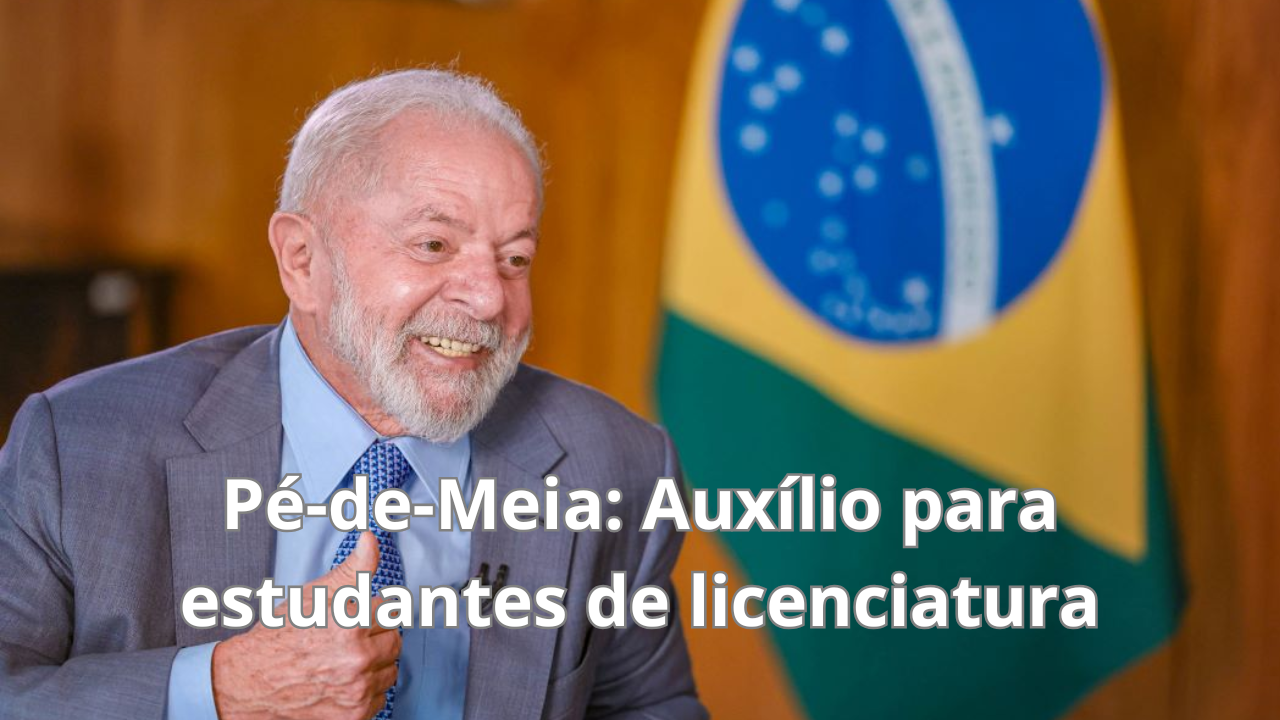


Lula Government Announces Pé-de-Meia Licentiate Program, With Monthly Incentive for Training New Teachers.
The federal government, through the Ministry of Education (MEC), announced the “Pé-de-Meia Licentiate” program, which will guarantee a monthly payment of R$ 1,050 for students enrolled in licentiate courses. The initiative will be detailed next Monday (13) and is part of the “Mais Professores”, a broad public policy aimed at valuing the teaching profession.
Incentives for Future Teachers
The program was designed to encourage young people to enter the teaching profession, a field that has suffered from salary devaluation and a lack of attraction of new talent. Part of the amount will be directed to the student, while another portion will be deposited into a savings account, promoting financial security for the beneficiaries during and after their higher education.
The expectation is that the program will become a hallmark of Luiz Inácio Lula da Silva’s (PT) third government, aligning with other educational incentive projects. Currently, the “Pé-de-Meia” also benefits about 4 million high school students with a monthly amount of R$ 200.
-
Take a course at the Federal Institute without spending a single real and from home: IFRS opens unlimited spots in online courses with certification.
-
MEC calls for a 100% online and free course in Neuroeducation with 2,461 limited spots, a workload of 200 hours, and a certificate at no cost.
-
Fiocruz releases a free, 100% online course with a certificate and opens 20,000 spots for a 45-hour training on gambling, with no prerequisites required and registrations open until May 2026 for all of Brazil.
-
USP opens 10,000 spots in a free 100% online course lasting 110 hours in areas such as nutrition and health, with registrations until April 15 and classes on diabetes, obesity, and educational public policies.

Official Announcement of the Pé-de-Meia Licentiate and Disclosure of Enem 2024
The program details will be presented at a press conference by the MEC and the National Institute for Educational Studies and Research Anísio Teixeira (Inep), coinciding with the disclosure of the results of the National High School Exam (Enem) 2024. The press conference is scheduled for 10 a.m. next Monday.
On Tuesday (14), President Lula and Education Minister Camilo Santana will hold a ceremony at the Palácio do Planalto to celebrate the launch of the program. During the event, additional conditions for benefiting from the program are also expected to be announced.
Controversies Surrounding the Program
Although the “Pé-de-Meia” has been well received by much of the population, it has also faced criticism and legal challenges. In December 2024, the Federal Court of Accounts (TCU) requested the blocking of funds allocated to the program, citing irregularities in the budget design and possible fiscal violations. Despite this, Lula strongly defended the initiative during an event in Bahia.
“First, I don’t think it’s an expense; I think it’s an investment. Second, it would be much more expensive to spend on prisons for kids who didn’t have the opportunity than to invest in school. That’s why, it doesn’t matter how much it costs; what matters is that we’re ensuring that you grow, learn a profession, get a college diploma, become doctors, and serve this country, the family, and the community,” the president stated.
The Licentiate in Brazil
Despite being an essential profession, the licentiate has faced increasing challenges, including low pay and poor working conditions. The new program seeks to reverse this scenario by offering financial support to attract more students to the field.
Experts point out that the lack of incentives may jeopardize the quality of basic education in the future, making initiatives like this even more relevant.
Next Steps
The implementation of the program will be closely monitored by analysts and educators, especially in light of technical challenges regarding its budget execution. The government, in turn, emphasizes that the program is a fundamental step toward valuing the teaching profession and training future education professionals.
With the new incentive, it is expected that thousands of young Brazilians will choose the field, contributing to strengthen public education and meet the growing demand for qualified teachers across the country.










Para cursos da área da saúde também precisa, gastamos muito na graduação, é uma área pouco valorizada alguns cursos.
Bem legal o incentivo embora precise melhorar toda a infraestrutura da educação. Mas a pergunta é: Depois de formado como esse profissional conseguirá vaga para trabalho no serviço público se nem concurso tem? Qdo ele irá pasar num PSS ?
Muitos professores dão sorte e só conseguem emprego em escolas particulares mas q tbm já estão outros estão aí sem vagas pra trabalhar na área de formação
Toda medida isolada, fortemente ancorada em motivações, com as quais todos concordam, mas que não abarcam o conjunto de ações de médio e longo prazo, capaz de virar a chave em relação à educação, acaba tendo também como maiorbeneficiário da política pública o ensino privado e seus investidores , sem exigência e monitoramento da qualidade do que é ensinado