





 English
  Francês
  Alemão
  Italiano
  Japonês
  Norueguês
  Portuguese
  Spanish
  5 min of reading
  26 comments


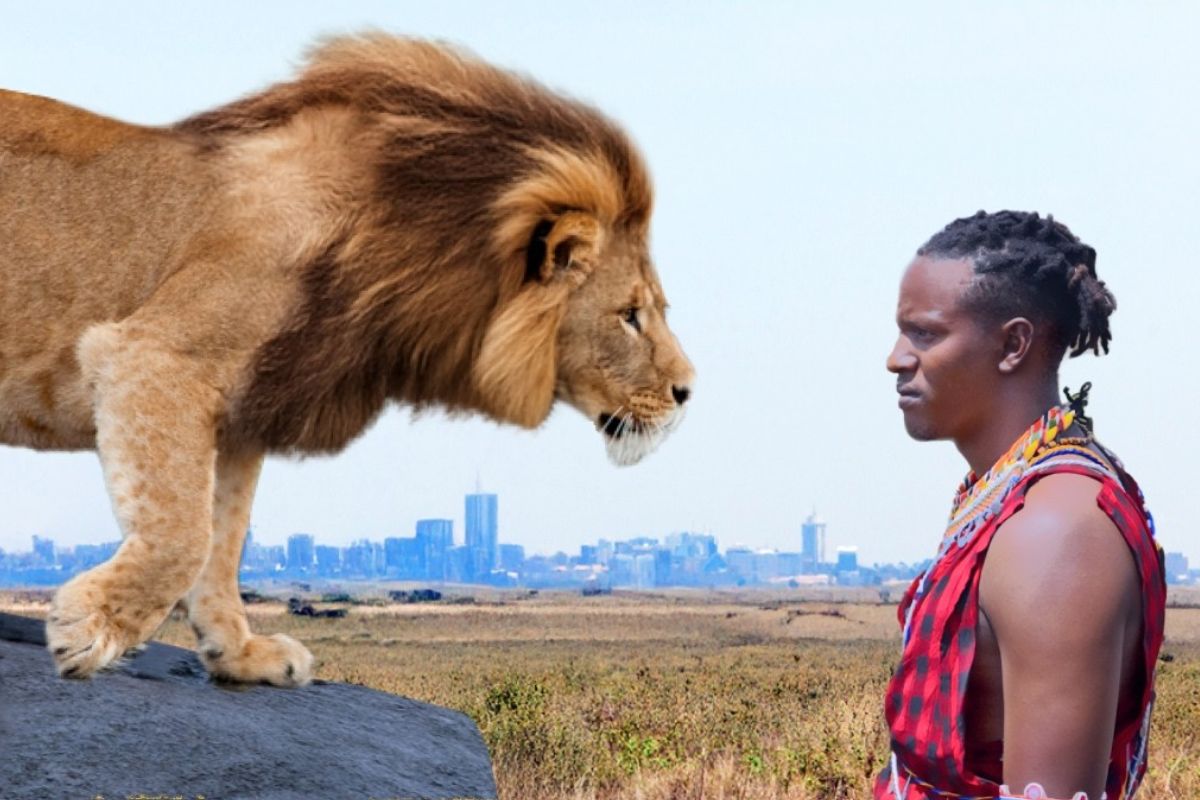


In Kitengela, Near the Nairobi National Park, Lions in Kenya Lived Next to Houses and Attacked Up to Five Animals Per Week. Richard Set Up Flashing Lights and Lanterns to Mimic Human Patrols. The Lights Eliminated Attacks, Gained Solar Panels, and Now Equip 14 Thousand Rural Farms Across Africa Today
In Kitengela, on the outskirts of Nairobi, lions in Kenya live close to human houses, a daily coexistence that can turn into conflict in minutes when nighttime hunting encounters the livestock of Maasai families. In a scenario where cows represent income, food, and cultural identity, recurring attacks put people and felines on a direct path of retaliation.
It was in this context that Richard, nicknamed “Lion Boy,” created at age 12 a simple system of flashing lights that mimicked human vigilance at night. The result was immediate and measurable: from about five animals lost per week to zero attacks, with the technology expanding to 14,000 properties and reinforcing the thesis that coexistence can work better than confrontation.
Kitengela and the Urban Border with the Nairobi National Park

Kitengela is next to the Nairobi National Park, described as a unique case: wildlife living freely alongside a bustling city. In practice, this means that seeing a lion close to houses is not a rare event; it is part of the routine, with real risk when the sun sets and the felines go hunting.
-
350-year mystery may have been solved: remains of a soldier who inspired the hero of The Three Musketeers found beneath a church in the Netherlands.

-
NASA photographed a nearly perfect square with 3 km sides on Mars, 13 times larger than the Great Pyramid of Giza, but the official explanation is natural erosion; still, no one has explained why the four sides have almost identical lengths.

-
Starlink breaks the barrier of 10,000 satellites in orbit and takes its expansion to an unprecedented level, with a direct impact on global internet, technological competition, and the race for space.

-
Japan finds an alternative to oil amid rising prices by transforming ocean balance into electricity with a new technology that maintains efficiency even when the sea changes.


The lions are presented as large, intelligent, and stealthy apex predators, capable of taking down prey up to six times their size. They hunt in groups and play an ecological role in regulating prey populations, preventing overgrazing, and sustaining habitat diversity. However, for those living on the edge of this system, a lion as a neighbor represents a direct threat to livestock and, in some cases, human safety.
Why the Conflict Exploded and How Lions Lost Territory

The structural reason for the encroachment is territorial: lions have lost over 92% of their original range. They once roamed vast regions of Africa, the Middle East, Central Asia, India, and even parts of Europe. With shrinking territory, coexistence with people has intensified, and the clash with livestock has become a predictable consequence.
The population data reinforces the urgency. About a century ago, there were still 200,000 wild lions. Today, only 23,000 remain. If the trend continues, there is a possibility that the last wild lion could disappear by 2050. In this context, reducing livestock deaths is not just about protecting income; it is about decreasing the impulse to kill felines out of desperation.
The Weight of Livestock for the Maasai and the Risk of Retaliation

For the Maasai community, cows are described as the backbone of economy, diet, and culture, with ancient beliefs linking livestock to a mission of protection. Losing a cow is treated as disastrous, especially when the herd represents nearly the entire family income.
When a family loses its only source of livelihood, the reaction tends to escalate. The local history includes generations of Maasai warriors facing lions with spears, and Richard’s own father is cited as one of the great hunters, with scars as evidence. It is at this point that the solution for lions in Kenya needed to be truly effective: if it failed, the cycle of loss and retaliation would continue.
The Nightly Routine at the Boma and the Idea Born from the Lantern Patrol


The attacks on livestock mainly occurred at night. Richard, like other boys, had the task of staying awake and patrolling around the fenced property, the boma. The logic was simple: lions avoid humans and associate the light of a lantern with someone awake, active, pursuing.
During the patrol, the motion of shaking the lantern created the impression of someone running toward the predator. This behavioral detail became the core of the invention. The reasoning was pragmatic: if a moving lantern drives them away, then a sequence of lights could simulate continuous human presence without requiring a 12-year-old boy to walk all night in an area with a real risk of encounter.
The Invention at 12 Years Old: Scrap, Batteries, and Flashing Lights to Deceive Lions in Kenya
Richard did not learn electronics in school, according to his own account. He describes learning by disassembling and reassembling pieces, “breaking things.” From this, he created in a few weeks an automated system that recreated the nighttime patrol.
He gathered car batteries, used motorcycle flashers, and lanterns to build flashing lights installed around the boma. The effect was the strongest part of the case: after installing the lights, absolutely nothing happened, in the desired sense. The lions in Kenya stopped attacking that livestock. The family went from multiple attacks per week to zero.
From Kitengela to 14 Thousand Properties: African Scale and Technical Evolution
The effectiveness generated immediate demand from friends and neighbors. Richard formed a small team, and the lights expanded to more than 14,000 rural properties across Africa, including Kenya.
With the expansion, the technology evolved. The latest versions include solar panels, rechargeable batteries, and a custom motherboard. The critical point was to prevent habituation: the light patterns began to mimic human behavior with random flashes, so that lions in Kenya do not “learn” the pattern and test the barrier over time.
Amboseli, Field Installation, and the Real-Time of the Solution
To demonstrate impact on the lives of herders, the relocation to Amboseli was cited to meet Tulumi Terare, described as someone who was desperate and considering giving up the herd. The installation of the Lion Lights on the property is treated as a quick procedure, with a clear operational milestone: the entire process took less than 30 minutes.
In addition to individual cases, there is a plan for community-funded expansion: resources to install 3,000 Lion Lights, covering 600 rural properties in five listed countries: Kenya, Namibia, Botswana, Tanzania, and Zimbabwe. On a larger scale, this transforms the solution into a coexistence infrastructure, not an exception.
Effect on Conservation: Fewer Deaths, More Tolerance, and Recovery of Felines
The central change is in mindset and perceived risk. When livestock is no longer slaughtered, the pressure to retaliate decreases, and the community begins to see itself as part of an ecosystem that includes lions and people. The impact goes beyond discourse: it has been noted that, with this and other conservation actions, the lion population in Kenya increased by 25% in the last decade.
This is the data that closes the cycle: reducing producer losses is not a concession to the predator; it is a strategy to keep felines alive, reduce conflicts, and make conservation socially viable. Lions in Kenya cease to be an inevitable enemy when there is a simple technology that changes the cost of coexistence for the producer.
In your opinion, what weighs more for making coexistence work: cheap technology like flashing lights, community education, or the economic pressure that forces families to protect livestock at any cost?







Já que funcionou o correto é instalar luzes piscantes em todas as áreas de pastagens dos rebanhos e só uma pessoa monitorar por computador para acabar de uma vez o problema de ataques de leões assim os bichos podem pastar em paz.Basta monitorar os leões e não o rebanho.
Ótima idéia, só esqueceu de um detalhe se o rebanho não conseguir se alimentar ali naquele local eles vão pra outro até conseguir e se não conseguir eles também morrem de fome e de todo jeito desequilibra a natureza , fazendo com que outros locais tenha ataques. Mexendo na cadeeia alimentar do ecossistema da naturesa.
Excelente ideia, parabéns ao garoto.