





 Portuguese
  English
  Spanish
  5 min of reading
  0 comments


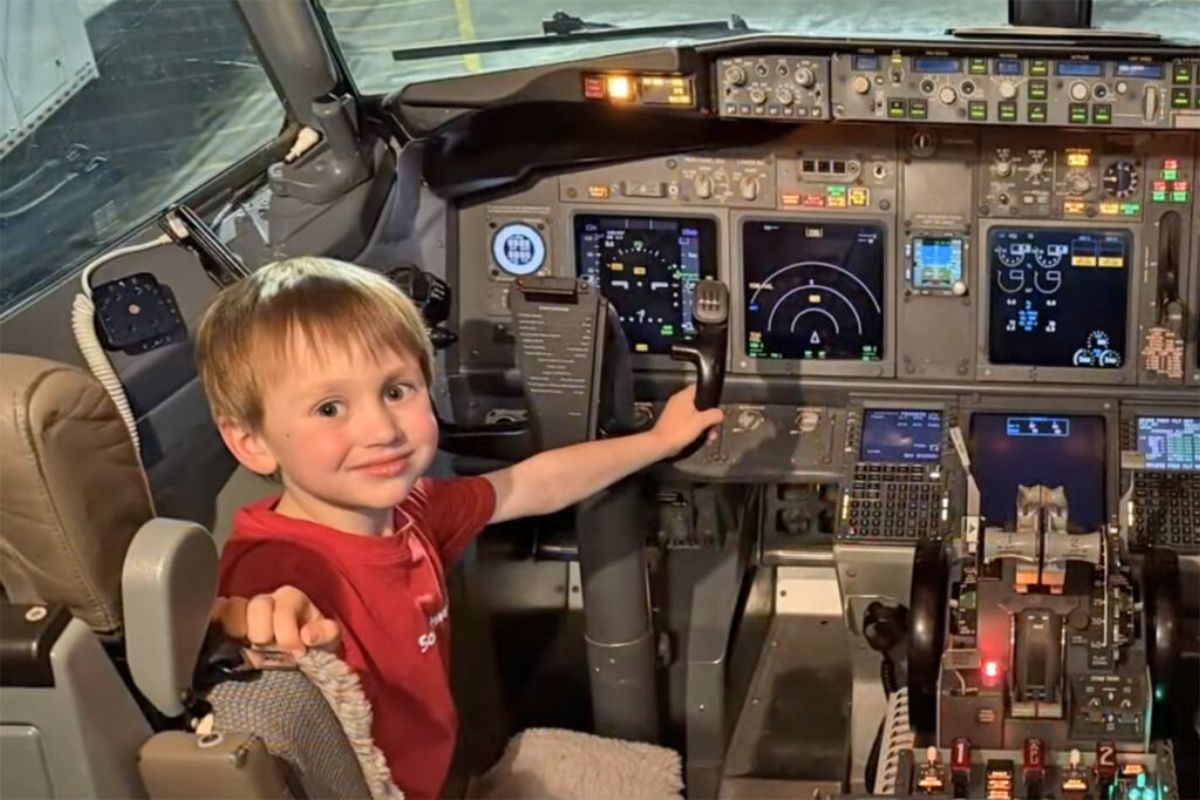
In Colorado, A 5-Year-Old Boy Noted A Photo Of The Cockpit Of The 737 Used For Familiarization And Noticed That The Maps Of The Navigation Displays Did Not Match. The Observation Turned Into A Report, Reached CEO Robert E. Jordan, And Ended With A Visit To The Headquarters In Dallas And Flight Simulation.
A 5-year-old boy named William Hines, from Colorado, got a day off script after noticing a small but real error in material used by pilots to familiarize themselves with the Boeing 737 cockpit. His curiosity about mechanics and aircraft details became the starting point of an unlikely chain within Southwest Airlines.
The situation began when William’s mother invited a family friend, a Southwest Boeing 737 pilot, to visit their home. According to the Aeroin portal, in about two hours of conversation about planes, the boy analyzed a high-resolution printed photo of the cockpit used in cockpit familiarization exercises and “mental training” before the simulator and pointed out what, to him, simply did not make visual sense.
The Detail In The “Maps” That Got Attention Before Any Checklist
What William saw was in the navigation displays, described by him as “maps” of the Boeing 737. In the image, the two sides of the cockpit did not seem to show the same framing: the co-pilot’s display indicated a smaller area with more weather formation, while the captain’s suggested a smaller area with fewer significant clouds.
-
Friends have been building a small “town” for 30 years to grow old together, with compact houses, a common area, nature surrounding it, and a collective life project designed for friendship, coexistence, and simplicity.

-
This small town in Germany created its own currency 24 years ago, today it circulates millions per year, is accepted in over 300 stores, and the German government allowed all of this to happen under one condition.

-
Curitiba is shrinking and is expected to lose 97,000 residents by 2050, while inland cities in Paraná such as Sarandi, Araucária, and Toledo are experiencing accelerated growth that is changing the entire state’s map.

-
Tourists were poisoned on Everest in a million-dollar fraud scheme involving helicopters that diverted over $19 million and shocked international authorities.


The reaction of the 5-year-old boy was direct, as if comparing two figures that should fit together: “the pilots’ map does not match… this one is closer, and this one is farther away.”
The strength of the observation was not in technical terms, but in simple logic: if the two instruments are representing the same navigation situation, the coherence between the screens becomes part of what the eye expects to find.
Why Familiarization Materials Matter More Than They Seem
Images of the cockpit used in training have a specific function: to help the pilot build visual memory of the cockpit, recognize patterns, and reduce the decision load when simulator practice begins. In this type of resource, layout details and consistency of what appears on each side of the panel make a difference for the mental exercise to meet its objective.
That is why the point raised by the 5-year-old boy gained weight when the pilot realized he was right in the comparison.
The story is not about the boy “correcting an airplane,” but rather noting an inconsistency in real training material—something that, if overlooked, can create noise in the familiarization stage, precisely the part where clarity and repetition are the foundation of learning.
How The Observation Left The Living Room And Reached The Company Leadership
Upon recognizing the relevance of the alert, the pilot took the case to his boss and reported the episode. From there, what was a detail pointed out in a printed photo gained formal traction within the company, ultimately reaching the CEO of Southwest Airlines, Robert E. Jordan.
The response was a large-scale thank you: Jordan invited the Hines family to visit the company’s headquarters in Dallas, Texas. The gesture transformed a childhood insight into a concrete experience, bringing William and his family closer to the universe he had observed from a distance—not as a spectacle, but as the behind-the-scenes of how a company structures training and internal culture.
The Day In Dallas And The Direct Contact With Simulator Training
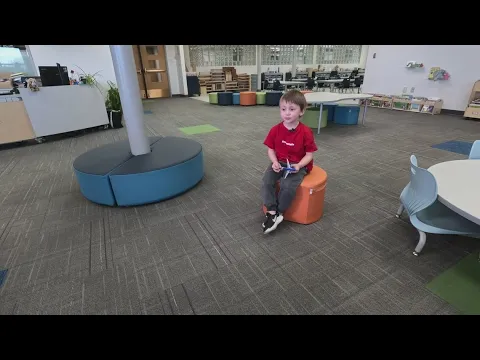

During the visit, the family was able to see more closely how training works, and in one of the most memorable moments, William even got to fly in a simulator.
For a 5-year-old boy who spent hours talking about aircraft and analyzing a cabin on paper, the shift from the printed “map” to the simulation environment became the bridge between curiosity and experience.
The episode also sheds light on how companies deal with unexpected contributions. An invitation like this does not “solve” a technical problem by itself, but signals that the organization is willing to recognize a good observation, even when it comes from someone outside the norm—and this relates directly to training, where small inconsistencies can hinder big objectives.
Colorado, Simulators, And The Size Of The Structure Behind The Boeing 737
There is a curious irony in the background: Colorado, where William lives, is described as the home of the largest simulated flight training center in the world, located in Denver, at United’s base, with 46 simulators of various models. In other words, the story of the 5-year-old boy begins in a state where the culture of simulation is part of the aviation ecosystem.
On Southwest’s side, the focus is specifically on the 737: the company also holds a relevant internal record by operating 18 simulators dedicated to the Boeing 737, with expansion already underway to reach 26 in the coming years.
This helps to illustrate why familiarization materials exist: before the simulator, there is a whole layer of visual and mental preparation to make the session more efficient and consistent.
What This Case Reveals About Attention, Precision, And Learning
There are two readings coexisting here. The first is human: a 5-year-old boy paid attention where many people might just “glance over,” and that attention was taken seriously.
The second is technical: training depends on consistency, and consistency depends on materials that do not create unnecessary discrepancies for those who are learning or reviewing procedures.
In the end, the episode serves as a reminder of something simple and hard to maintain in daily life: looking calmly is still a rare skill.
In high-complexity environments, such as aviation, this does not mean that anyone “audits” systems; it means that observing patterns, comparing, asking, and reporting can be the start of improvements and, sometimes, an unforgettable day for an entire family.
And you? When was the last time you noticed a “small” detail that no one around you noticed at school, work, or home?
And if you were in the company’s place, how would you recognize an unexpected contribution from a 5-year-old boy without turning it into a publicity stunt, but into real learning?










-

-

-

-

-

14 pessoas reagiram a isso.