





 Portuguese
  English
  Spanish
  5 min of reading
  10 comments


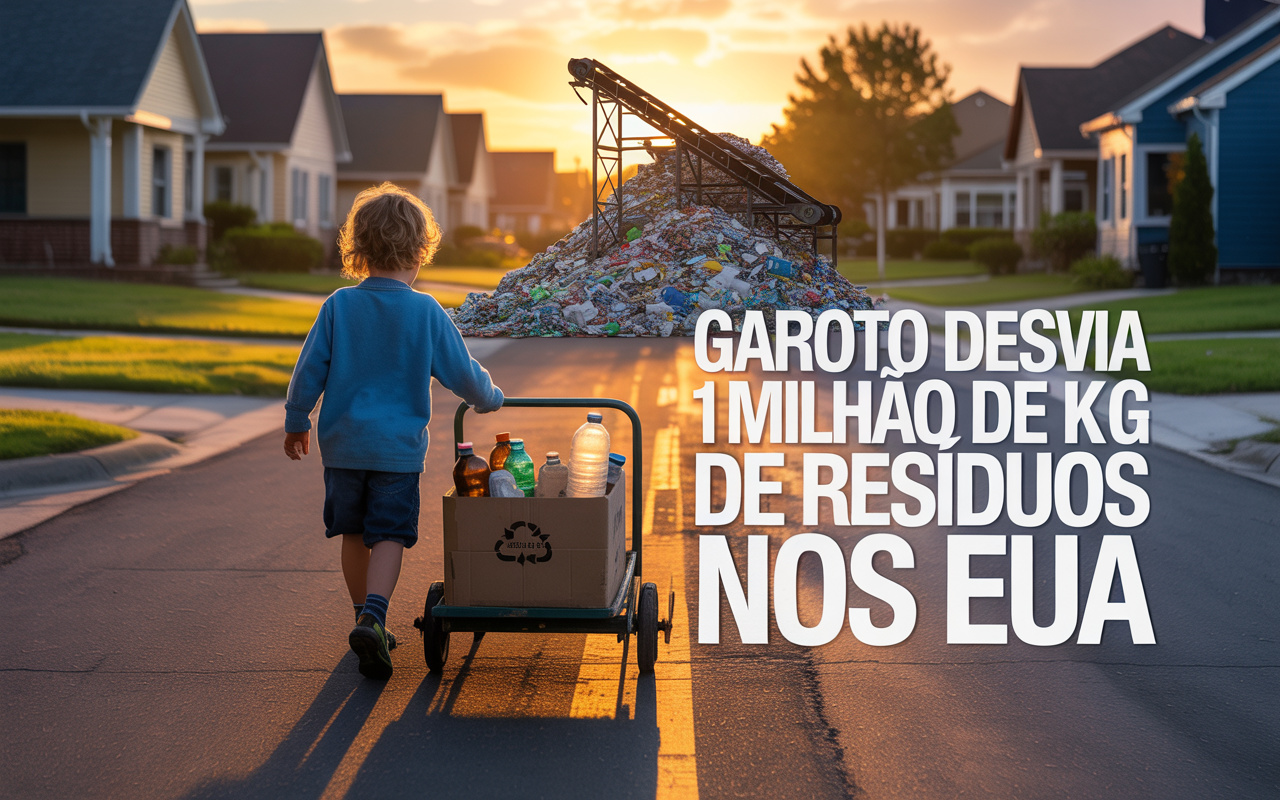


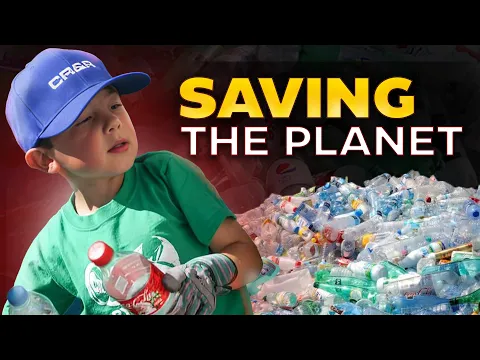
Before The Age Of 4, Ryan Hickman Created A Recycling System That Became A Company, Surpassed 1 Million Pounds Recycled, And Transformed Urban Waste Into Real Revenue In The USA.
In 2012, at just 3 years old, a boy from California began doing something that seemed like mere child’s play: sorting cans, plastic bottles, and cardboard in his garage. A few years later, that routine would transform into a real urban recycling operation, with goals, contracts, logistics, revenue, and measurable environmental impact. The name of this boy is Ryan Hickman, founder of Ryan’s Recycling Company, now recognized as one of the most impressive cases of youth environmental entrepreneurship in the United States.
What started as childhood curiosity turned into a continuous system of collection, sorting, and disposal of waste that has already surpassed 1 million pounds of recycled materials throughout the operation. The impact of this volume is direct: less plastic in rivers, less aluminum in landfills, less paper wasted, and more raw materials returning to the production chain.
How A Garage Turned Into A Waste Sorting Center
The story begins when Ryan visits a recycling center with his father and realizes that people were paid for the waste they brought in to recycle. The word “waste” took on a new meaning at that moment. Understanding that what was discarded had economic value, Ryan began collecting waste from neighboring houses, local events, and nearby businesses. In no time, the family garage was converted into an informal sorting point, where he manually sorted:
-
While the world looks at oil, the war with Iran is already disrupting helium supply from Qatar, affecting car and iPhone chips, threatening AI expansion, and putting pressure on aluminum packaging at the highest value in four years.

-
Global warming will expose a treasure hidden under the ice of Antarctica and may spark an international dispute over gold and valuable minerals.

-
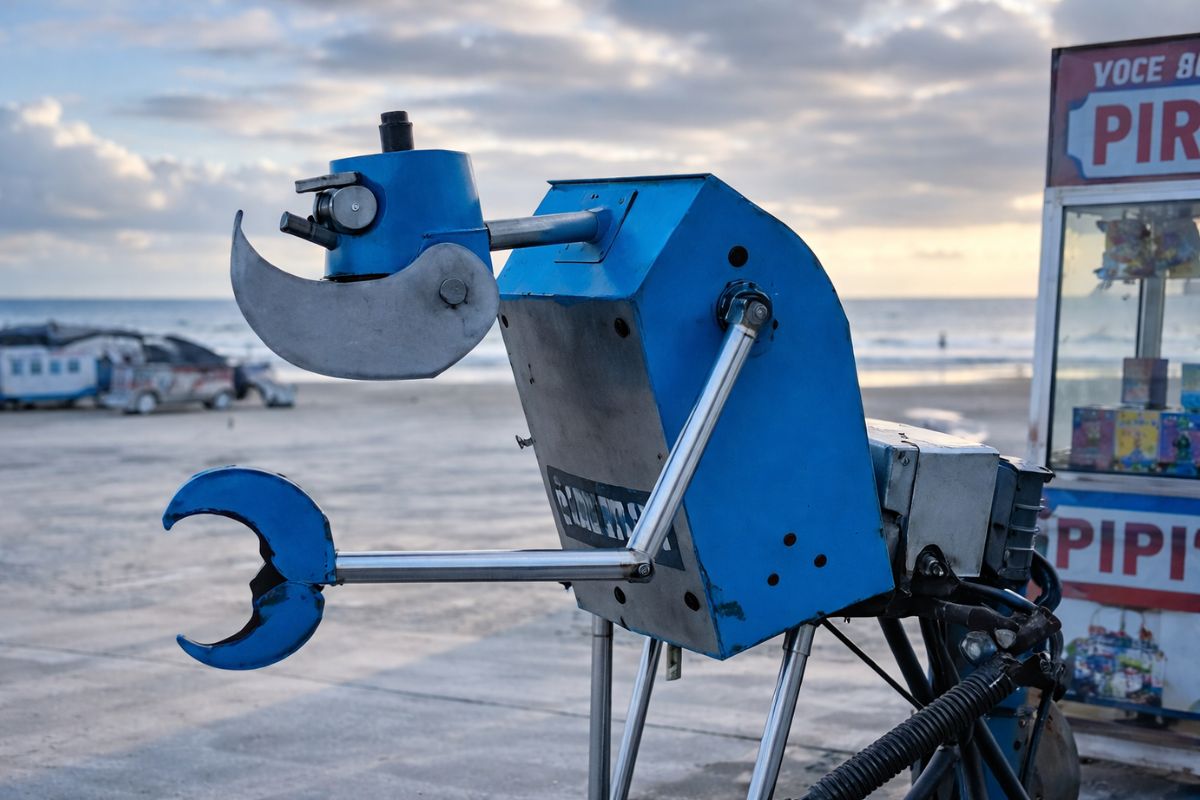
A street vendor from Praia Grande built a robot made of scrap from scooters and washing machines that pulls his popcorn cart on the beach, emits sounds, and interacts with customers, becoming an attraction on the coast of São Paulo.
-
The specifications of the Xiaomi 18 Pro Max have been leaked, and the highlight is a dual 200 MP camera with a new 22-nanometer technology that promises to consume less energy and capture details in shadows and bright areas using LOFIC HDR.


- aluminum;
- PET plastic;
- cardboard;
- glass;
- mixed packaging.
The next step was to transform the activity into a business. Still a child, Ryan began issuing receipts, scheduling pickups, organizing routes, and tracking the weight of the materials at recycling centers. What was once just home sorting became a micro-scale logistics operation, with weekly routines and continuous growth.

The Milestone Of 1 Million Pounds Recycled And The Real Environmental Impact
Surpassing 1 million pounds of recycled materials is not a symbolic number. From an environmental perspective, this amount represents:
- hundreds of thousands of pounds of aluminum that were not extracted from bauxite;
- large-scale savings in industrial electricity;
- direct reduction in greenhouse gas emissions;
- less pressure on urban landfills.
Every pound of recycled aluminum, for example, saves up to 95% of the energy needed to produce primary aluminum. This means that the operation started by Ryan has contributed, over the years, to energy savings amounting to tens of millions of megajoules, in addition to indirectly preserving natural resources.
From A Childhood Project To A Formal Recycling Company
With the growing demand, the garage could no longer accommodate the volume. Ryan’s Recycling Company began operating with:
- fixed collection points;
- recurring residential clients;
- schools;
- churches;
- small businesses;
- community events.
Ryan took on a symbolic leadership role while his parents structured the company legally. The funds generated from the sale of recyclables began to be used to sustain the operation and finance educational projects focused on environmental awareness.
The company also began to engage in educational programs in schools, showing children, in practice, that waste has economic value and can be turned into revenue.
How Much Revenue Ryan’s Recycling Generated
Although the family has never disclosed exact revenue figures as a private company, public data from interviews and reports indicate that the company generates tens of thousands of dollars per year, especially after securing recurring large-scale collection contracts. Revenue primarily comes from:
- sale of compressed aluminum;
- PET plastic sorted by type;
- compacted cardboard;
- educational contracts;
- sponsored events.
This transforms Ryan’s operation into something much more than a social project. It is a micro-industry of recycling, financially viable, sustainable over time, and with organic growth.
The Math Of Recycling: When Waste Becomes Money
In the American market, recycling pays an average of:
- aluminum: variable prices per pound, depending on market conditions;
- PET plastic: prices per ton according to purity;
- cardboard: price per bale according to industrial demand.

By handling hundreds of pounds per week, the operation generates sufficient revenue to maintain:
- pressing equipment;
- transport structure;
- space rental;
- sorting materials;
- educational initiatives.
The economic logic behind this is simple: the industry needs recycled raw materials to reduce energy costs and meet increasingly stringent environmental goals. Ryan simply filled, as a child, a space that already existed in the market.
The Educational Effect That Multiplied The Operation
One of the biggest differentiators of Ryan’s Recycling Company is the multiplier effect on other children. By visiting schools and talking about recycling, Ryan has encouraged hundreds of students to start sorting waste at home, indirectly increasing the volume of material reused.
This educational effect generates impact on three levels:
- behavioral, by changing household habits;
- environmental, by reducing improper disposal;
- economic, by feeding the recycling industrial chain.
The company ceased to be just a business and began to function as a platform for practical environmental education.
What Differentiates This Company From Other Recycling Initiatives
Most urban recycling programs originate from public policies, NGOs, or large companies. Ryan’s case is different because it stems from:
- individual initiative;
- spontaneous motivation;
- empirical learning;
- organic growth;
- simple and replicable business model.
There’s no complex technology or large initial investments. There’s only:
- correct sorting;
- basic logistics;
- operational discipline;
- regularity in collection.
It is precisely this simplicity that makes the model so powerful. It can be replicated in any urban neighborhood around the world.
The Impact On The Image Of Recycling As An Economic Activity
For decades, recycling has been viewed merely as a symbolic environmental action. Ryan’s project changes this perception by demonstrating that:
- recycling generates real revenue;
- recycling sustains permanent companies;
- recycling creates jobs;
- recycling drives entire industrial chains.
Today, large beverage, packaging, and food industries rely on recycled material to meet carbon neutrality goals. Small companies like Ryan’s feed this chain at the grassroots level.
Why Ryan’s Story Became A Global Reference
Over the last decade, Ryan’s story has been used as an example in:
- environmental education programs;
- youth entrepreneurship projects;
- circular economy initiatives;
- international recycling campaigns.
This happens because it proves, with numbers, that it is possible to unite concrete environmental impact, income generation, and foundational education, all supported by a simple and scalable operation.








Se fosse no Brasil, ele não poderia fazer isso, pois menor de idade não pode trabalhar, de acordo com o estatuto da criança e do adolescente.
O Brasil é líder mundial em reciclagem de latas de alumínio 👏👏👏👏. Precisamos melhorar e muito na reciclagem de plástico 😵💫
Na minha cidade a falta de informação e orientação das pessoas quanto ao trabalho dos recicladores e vista com preconceito por grande parte dos moradores, que misturam (atitude que só pode ser intencional), fezes de animais domésticos ao lixo reciclável; no Japão, dentre outros países com consciência ambiental, todo lixo reciclado e lavado e separado(garrafas, latas), aqui na minha cidade, muitos moradores esfregam fezes dos animais no lixo reciclavel e depois clamam por um país melhor. Um país melhor se faz com atitudes melhores do rico para com o pobre e do pobre para com o rico. Enquanto não houver consciência nas pessoas que nem todo catador de reciclagem e ****, ****, ****, etc, o nosso país será o que vemos nos noticiários. Dois mil anos depois da vinda de Cristo, não aprendemos NADA sobre as lições que ele nos deixou.
Falou tudo que eu pensava em falar, parabéns.
O nosso país é poderoso para progredir, mas infelizmente as pessoas que não raciocinar, não se interessam em salvar o planeta.