





 Portuguese
  English
  Spanish
  3 min of reading
  0 comments


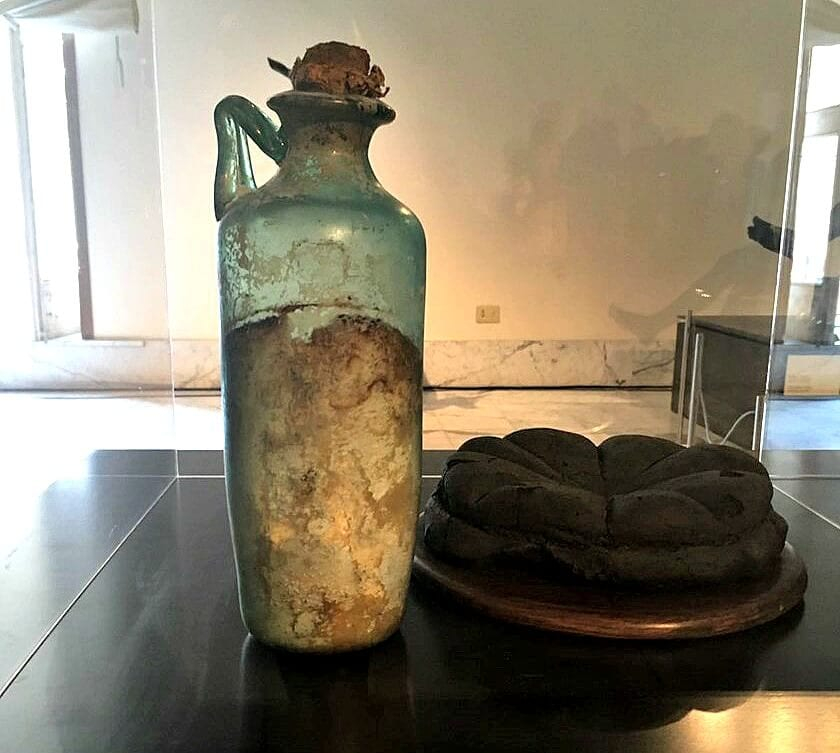
Discover The Details Of A Nearly 2,000-Year-Old Olive Oil Bottle Made In Ancient Rome
In 2020, a multidisciplinary team led by Professor Raffaele Sacchi from the University of Naples Federico II managed to verify the authenticity and molecular identity of a sample of olive oil stored in a glass bottle buried by the eruption of Vesuvius in 79 A.D.
The study was published in the journal NPJ Science of Food, part of the Nature group. The research indicates that this is possibly the largest and oldest known olive oil bottle, with a capacity of nearly 0.7 liters.
The study is part of a collaboration between the Department of Agriculture at the University of Naples and the National Archaeological Museum of Naples (MANN).
-
Friends have been building a small “town” for 30 years to grow old together, with compact houses, a common area, nature surrounding it, and a collective life project designed for friendship, coexistence, and simplicity.

-
This small town in Germany created its own currency 24 years ago, today it circulates millions per year, is accepted in over 300 stores, and the German government allowed all of this to happen under one condition.

-
Curitiba is shrinking and is expected to lose 97,000 residents by 2050, while inland cities in Paraná such as Sarandi, Araucária, and Toledo are experiencing accelerated growth that is changing the entire state’s map.

-
Tourists were poisoned on Everest in a million-dollar fraud scheme involving helicopters that diverted over $19 million and shocked international authorities.


The aim is to analyze organic finds stored in the museum’s depots. The investigation into the contents of the glass bottle began in 2018. The storage rooms of the MANN contain materials recovered from excavations carried out under the command of King Charles of Bourbon in the Vesuvius area.
The University of Naples believes the bottle came from Herculaneum. However, like many archaeological discoveries, information about the exact moment of its recovery has been lost over time.
Chemical Transformations Over The Centuries
The research was initiated by Italian paleontologist and journalist Alberto Angela. During an inspection of the MANN storerooms, he noticed that the bottle still contained liquid.
Initially, he assumed that the contents could be wine. However, the analyses revealed a different result, classified by the University of Naples as “surprising and unexpected.”
The studies were conducted by researchers from the University of Naples Federico II, the National Research Council of Italy (CNR), and the University of Campania Luigi Vanvitelli.
The results confirmed that the organic matter in the bottle was olive oil. The high temperatures generated by the eruption of Vesuvius and the changes suffered over nearly two thousand years caused profound chemical alterations in the product.
The analysis revealed that few of the typical molecules of olive oil survived over time. The triglycerides, which make up 98% of the oil, degraded into their constituent fatty acids. The unsaturated fatty acids were completely oxidized, forming hydroxy acids.
Over two millennia, these compounds reacted with each other, giving rise to substances such as stoney acids, which had never been detected in conventional natural alteration processes of olive oil.
The fatty substance also produced a variety of volatile compounds. These substances are found in highly rancid oils and result from the decomposition of oleic and linoleic acids.
The study provides an advance in understanding the chemical transformations that occur in food fats over extremely long periods. The discovery also contributes to the history of food and food preservation in antiquity.
With information from scasanjuanvillargordo.










-

-

-

15 pessoas reagiram a isso.