





 Portuguese
  English
  Spanish
  5 min of reading
  12 comments


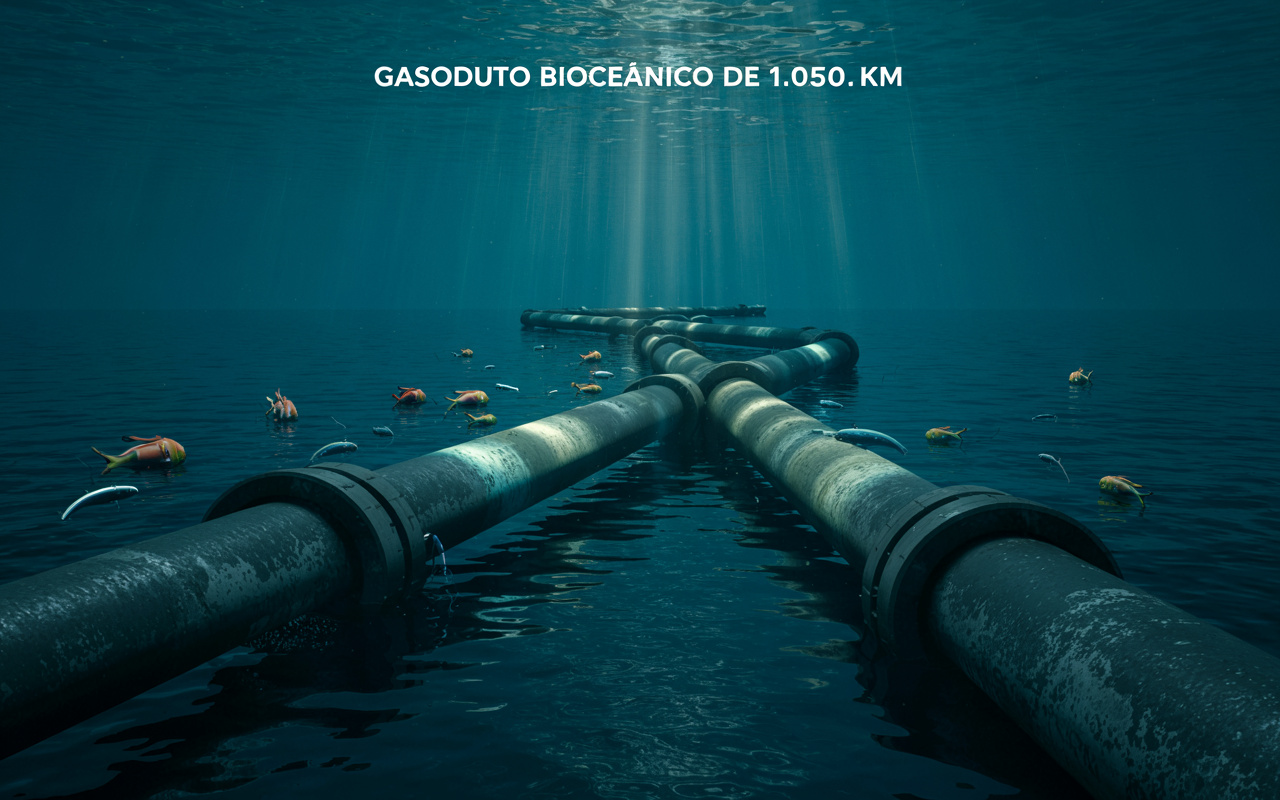


The 1,050 km Bioceanic Pipeline Will Connect Vaca Muerta to Brazil via Paraguay, Reduce Import Costs, Strengthen Pre-Salt, and Attract R$ 50 Billion in Investments.
Brazil is about to become an even more relevant energy hub in the South American landscape. A new project, the Bioceanic Pipeline, promises to change the way natural gas is transported and consumed on the continent. The 1,050-kilometer construction will connect Argentina to Brazil through Paraguay and could be a game changer for logistics, the economy, and energy security in the region. With R$ 50 billion in planned investments, the project aims not only to transport the production from Argentina’s massive Vaca Muerta field but also to reinforce the use of natural gas from Brazil’s pre-salt layer and consolidate the country as the main energy hub in the Southern Cone.
What Is the Bioceanic Pipeline and Why Is It So Important?
The Bioceanic Pipeline is a trilateral energy integration project that will interconnect the gas networks of Argentina, Paraguay, and Brazil. The proposal is to transport gas from Vaca Muerta – considered the second largest shale gas reserve in the world – to Brazil, where industrial and residential demand grows each year.
For the governments, the project is more than just a pipeline: it’s a strategic energy corridor. Brazil heavily relies on expensive imports of liquefied natural gas (LNG), which arrives by ship and raises the cost of supply for industries and power plants. With the pipeline, the country will have access to a cheaper and more stable fuel, reducing logistics costs and strengthening the energy matrix.
-
Petrobras evaluates suspension of sales to distributors and considers canceling the cooking gas auction following guidelines from the Federal Government.
-
Lula reveals a masterstroke by Petrobras to undo a deal made by Bolsonaro, which involves the return of an important refinery that currently produces less than half of what was expected and makes Brazil dependent on international diesel.
-
A study confirms that the natural gas sector will reduce greenhouse gas emissions in Brazil by 0.5% and accelerate the energy transition by 2026.

-
Petrobras implements a severe adjustment and confirms a 55% increase in the price of aviation kerosene with a proposal for installment payments for the companies.




The Trilateral Agreement That Brought the Project to Life
The advancement of the project was only possible after some diplomatic work. In July 2025, the presidents of Brazil, Argentina, and Paraguay signed a memorandum of understanding, formalizing the intention to build the pipeline. The initial phase involves studies of technical, economic, and environmental feasibility, which should be completed within 18 months.
The participation of Paraguay was crucial. The route passing through Paraguayan territory avoids sensitive areas, reduces environmental impact, and ensures the country a new source of revenue from transit fees and future investments in local infrastructure. This route also simplifies the licensing process, which would be more complex if the route were directly between Argentina and Brazil.
How Much Can Brazil Save with the Bioceanic Pipeline?
Today, Brazil spends billions of reais annually on LNG imports to supply industries, thermoelectric plants, and gas distributors. According to preliminary estimates, the Bioceanic Pipeline could generate a savings of R$ 8 to R$ 10 billion annually in logistics and import costs.
Additionally, the infrastructure will allow for better transport of pre-salt gas, which currently faces a chronic problem: the lack of pipelines to transport the excess.
A large portion of the gas associated with oil is reinjected into wells or flared because there is not enough network to take it to consumers. With a more robust network, Brazil will be able to harness this energy potential and potentially become an exporter.
Vaca Muerta: The Argentine Energy Giant
The origin of it all lies in Vaca Muerta, one of the most promising shale gas formations in the world. Located in the province of Neuquén, in southern Argentina, the reserve has the potential to supply all of South America for decades.
The problem is that the infrastructure for export is still limited, which prevents the country from fully tapping the economic potential of the field.
With the pipeline, Argentina will have a permanent transport route to the largest market in the region – Brazil – which will ensure stable revenue and could attract new companies and technologies for the exploration of the resource.
The Strategic Role of Paraguay in the Project
Often overlooked in major energy projects, Paraguay will gain prominence with the Bioceanic Pipeline.
The country will be the link between Argentina and Brazil, receiving fees for the passage of gas, investments to modernize its network, and even the possibility of building internal branches for local consumption.
This intermediary role strengthens Paraguay in the regional scenario and creates an opportunity to diversify its energy matrix, which is currently primarily based on hydroelectric power like Itaipu.
Building 1,050 km of pipeline is no simple task. The project will require:
- thousands of tons of steel pipes;
- compression stations along the route to maintain gas pressure;
- subterranean crossings of rivers and rocky areas;
- interconnection works with the existing network in Brazil.
The schedule estimates 5 to 7 years of construction after final approval. This means the pipeline could be operational between 2032 and 2033. During construction, thousands of direct and indirect jobs will be created, boosting the local economy.
Environmental Impacts and Protection Measures
One of the main points discussed is the environmental impact. All three governments have signaled that the route will be planned to avoid indigenous lands, natural reserves, and protected areas.
In addition, modern technologies for underground installation, real-time monitoring sensors, and containment systems will be adopted to reduce leak risks. The goal is for the Bioceanic Pipeline to be a benchmark project in safety and sustainability.
The Geopolitical Effect of the Bioceanic Pipeline
More than an engineering project, the pipeline has a geopolitical weight. Brazil will establish itself as the energy hub of the Southern Cone, centralizing gas flow between neighboring countries and creating an integrated market.
This integration can attract international investments, including from Asia, in addition to strengthening Brazil’s position in energy and environmental negotiations. The project also opens the door for future agreements on green hydrogen and other clean sources, as the infrastructure can be adapted in the future.
What Comes Next?
The next steps involve environmental impact studies, soil analyses, and financial modeling. Only after these stages will the pipeline receive the final approval for construction. If everything goes according to schedule, construction could be authorized starting in 2027.
Until then, Brazil, Argentina, and Paraguay will need to align regulatory issues, licensing, financing, and define who will be the operator of the infrastructure. Development banks, sovereign funds, and private companies have already shown interest in participating in the consortium that will finance the project.
A Project to Change the South American Energy Map
The 1,050 km Bioceanic Pipeline is not just a steel pipe crossing the continent. It symbolizes the attempt to transform South America into an interconnected energy network, capable of offering cheaper gas, boosting industries, reducing costs for consumers, and paving the way for a more planned energy transition.
If it comes to fruition, the project will be one of the largest infrastructure investments of the century in Brazil – and could mark a new era for the economic and energy integration of the continent.










E o Gasoduto que chega em Uruguaiana/RS vindo da Argentina? Salvo engano a continuidade até triunfo seria pouco mais da metade desta distância em obras.
Distância desde **** morta até a Assunção: 2300 km…
Se o Brasil vai gastar uma fortuna na construção desse gasoduto, por que não viabiliza o gás do pré-sal rejeitado?
Um país que não tem dinheiro pra dar uma saúde pública decente para sua população, vai gastar uma montanha de dinheiro pra beneficiar a Argentina, quando tem o seu gás do pré-sal rejeitado ! É de uma **** incrível ! São os nossos políticos !
a pergunta é valida e eu tambem a fiz a mim no momento da leitura.
a materia teria mais valor se explicasse este ponto.
apesar de não ter o conhecimento do projeto, posso imaginar que a construçao de trecho de gasoduto para dar vazao ao gas produzido no pré-sal não é economicamente viavel, mas pode se beneficiar, de alguma forma, que nem eu mesmo sei dizer, de um gasoduto que é economicamente viavel, que é este que traz o gas de xisto da argentina.
, o gasoduto do pré-sal que chega a Santos não tem 255 km por mar. O gasoduto em questão é o Rota 3, com 355 km no total, sendo 307 km marítimos e 48 km terrestres, levando gás do pré-sal da Bacia de Santos para o Complexo Petroquímico do Rio de Janeiro (Comperj). O trecho marítimo atinge profundidades de até 2.190 metros.
Detalhes sobre o Rota 3:
Extensão total: 355 km.
Trecho marítimo: 307 km.
Trecho terrestre: 48 km.
Destino: Complexo Petroquímico do Rio de Janeiro (Comperj).
Profundidade máxima: 2.190 metros.
Capacidade: Até 21 milhões de metros ****bicos de gás por dia.