





 English
  Francês
  Alemão
  Italiano
  Japonês
  Norueguês
  Portuguese
  Spanish
 3 min of reading


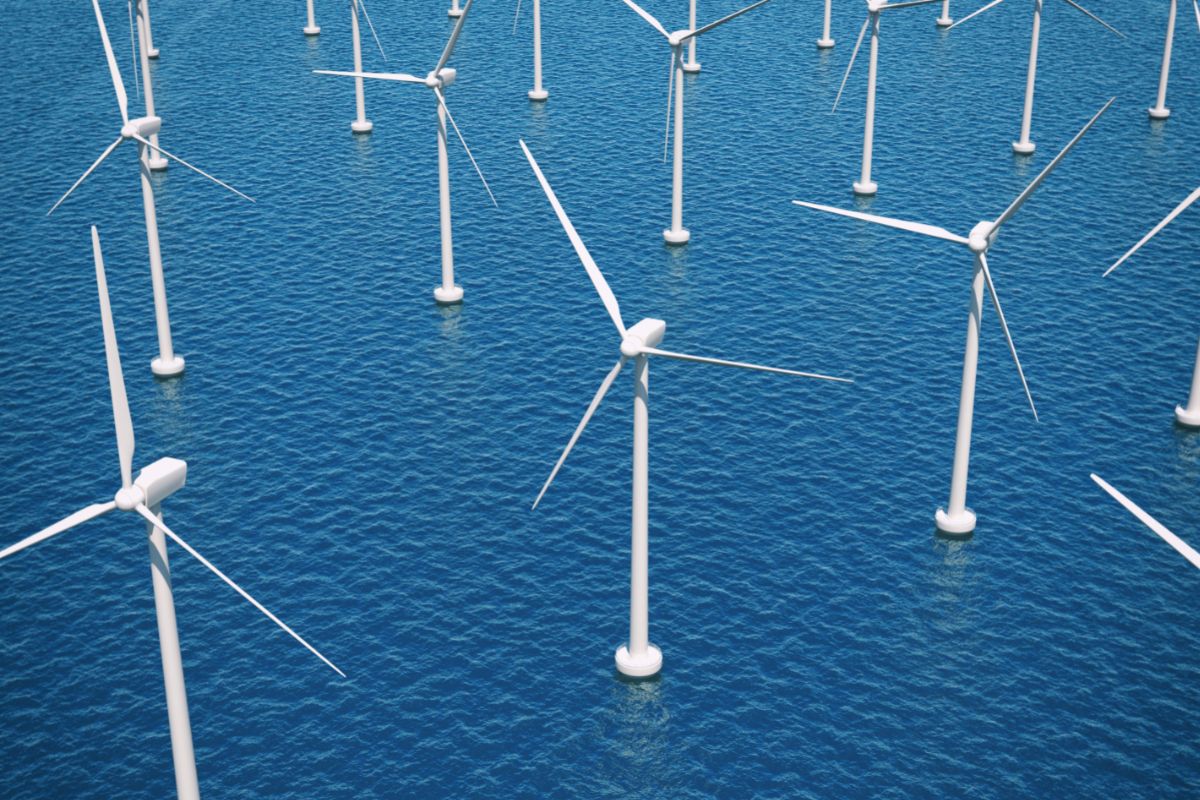
New Innovative Pipeline Construction from Offshore Wind Energy Promises to Supply 15% of All the European Union’s Needs by 2050
According to the consulting firm DNV GL, one of the largest in the oil and gas sector, a new innovative pipeline could be built in the European Union. However, this project would allow the transport of hydrogen generated from offshore wind energy. In this way, countries in Europe would be able to take great advantage of this new form of energy and become more independent from Russia.
DNV GL conducted a comprehensive study at the request of the German pipeline operator Gascade. However, after some detailed analyses, the consulting firm concluded that the North Sea could yield up to 300 terawatt-hours (TWh) per year of hydrogen. Nevertheless, only billion-dollar investments could make the entire construction feasible. Learn more!
Learn More About the European Union’s Quest for Hydrogen as a Substitute for Natural Gas with the Video Below

Billion-Dollar Investment Could Enable the Construction of a New 4,200 Kilometer Pipeline
According to the studies by consulting firm DNV GL, only investments in the billions of dollars could make the pipeline construction feasible. In this sense, an amount between US$ 16 billion and US$ 24 billion may be necessary. However, this amount will be invested in an extensive structure of pipes covering a distance of 4,200 kilometers.
-
With 160,000 m² of collectors, an area larger than 20 football fields, Silkeborg, in Denmark, hosts a solar thermal plant that heats 19,500 homes and could become the largest solar heating plant in the world.

-
A study reveals the expansion of renewable energy procurement in Brazil and shows how companies are taking advantage of opportunities to reduce expenses, ensure energy efficiency, and strengthen strategic environmental commitments.

-
Mato Grosso do Sul excels in the sugar-energy sector: the state reaches a milestone of 22 operating mills and accelerates the production of clean energy in MS with a focus on sustainability.

-
231 turbines of 260 meters at 160 km from the coast, monopiles weighing as much as nine blue whales embedded in the North Sea, and a crane ship taller than the Eiffel Tower: Hornsea 3 will be the largest offshore wind farm on the planet by 2027, and its first components have already arrived in England.
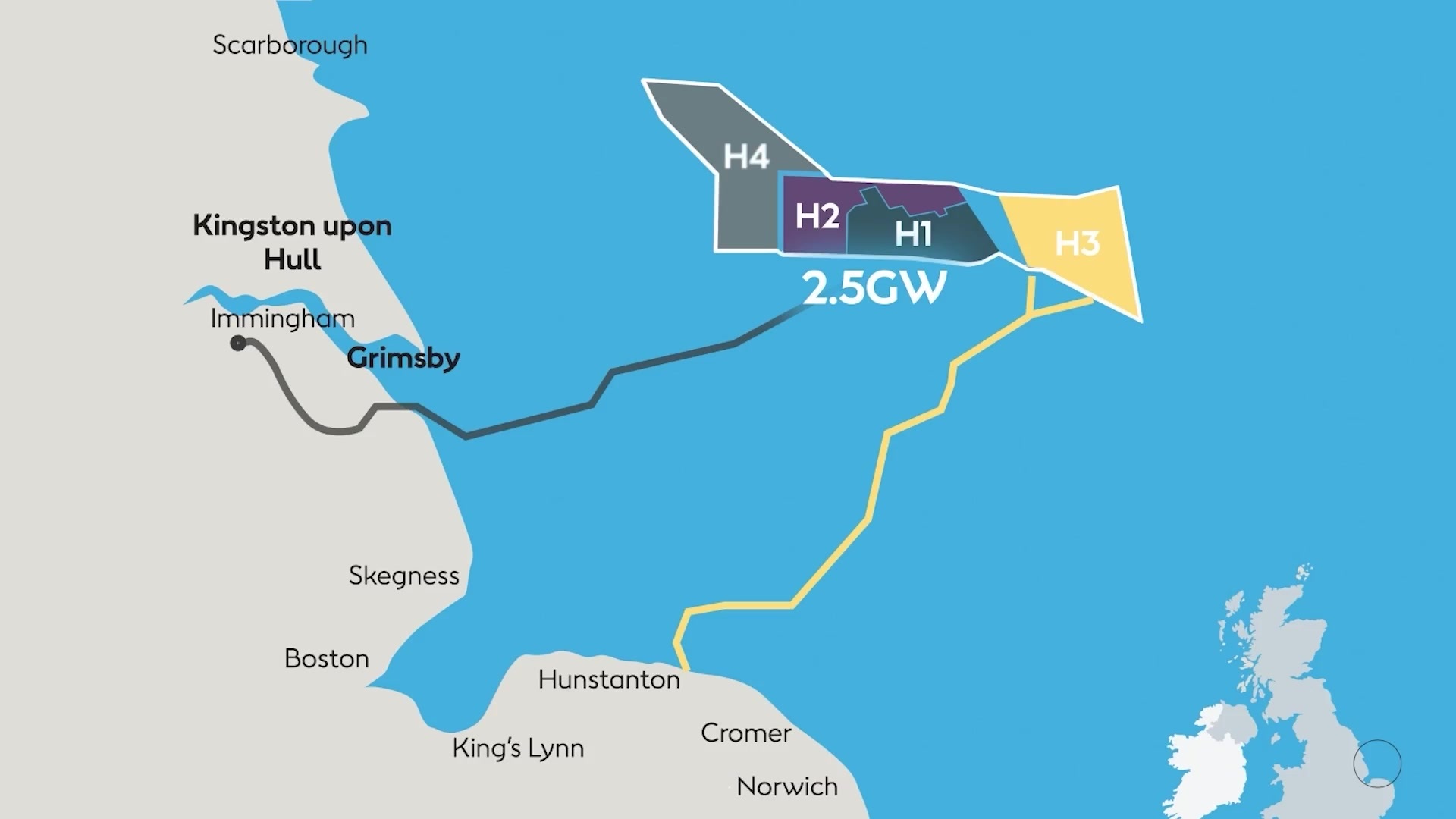

The structure would connect countries such as Norway, the Netherlands, Germany, Belgium, and several others. Furthermore, the production and distribution of hydrogen from offshore wind energy could meet 15% of the European Union’s fuel demand. Thus, one of the main objectives would be to achieve energy independence from Russia, in addition to energy transition.
How Does Hydrogen Production from Offshore Wind Energy Work?
Offshore wind energy is generated from the force of winds at sea, capable of turning large blades. Thus, large electrolysis plants receive this produced energy, carry out chemical processes, and transform it into hydrogen. However, a well-connected structure with coastal plants is necessary for effective and rapid transmission. This way, losses are avoided.
According to the studies conducted by consulting firm DNV GL, the distance that produces the most satisfactory results is 100 kilometers between the plant and the towers. After all, hydrogen is generated more quickly due to optimized transmission.
Benefits of Hydrogen from Offshore Wind Energy
The use of offshore wind power to produce hydrogen has several benefits. Check out the main ones:
- Reduction of expensive electrical cables that increase energy transportation costs;
- Reduction of the use of fossil fuels;
- Renewable energy with fewer limitations than fossil fuels;
- Lower energy costs compared to importing hydrogen from abroad;
- Less dependence on natural gas from Russia.
Countries Like Germany, the Netherlands, and Belgium Want to Significantly Increase Offshore Wind Energy Production by 2050
According to executive representatives of Gascade, which commissioned the research, countries in the European Union have significant potential to use offshore wind energy. Proof of this is that Germany, the Netherlands, Belgium, and Denmark committed in 2022 to promote and fund constructions that generate up to 150 gigawatts of wind energy by 2050.
However, in 2021, the European Union was responsible for producing only 15 gigawatts of offshore wind energy. The promise made among the countries last year is outlined in the Esbjerg Declaration. However, the expectation is that the signatory countries will meet again to discuss details in April of this year.



Seja o primeiro a reagir!