





 English
  Francês
  Alemão
  Italiano
  Japonês
  Norueguês
  Portuguese
  Spanish
  4 min of reading
  0 comments


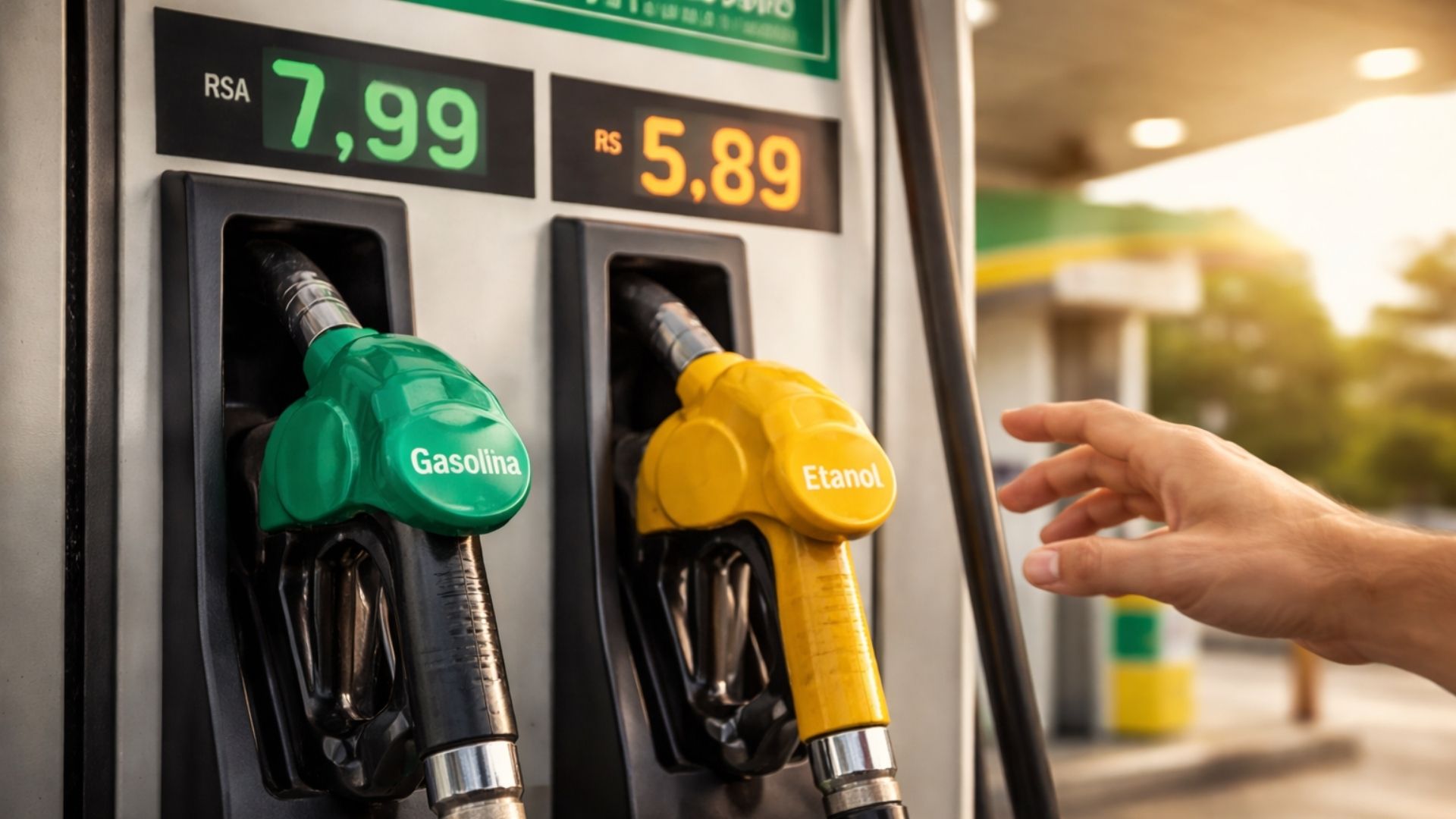
High gasoline prices reignite calculation at gas stations and require attention to actual vehicle consumption, while the 70% rule remains the main reference for deciding between ethanol and gasoline, with variations according to car efficiency and regional price differences.
The rise in fuel prices has brought back an old but still decisive calculation to the driver’s decision-making process.
In flex-fuel cars, ethanol tends to be worthwhile only when it costs up to 70% of the price of gasoline, although more modern vehicles may extend this margin to around 75%, depending on the efficiency of the mechanical setup.
In Bahia, where gasoline approaches R$ 8 in some areas and Salvador recorded an average of R$ 6.99 in the week of March 15 to 21, 2026, the choice now requires more frequent comparisons between pump price and actual vehicle consumption.
-
The government has made a decision and is starting a test with more ethanol in gasoline, anticipating a mixture of up to 35%, diesel with 25% biodiesel, and a study to assess the impacts on engines.
-
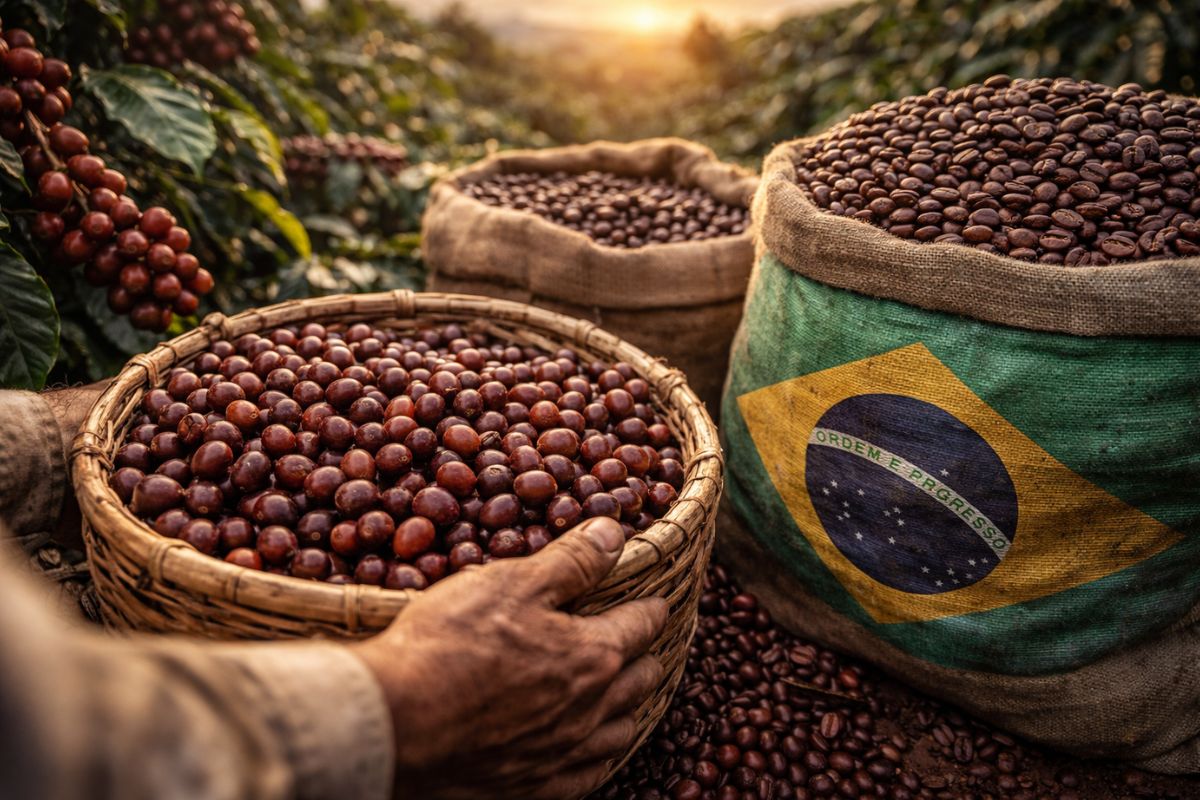
Brazil is the largest coffee producer in the world, but four foreign companies control more than half of the domestic market, including brands that you probably have in your kitchen like Pilão, 3 Corações, Melitta, and Nescafé.
-
Expansion of Federal Institutes: 38 new campuses and R$ 200 million for public education; see the cities included.

-
Lula’s government changes rule in important benefit and thousands of Brazilians will no longer receive it; see what has changed.


70% Rule Still Defines the Choice
In practice, the so-called 70% rule remains the safest reference for most drivers, because hydrated ethanol delivers less energy per liter.
Therefore, it usually yields fewer kilometers than gasoline in the flex models sold in the country.
The calculation is straightforward.
Just divide the price of ethanol by that of gasoline. If the result is below 0.70, the trend is in favor of the biofuel financially.
This means that, with gasoline at R$ 7.50, ethanol becomes competitive at around R$ 5.25 or less.
In a scenario where gasoline is close to R$ 8, the ceiling rises to R$ 5.60. The logic is the same in any city.
However, the final result changes according to the price charged at each gas station. Especially, according to the difference in consumption observed in each driver’s car.
Prices in Bahia Reduce Ethanol Competitiveness
When evaluating the situation in Bahia, economist Edval Landulfo states that ethanol still does not appear as a financially advantageous choice in most cases.
This is because the prices charged at many gas stations remain above the competitive range.
In a statement published by Correio, he claims that at most gas stations in Salvador and the Metropolitan Region, the biofuel “is still not worth it financially.”
He also emphasizes that the calculation should always be based on the effective price found at the pump.
The most recent numbers help explain this caution. In the week of March 15 to 21, 2026, ANP recorded a national average of R$ 6.32 for regular gasoline.
During the same period, hydrated ethanol was priced at R$ 4.70.
In Bahia, surveys indicated gasoline close to R$ 7.99 and ethanol around R$ 5.89 in parts of the state.
In this relationship, ethanol comfortably exceeds the 70% limit. As a result, it loses economic appeal for a large part of the flex fleet.
Vehicle Consumption Influences More Than Price
Although the gas station calculation helps decide in a few seconds, it does not eliminate a central factor.
The specific performance of the vehicle. Financial consultant Raphael Carneiro emphasizes that the driver needs to consider the higher consumption of ethanol.
He also highlights its higher evaporation rate. Therefore, the reference of 70% remains, for him, the most prudent before switching from one fuel to another.
This difference in yield supports the caution of specialists.
In general terms, ethanol usually requires more liters to cover the same distance.
Part of the market operates with the notion of a loss close to 30% compared to gasoline.
Still, this distance varies according to model, engine, vehicle weight, and type of use. Therefore, the most accurate calculation remains the cost per kilometer driven. Not just the direct comparison between pump prices.
When Ethanol Can Be Worth Up to 75% of Gasoline
The exception appears in newer flex-fuel cars. Especially in more efficient engines with ethanol.
In these cases, the parity can rise to near 75%. Without the biofuel losing its competitiveness.
This occurs because some mechanical setups make better use of ethanol combustion.
Still, this is not a universal rule. It requires practical testing of the vehicle itself. The scenario has also gained a new layer since the adoption of E30 gasoline.
With 30% anhydrous ethanol in the mandatory mix. This change slightly reduced the energy available per liter of gasoline. And reignited the debate about the rigidity of the 70% rule.
Even so, the parameter remains useful as a quick reference for the consumer.
Price Variation Requires Constant Attention
Another point that weighs on the driver’s routine is the speed at which prices fluctuate.
In Bahia, the recent pressure occurred at the same time the state government postponed the change in the ICMS of ethanol to June 1, 2026.
The measure was presented as a way to avoid additional pressure on prices.
Even with this postponement, the difference observed between ethanol and gasoline at many stations has not yet restored broad competitiveness to the biofuel.
Therefore, the practical recommendation remains based on calculation. Before refueling, it is worth comparing the prices at the station.
Apply the division between ethanol and gasoline. Whenever possible, compare with the average consumption of your own car.
In a market subject to weekly fluctuations, the advantage can disappear from one tank to another without warning.








Seja o primeiro a reagir!