





 Portuguese
  English
  Spanish
  5 min of reading
  0 comments


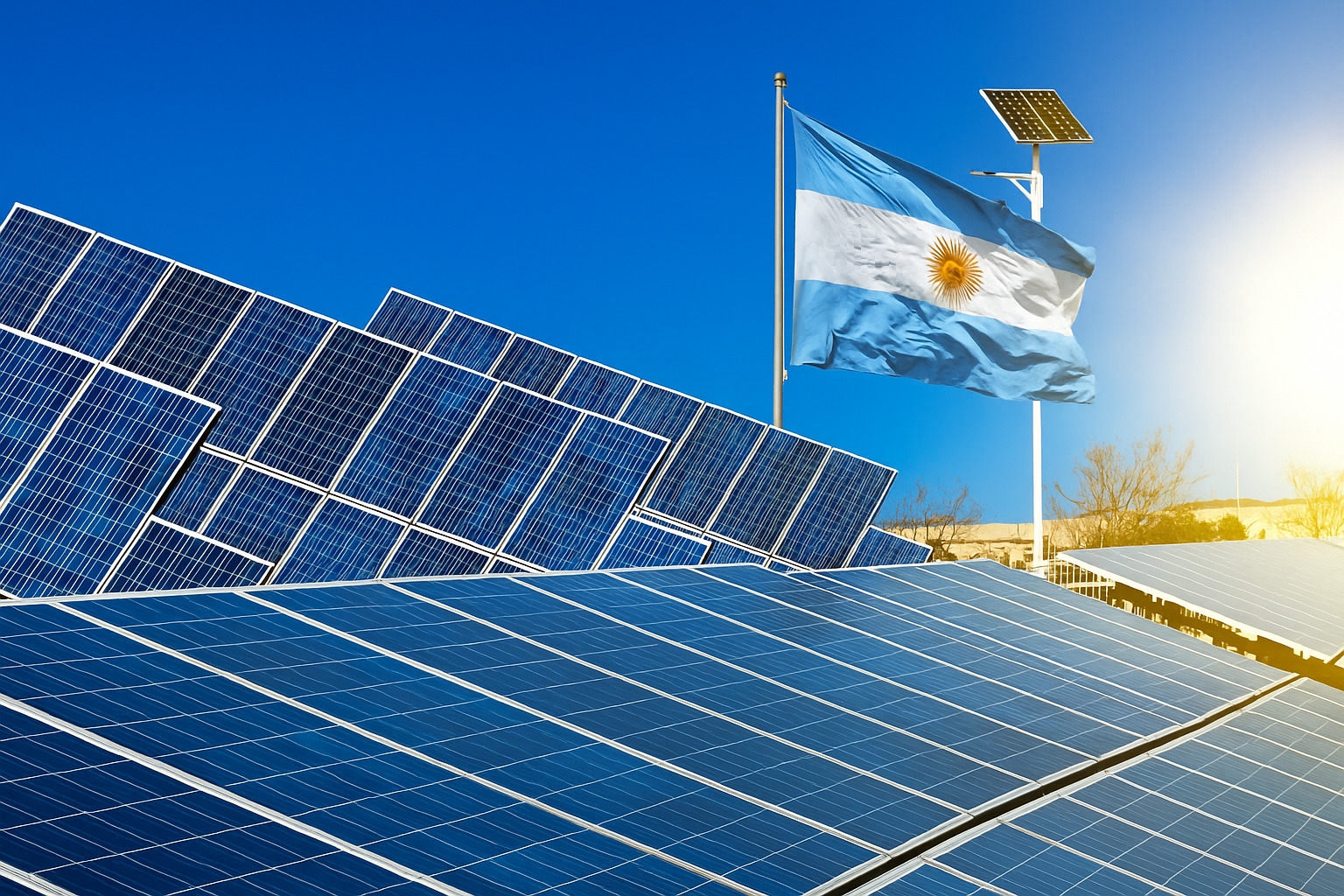
Discover How Genneia Strengthens Clean Energy in Argentina and Drives Sustainable Growth in the Power Sector.
Clean energy in Argentina has been gaining prominence in recent years and, in this context, Genneia, the largest renewable energy company in the country, is at the center of this transformation.
The company is approaching the historic mark of 2 GW of installed capacity and, consequently, establishes itself as one of the main engines of Argentina’s energy transition.
At the same time, it awaits the results of the government’s first tender aimed at energy storage, which may further expand its reach.
Currently, Genneia maintains about 1.4 GW in renewable energy capacity.
This number, however, is expected to grow to 1.7 GW by the end of 2026, when two new solar parks under construction come online.
The first is San Rafael, in the province of Mendoza, with 180 MW and an investment of US$ 180 million.
The second is San Juan Sur, in the province of San Juan, with 129 MW and an investment of US$ 110 million.
In 2024, the company reached the milestone of 1 GW of renewable capacity.
In this way, it maintains a focus on the long-term electricity market, where industries and large consumers contract clean energy directly from generators.
-
The Brazilian state accelerates industrial competitiveness with a focus on the extraction of strategic minerals to boost the energy transition in Goiás.

-
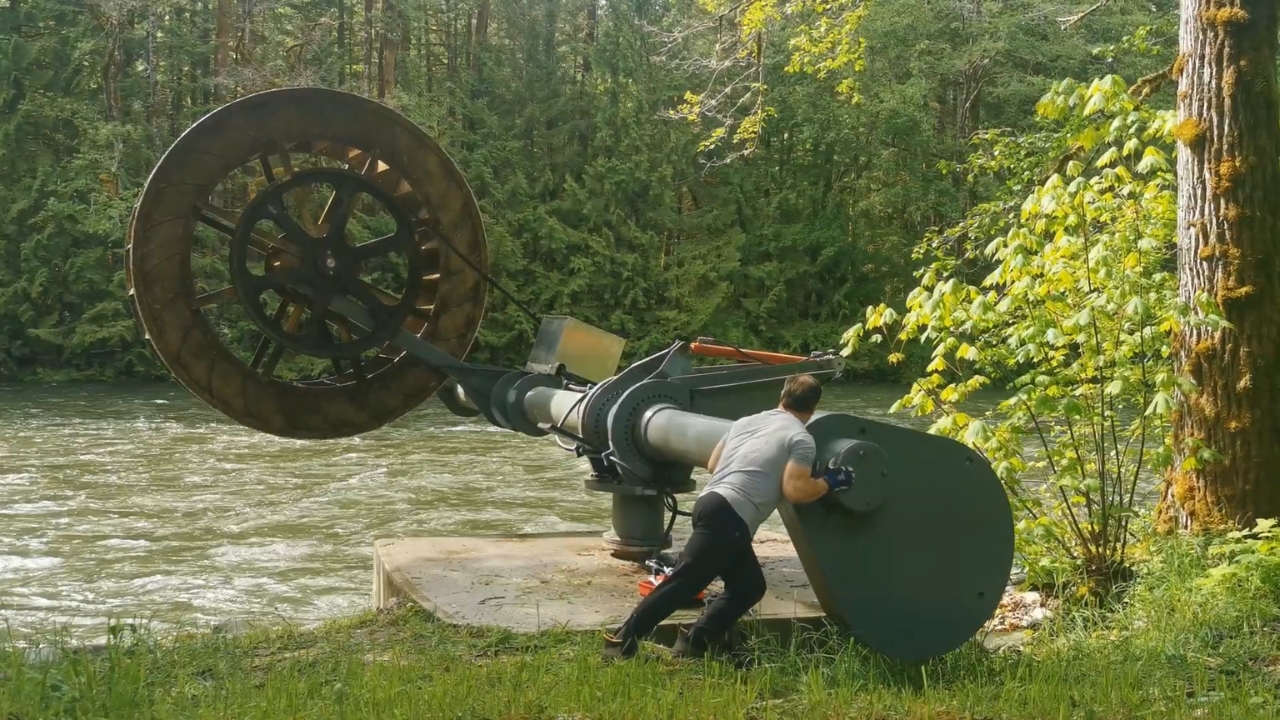
A Canadian retiree creates a hydroelectric system on a real river, generating energy continuously throughout the day and demonstrating how the power of water can supply a house with stability even in a simple structure.
-
Petrobras reaffirms its commitment to the market and ensures that it will carry out the energy transition safely to maintain national sovereignty.
-
Researchers discover a possible hydrogen deposit of up to 46 million tons beneath an ancient coal basin, and the volume could exceed half of the entire global production.


Expansion and Strategic Projects
Genneia has already secured priority dispatch transmission for several projects under development and, thus, strengthens its competitive position.
Among these projects, the Hucalito wind project, in the province of La Pampa, stands out, with an anticipated installed capacity of 176 MW.
In June, the first phase, with 90 MW, obtained access to the wholesale energy market, which represents an important advancement.
Additionally, the second phase of Hucalito, with 85.5 MW, is already under review by provincial authorities.
At the same time, the company secured 60 MW of associated dispatch capacity, after requesting works at the Puelches transformer station of 500/132 kV.
This strategy, therefore, ensures not only the expansion of generation but also the efficient integration of new renewable sources into the power grid.
This movement aligns with a scenario of profound changes in the Argentine energy sector.
Currently, renewable energies — excluding large hydroelectric plants — represent about 16% of the country’s total generation.
In 2016, however, this share was only 2%, which highlights a significant advance.
Historical Context and Overview of Clean Energy in Argentina
The recent trajectory of clean energy in Argentina reflects, above all, a joint effort of public policies and private investments.
In the past decade, the country has heavily invested in wind and solar projects, driven by programs like RenovAr, which attracted foreign capital and stimulated competition in the sector.
By June 2025, Argentina had 4.35 GW of wind capacity and 2.08 GW of solar capacity installed.
This growth, consequently, shows not only the country’s technical potential but also the economic viability of renewable energies.
They have become more competitive due to decreasing technological costs.
According to Genneia’s CFO, Carlos Palazón, the trend is clear.
With more investments in transmission and access to long-term financing, the share of renewable energy could substantially increase.
Moreover, as consumers bear the total cost of generation, the demand for cheaper and more sustainable alternative solutions grows.
Incentives and New Challenges for the Sector
Recently, the Argentine government released a list of priority transmission projects.
These are part of a regulatory reform aimed at attracting private investments and unleashing the country’s renewable potential.
These measures, thus, aim to improve electrical infrastructure, reduce bottlenecks, and prepare the grid to integrate an increasingly larger share of clean generation.
On the other hand, competing companies are also expanding their investments.
YPF Luz, for example, already operates with 652 MW of wind and solar capacity and is constructing another 368 MW.
Thus, it should exceed the 1 GW mark and reach 1.2 GW by 2030.
Similarly, Central Puerto, Argentina’s largest generator, plans to exceed 600 MW of clean capacity by 2027.
These advances, therefore, reinforce that the renewable energy market relies on a broader ecosystem of companies and investors.
Energy Storage: The Next Step
Among the most promising opportunities, energy storage stands out as an essential element.
In the first auction of its kind, the government seeks to contract 500 MW in battery systems to strengthen the electricity grid of Buenos Aires and the metropolitan area.
This measure, therefore, responds to demand peaks that, at certain times, overload the existing infrastructure.
Genneia submitted four projects for the concession area of the Edenor distributor: BESS Parque (50 MW), BESS Pilar (50 MW), BESS Maschwitz (40 MW), and BESS Bancalari (30 MW).
For Palazón, storage complements renewable generation and ensures greater stability and reliability in supply.
The bidding document provides for the evaluation of proposals by the end of August, with contract signing in September and operations starting in January 2027.
Moreover, the systems can begin operations by the end of 2028.
After this date, the contracts will no longer be valid.
Outlook for the Future of Clean Energy in Argentina
Clean energy in Argentina faces significant challenges, such as the need to expand transmission, access capital at competitive costs, and ensure stable regulatory frameworks.
However, the growth potential is evident.
After all, the combination of abundant natural resources, such as strong winds in Patagonia and high solar radiation in the northwest, places the country in a privileged position to lead the energy transition in Latin America.
Thus, Genneia plays a central role in this process.
Its investments, combined with the initiatives of companies like YPF Luz and Central Puerto, may transform the Argentine electricity matrix.
In this way, the country reduces its dependence on fossil fuels and contributes to global decarbonization goals.
The progress toward 2 GW of installed capacity does not just represent a symbolic number.
On the contrary, it translates into a strategic step toward a more sustainable future, where Argentina stands out as a protagonist of the green revolution already happening worldwide.









Seja o primeiro a reagir!