





 Portuguese
  English
  Spanish
  4 min of reading
  0 comments



In New Analysis On Sea Level Behavior, Researcher Explains That The Variations Observed In Recent Decades Are Part Of Natural Climatic Cycles And That, On The Geological Scale, The Ocean Has Been Receding Since The End Of The Last Ice Age.
The sea level, according to geologist Dr. Ricardo Felício, is not in continuous ascent as indicated by recent short-term interpretations, but rather in slow and progressive retreat for millennia. He argues that maps and paleoclimatic records show a gradual recession trend in coastal areas, resulting from the balance between glacial and interglacial periods.
In the last five thousand years, the sea would have lost part of the elevation gained after the global thaw that marked the end of the last ice age. This process, although imperceptible on human time scales, reflects the cyclical behavior of the climatic system, where the redistribution of ice and water between oceans and continents occurs in an alternating and slow manner.
Ice And Melting Cycles Explain Climatic Variations
According to the specialist, the melting of the Arctic and Antarctica is often interpreted in isolation, without considering that these regions undergo natural cycles of ice expansion and retreat.
-
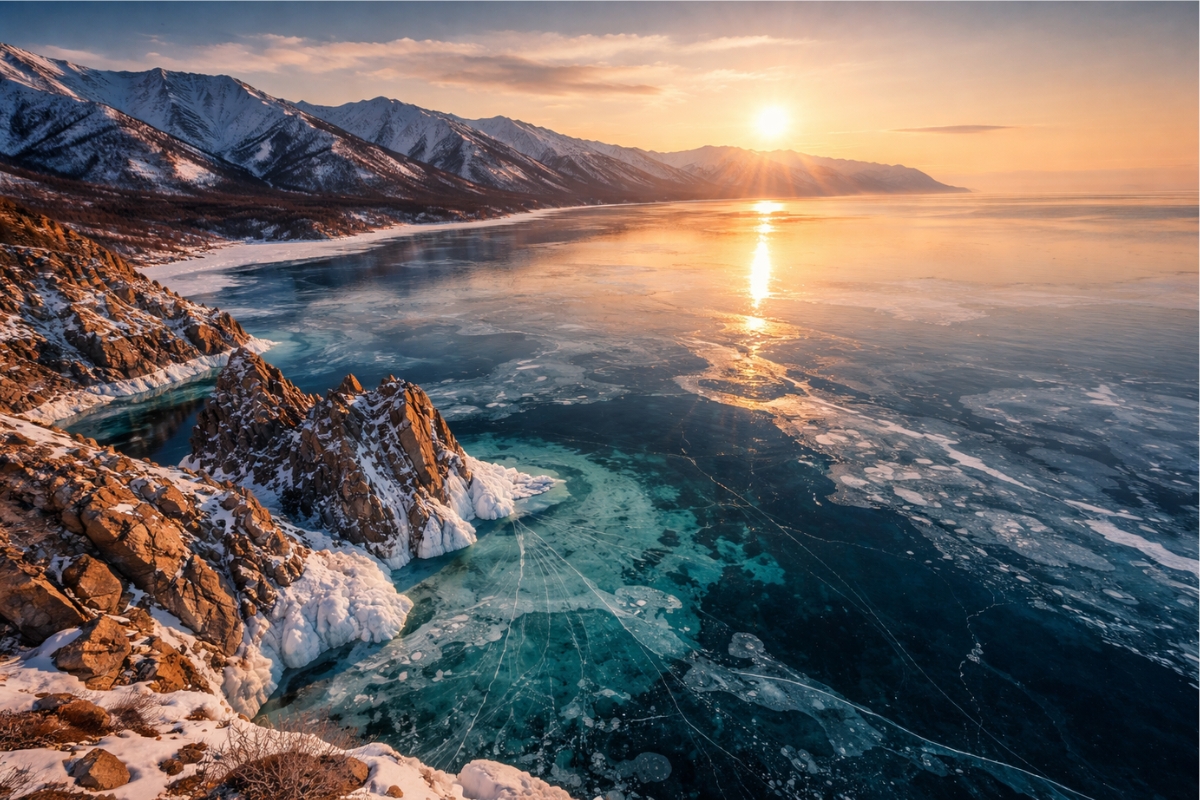
A single lake holds 20% of the planet’s non-frozen freshwater and is also the deepest and oldest on Earth.
-
How 5,000 Indian dabbawalas manage to deliver around 200,000 lunchboxes a day in Mumbai for over 130 years using bicycles, crowded trains, and a manual system that continues to operate with impressive accuracy.

-
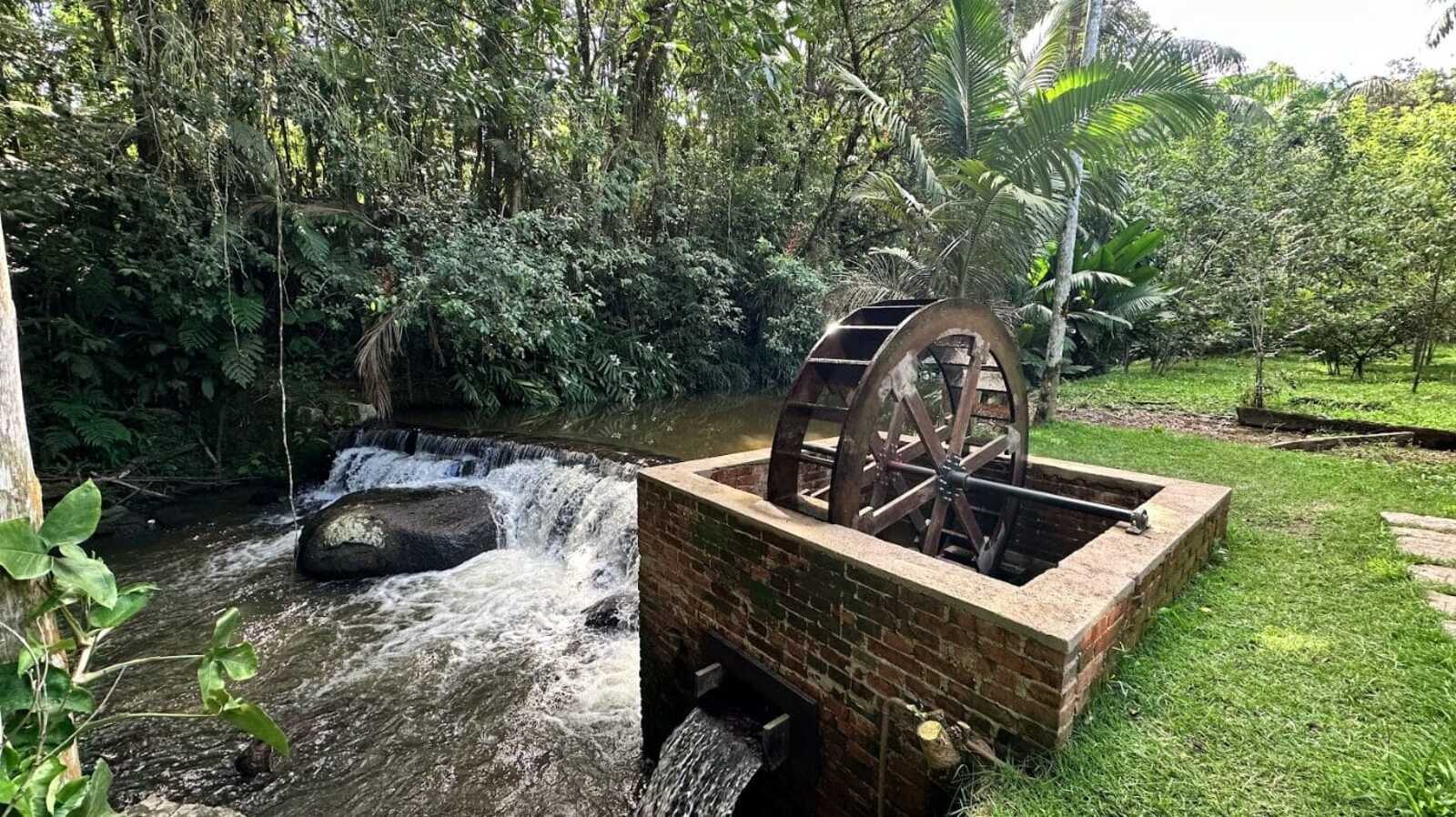
While restoring a historic mansion from 1910, a brick structure with an old turbine that generated energy from the Rio do Testo emerged, along with a hidden door and a rare floor concealed under layers of wax.
-
Italian researchers have detected what appears to be a second Sphinx buried under the sands of Egypt, and satellite scans reveal a gigantic underground megastructure hidden beneath the Giza Plateau for over 3,000 years.

The Arctic, for example, does not have a continent beneath the ice, only sea ice, which freezes and melts every year, with fluctuations that accompany seasonal and decadal variations.
He highlights that climatic maps created since the 1950s and 1960s already showed that the 0 °C isotherm in summer is located over Greenland, indicating that coastal edges have always been susceptible to melting.
The incorrect interpretation of these cycles, according to the geologist, led to the idea that recent warming represents an unprecedented anomaly, when in fact the pattern is part of recurring climatic oscillations.
The Importance Of Time Scale In Understanding The Climate
From the researcher’s perspective, the confusion between weather time and geological time distorts the understanding of what constitutes a real climate change.
He explains that glaciers react on very long scales, some with cycles of 20 to 30 years, others with secular durations, and so the current effects may be delayed responses to phenomena that began over a century ago.
He cites, for example, Mount Kilimanjaro and the Himalayas, often used as symbols of global warming, but which are undergoing local hydrological changes and not just thermal ones.
Studies have shown that the reduction of snow in these regions is linked to changes in precipitation regimes, not to accelerated melting due to temperature.
Thus, regional hydrology plays a decisive role in the maintenance or loss of ice, something that cannot be explained solely by the global temperature average.
Sea Level Recession And Geological Records
The geologist maintains that, after the great thaw that occurred at the end of the last glacial period, the sea level reached its peak and has since been gradually decreasing.
He cites formations known as “tambaquis”, ancient coastlines and marine deposits found above the current level that serve as natural markers of oceanic recession.
These records, observed in different coastal regions, indicate that the sea has already been about five meters above the current level and that the decline is a result of the reaccumulation of ice in the polar caps.
The process is slow but constant, reinforcing the thesis that the Earth is in a stage of slight cooling within a long-duration natural cycle.
Water And Ice: The Balance Of The Terrestrial System


According to the specialist, glaciers function as hydrological banks, temporary reserves of frozen water that store part of the planetary water cycle.
In colder periods, water is retained as ice; in warmer phases, it is returned to the oceans and the atmosphere.
This alternation keeps the climatic system in a constant state of adjustment, which explains why fluctuations of a few centimeters in sea level do not necessarily represent a permanent trend.
He also emphasizes that water has unique physical properties, different from other natural compounds.
When frozen, it becomes less dense and acts as a thermal insulator, helping to preserve existing ice and preventing seasonal melts from turning into permanent losses.
This characteristic reinforces the argument that the natural dynamics of water challenge linear heating models and demand broader interpretations of climatic behavior.
The analysis presented argues that the sea level is not rising continuously but adjusting within geological cycles.
The idea of accelerated increase, according to the geologist, ignores the time scale of natural phenomena and simplifies a process that involves complex interactions between ice, atmosphere, oceans, and continental hydrology.
Understanding the past is essential to interpreting the present: the variations observed today may be merely reflections of trends that began thousands of years ago.
Do you believe that the sea level is indeed receding, as these geological evidences suggest, or do you think that recent global warming data indicate otherwise? Leave your opinion in the comments—we want to hear from those closely following these transformations.







Seja o primeiro a reagir!