





 Portuguese
  English
  Spanish
  3 min of reading
  0 comments



Gerdau Is Assessing Whether to Strengthen Its American Operations or Protect Brazil from Chinese Competition.
According to InvestNews BR, Gerdau is facing a strategic dilemma that could redefine its future: strengthen its operations in the United States, benefiting from Donald Trump’s tariffs against imported steel, or protect the Brazilian market, increasingly pressured by the advancing subsidized Chinese steel.
The choice is crucial because the U.S. already accounts for about 40% of the company’s revenue, while in Brazil, the steelmaker is facing declining sales and strong international competition.
The decision rests with the board of directors, which includes representatives of the fifth generation of the controlling family.
-
A new Brazilian shopping center worth R$ 400 million will be built in an area equivalent to more than 4 football fields, featuring 90 stores, 5 cinemas, a supermarket, a college, and parking for 1,700 cars, potentially generating 3,000 jobs.

-
Larger than entire cities in Brazil: BYD is building a 4.6 km² complex in Bahia with a capacity for 600,000 vehicles per year, but the discovery of 163 workers in conditions analogous to slavery has shaken the entire project.

-
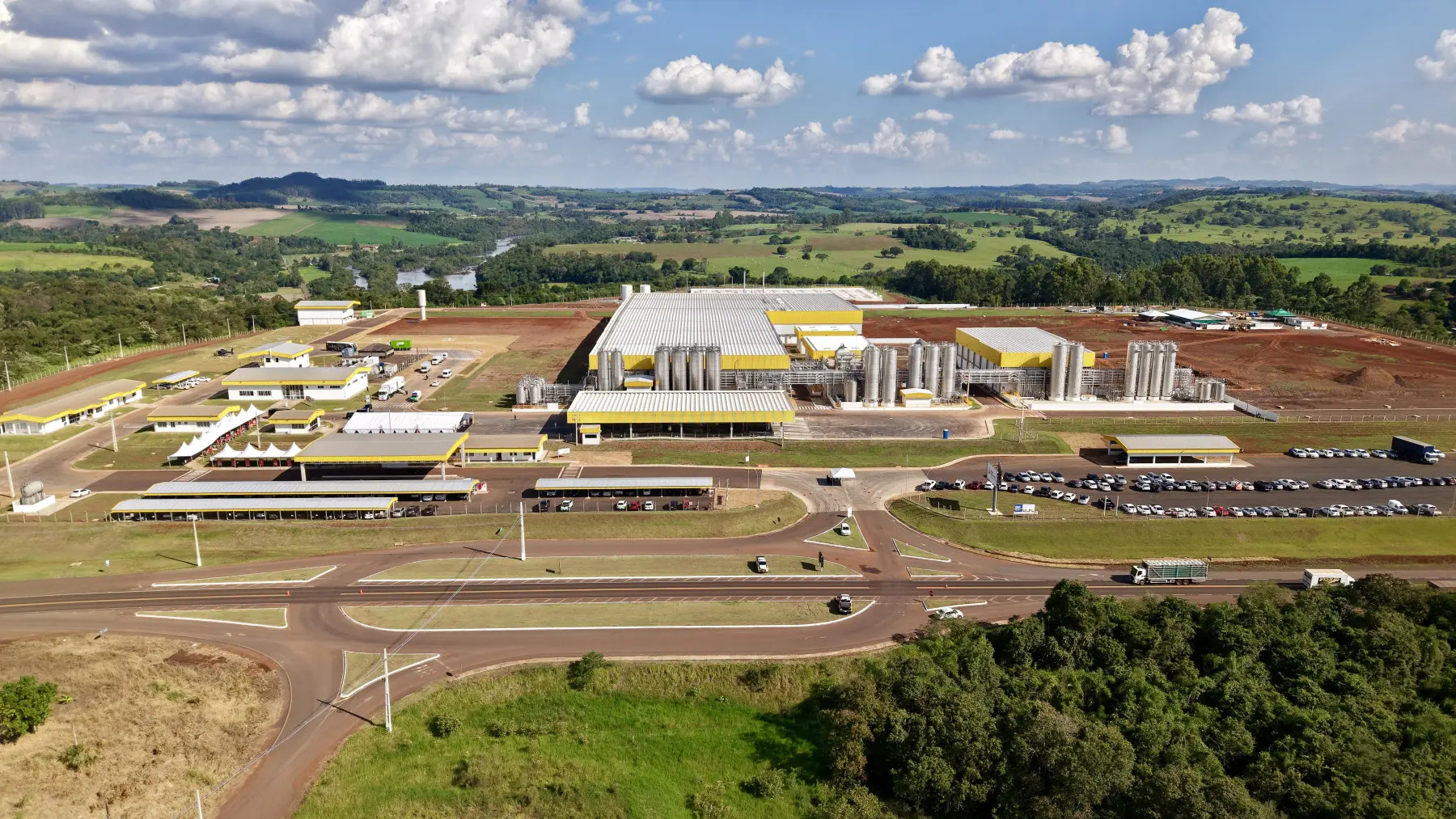
With an investment of R$ 612 million, a capacity to process 1.2 million liters of milk per day, Piracanjuba inaugurates a mega cheese factory that increases national production, reduces dependence on imports, and repositions Brazil on the global dairy map.
-
Brazilian city gains industrial hub for 85 companies that is equivalent to 55 football fields.


The Strength of Gerdau in the United States
In recent years, Gerdau has consolidated its presence in North America, where it operates as a local producer: everything it manufactures in the country is sold domestically.
This branch gained momentum with the Biden government’s infrastructure package and is expected to benefit even more from the 50% tariff imposed by Donald Trump on imported steel.
For analysts, this position is strategic because it creates extra demand for the company’s local production.
With every move by Trump in defense of the American industry, investors are already anticipating gains for the Brazilian steelmaker operating within the U.S. market.
The Pressure of Chinese Steel in Brazil
In Brazil, the scenario is much more challenging. Chinese steel, subsidized by the Beijing government, enters the country at lower prices and compresses the profit margins of national steelmakers.
Gerdau has been one of the most active voices calling for measures from the Brazilian government against this practice, arguing that unfair competition weakens the local industry.
This external pressure has led the company to seek greater efficiency and even sell assets in the past to preserve profitability.
However, the continuation of this scenario could jeopardize its historical leadership position in the domestic market.
Family Tradition and Strategic Decisions
With 124 years of history, Gerdau is the only Brazilian company among the 50 largest steelmakers in the world. The company is marked by a strong family presence in its leadership, but since 2018 it has been led by Gustavo Werneck, the first CEO outside the family.
Still, three representatives of the fifth generation remain on the board and directly influence strategic choices.
The decision between expanding in the United States or strengthening defense in Brazil involves not only market analysis but also a vision for legacy.
The dilemma synthesizes the need to balance tradition, global presence, and the sustainability of the sector in the country of origin.
Investments and the Future of the Company


According to InvestNews BR, Gerdau invests about R$ 6 billion per year, half for maintenance and half in strategic projects.
In Brazil, the highlight is the expansion of the iron ore mine in Minas Gerais, which is expected to make the company self-sufficient starting in 2026.
At the same time, the company is betting on new businesses, such as modular construction and renewable energy, through Gerdau Next.
The challenge is to define where to concentrate resources in a scenario of trade war and global competition for competitiveness.
What is at stake is not only the short-term result but the ability to remain a global leader without losing relevance in Brazil.
The situation of Gerdau exposes the crossroads of large Brazilian industries: seeking opportunities in more favorable external markets or resisting the pressure of Chinese steel in the domestic market.
Each path has advantages and risks that could redefine the company’s century-old strategy.
And you, do you think Gerdau should prioritize strengthening in the U.S. or protecting the Brazilian market against Chinese steel?
Leave your opinion in the comments and join the discussion.




-

Uma pessoa reagiu a isso.