





 Portuguese
  English
  Spanish
  4 min of reading
  0 comments


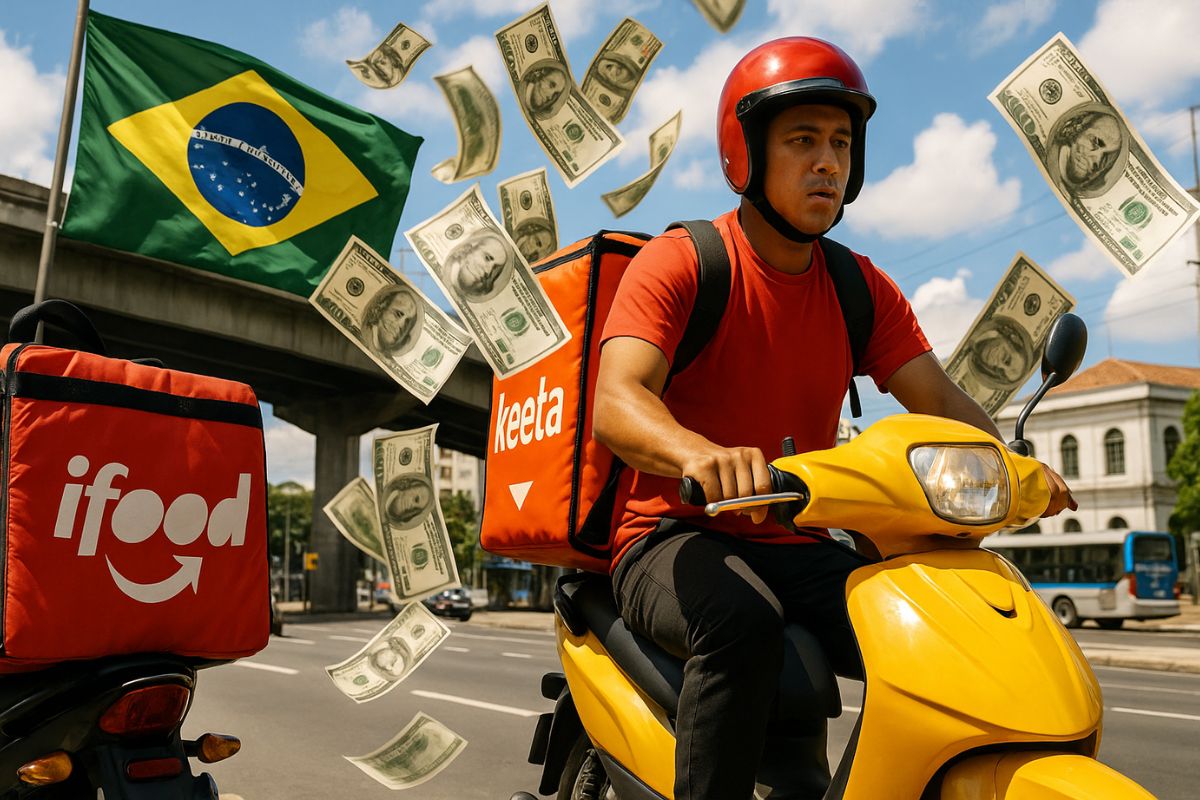
Chinese Giant Announces Lower Fees, Launches in Q4 2025, and Aims for 120,000 Deliverers by 2026.
The Chinese Giant Keeta, a subsidiary of Meituan, is preparing to enter the Brazilian meal delivery market with a US$ 1 billion plan over five years, a promise of lower fees for restaurants, and an ambitious goal: to register 120,000 deliverers by 2026. This move aims to break the hegemony of iFood, which holds over 80% of the market. According to the People’s Daily, the strategy combines technology, capital, and an understanding of the current regulatory moment in the country.
Scheduled for launch in Q4 2025, the Chinese Giant wants to debut in a smaller city and then accelerate expansion to São Paulo and other capitals.
According to the People’s Daily, the company aims to be present in the 15 largest metropolitan regions by June 2026, taking advantage of the limitation on exclusivity contracts set by Cade to promote competition.
-
Brazilian city bets on the business environment to generate jobs and attract investments in the energy sector — secretary reveals strategy at Macaé Energy 2026.

-
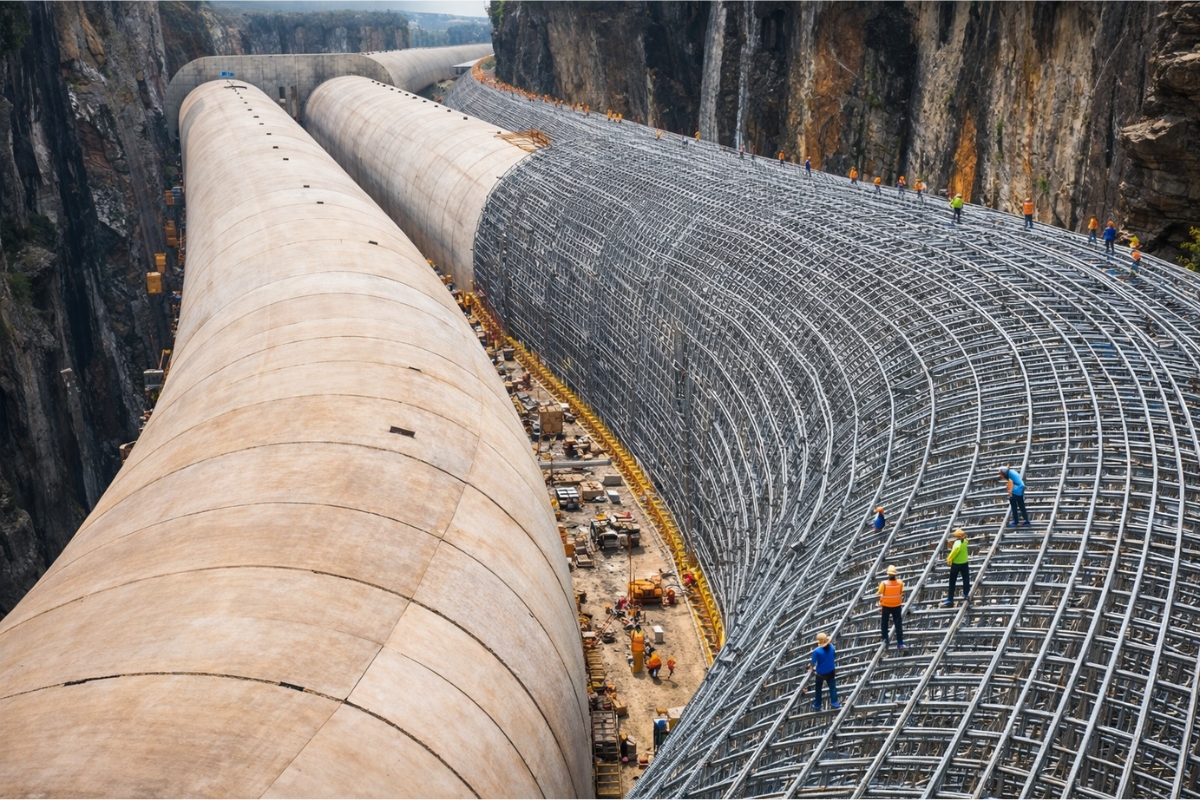
50 viaducts, 4 tunnels, 28 bridges, and 40 kilometers of bike paths: BR-262 in Espírito Santo will receive 8.6 billion reais for the largest engineering project in the state’s history, inspired by the Immigrant Highway in São Paulo.

-
Brazil produces too much clean energy and doesn’t know what to do with it: over 20% of solar and wind capacity was wasted in 2025 while investors flee and 509 renewable generation projects were abandoned in the last year.

-
Piauí will produce a new fuel that replaces diesel without needing to change anything in the truck’s engine and reduces pollutant gas emissions by half: truck drivers from all over the Northeast are already celebrating the news that will arrive later this decade.


Why Brazil Is on the Radar
Brazil is the 5th largest delivery market in the world, with approximately US$ 12 billion in annual turnover and nearly 20% annual growth.
For Keeta, this size combined with regulatory advancement creates the ideal window for a new scale competitor.
“Large market, with rising consumption habits and room for technological efficiency” — this sums up the guiding investment strategy.
The Chinese Giant aims to increase the average frequency of orders from Brazilians (currently about 3 per month) with more predictable logistics and operational incentives, targeting a level similar to that observed in its international markets.
How Keeta Plans to Compete
Lower fees than iFood, which currently range between 25% and 30%, are the first pillar. Keeta talks about being “a few percentage points below”, without adopting “zero commission.”
The idea is to gain adherence through price and predictability, not by artificial subsidy.
Another differential is the guarantee of compensation in case of delays, a policy already tested in other countries where the group operates.
The Chinese Giant plans to use smart routing and regional support centers to reduce downtime and improve the experience for restaurants, deliverers, and consumers. “Commitment to deadlines” is the message.
Strategy for Deliverers and Restaurants
The goal of 120,000 deliverers by 2026 focuses initial efforts in São Paulo, with activation and retention programs based on more efficient routes, predictable hourly earnings, and local support.
The Chinese Giant seeks to avoid the high turnover typical of the sector by offering training and productivity tools.
For restaurants, the proposal is to give up exclusivity and simplify integration. Quick onboarding, management dashboard with real-time data, and technical support are part of the package.
The Chinese Giant bets that “charging less and serving better” is the way to unlock local menus that currently avoid marketplaces due to costs.
Technology, Scale, and Promises of Service Level
Coming from an ecosystem that processes peaks of up to 120 million orders/day, Keeta wants to reproduce in Brazil the logic of “algorithm + density”: the more orders per zone, the greater the forecasting accuracy and lower the cost per delivery.
The Chinese Giant claims that it will bring fleet telematics, dynamic dispatch, and demand forecasting by neighborhood, reducing cancellations.
Innovations such as drones are on the radar, depending on specific regulation. For now, the priority is an optimized ground network, with SLA for delivery and automatic compensation when deadlines are exceeded. “Reliability before futurism” summarizes phase 1.
Regulation and Competitive Environment
The limitation of exclusivities by Cade has opened space for new entrants. The Chinese Giant intends to compete on merit, avoiding paying to block restaurants in other apps — a practice that, besides being economically implausible, contradicts rules in some of the markets where the group already operates.
iFood continues to have critical mass and a strong brand, but the sector should repricing fees and services in light of competition with capital and technology.
The competition is expected to translate into UX improvements, more stable deadlines, and management tools for partners and fewer contractual ties.
Risks, Limits, and Execution
Entering a pilot city before São Paulo reduces operational risk, but the acid test is scale: maintaining high NPS, competitive delivery times, and positive unit economics while scaling.
The Chinese Giant relies on order density, a healthy network of deliverers, and restaurant adherence to sustain the plan without burning cash excessively.
Another challenge is educating the consumer: “paying less with more predictability” needs to become a tangible perception.
Keeta bets on clear communication about deadlines and automatic compensation, along with calibrated promotions to avoid conditioning users to discounts.
The arrival of the Chinese Giant Keeta promises to repricing fees, elevate service levels, and open the game in a market with consolidated leadership.
If execution delivers on its promises, restaurants could pay less, deliverers gain predictability, and consumers receive more timely orders.
For you, what should be this new competitor’s priority to gain traction: lower fees for restaurants, better compensation and routes for deliverers, or guaranteed delivery times for the customer? Share your insights in the comments, especially if you are in the industry.








Seja o primeiro a reagir!