





 English
  Francês
  Alemão
  Italiano
  Japonês
  Norueguês
  Portuguese
  Spanish
  5 min of reading
  6 comments


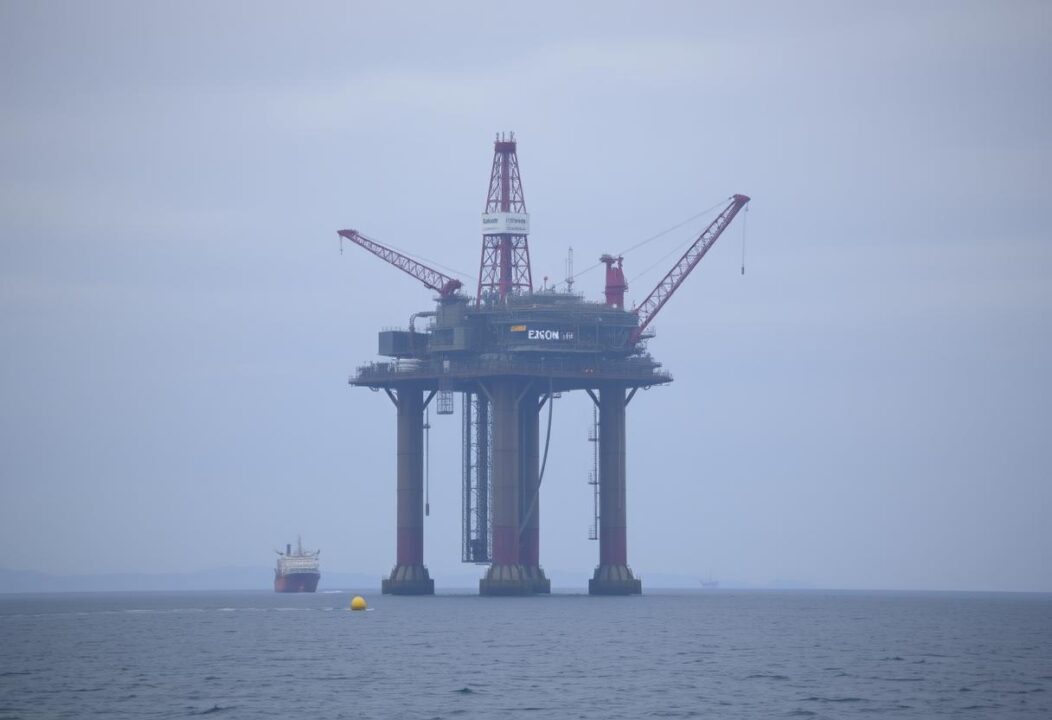

Imagine being on the verge of a discovery that could change the fate of an entire country, yet facing deep doubts and almost giving up. This is the story of a geoscientist from Exxon Mobil who, while observing the vast Atlantic off the coast of Guyana, saw potential where others only saw risks.
What he didn’t know, however, was that this gamble almost didn’t happen, and what today is one of the largest oil discoveries of the last generation could have remained at the bottom of the ocean, forgotten and untouched.
Exxon Mobil, the oil giant, was just a step away from giving up on the exploration that ultimately revealed a reservoir of more than 11 billion barrels of oil in Guyana.
This discovery not only transformed Exxon but also changed the economic landscape of Guyana, making it one of the largest oil producers per capita in the world. The field, named Liza, is now one of the company’s most valuable jewels, but its exploration faced resistance and doubts within the company itself.
-
Brazilian giant expands borders in the Southeast: Petrobras confirms new oil discovery in ultra-deep waters in the pre-salt of the Campos Basin.

-
Alert in the global energy market: Severe tropical cyclone hits the coast and disrupts gas production at major plants in Australia, threatening global supply.

-
Petrobras finds high-quality oil in the pre-salt at 113 km from RJ and reignites expectations about strategic reserves in the Campos Basin.

-
Chinese giant worth nearly R$ 4 billion that manufactures cables for electric cars, solar energy, and robotics wants to open a factory in SC.


The Risky Bet of a Geoscientist
In 2013, Scott Dyksterhuis, a young geoscientist at Exxon Mobil, firmly believed in the possibility of a vast oil reservoir hidden nearly 5 kilometers below the seabed off the coast of Guyana.
Despite Dyksterhuis’s certainty, Exxon had drilled more than 40 dry wells in the region, and the unfavorable history made the project a hugely risky bet.
The drilling of the Liza well, named after the geological formation in the area, would cost around US$ 175 million and had only a 20% chance of success, according to the geoscientist’s own estimates.
If confirmed, the discovery could prove a theory suggesting that Venezuela’s oil-rich geology extended to the northern coast of South America. However, many within Exxon and in the oil sector in general were not willing to take that risk.
From Doubt to Success: Guyana Transforms
The scenario drastically changed with the discovery of the Liza formation, which proved to be an invaluable treasure. Exxon Mobil not only validated geological theories but also transformed Guyana into one of the world’s leading oil producers.
By 2027, the country is expected to surpass Venezuela and become the second largest oil producer in South America, behind only Brazil. The discovery of oil in Guyana elevated the country, previously one of the poorest in the region, to the status of energy giant, with per capita production projections higher than those of Saudi Arabia and Kuwait.
Today, Guyana is the cornerstone of Exxon’s post-pandemic resurgence. With a 45% stake in the Liza field, where production costs are below US$ 35 per barrel, Exxon has managed to turn the discovery into one of the most profitable projects outside the Organization of the Petroleum Exporting Countries (OPEC).
Even with the current oil price around US$ 80 per barrel, the Liza field remains profitable, ensuring profits for the company even amidst uncertainties about the future of fossil fuel demand.
The Dilemma of Energy Transition and Environmental Criticism
The story of the oil discovery in Guyana reveals challenges for the global energy transition. While many in the sector expected renewable energies, such as solar and wind, to gradually replace oil, Exxon bet on the continuation of fossil fuels, resulting in significant financial returns. Since production began in Guyana in 2019, Exxon’s shares have more than doubled, registering the highest return among the major global oil companies.
On the other hand, the discovery in Guyana has also brought significant criticism, especially from environmentalists concerned about the environmental impact. Melinda Janki, a Guyanese lawyer specializing in environmental protection, harshly criticized Exxon, accusing the company of polluting the ocean and atmosphere without facing the consequences of the damage caused. According to her, “Exxon is polluting the ocean and the atmosphere without having to pay for the damages.” Exxon, for its part, claims to invest in technologies to protect the environment and that it meets or exceeds regulatory requirements.
Competitors Who Gave Up and Exxon’s Lessons
As Exxon reaped the rewards of its persistence, other major oil companies that had given up on the region were left regretting. Companies like Chevron and Shell, which initially had stakes in Guyana’s exploration blocks, chose to abandon the venture. Chevron, for example, recently paid US$ 53 billion for Hess, one of Exxon’s partners in Guyana, in an attempt to make up for lost time.
The story of Guyana, however, goes beyond a simple successful bet. It demonstrates how Exxon, in addition to being an oil giant, also stood out as a financial engineering company. By protecting its bets, Exxon minimized risks and maximized profits, transforming a high-risk project into one of its greatest assets.
The Backstory of the Decision: How They Almost Gave Up
In 2013, the drilling of the Liza well was about to be canceled. The leading geoscientists at Exxon concluded that the risks didn’t justify the investment, and the company could lose the Stabroek block concession if exploration didn’t begin.
That’s when Rudy Dismuke, a business consultant, proposed a bold solution: drill for free. A small group of lower and mid-level Exxon employees found a way to make the project feasible, cutting costs to the bone and ensuring the continuity of exploration.
The concession obtained by Exxon also played a crucial role in this story. Thanks to Rod Limbert’s work, the company was able to negotiate a highly favorable agreement with the government of Guyana, guaranteeing 50% of the profit after deducting costs, along with a royalty of only 1%. Although Guyana has been criticized for accepting such a generous contract for Exxon, the deal was vital for the country’s economy, as well as strengthening Guyana’s position in territorial disputes with Suriname and Venezuela.
An Exxon Bet That Transformed a Country
The story of the oil discovery in Guyana is a lesson on how calculated risks can lead to extraordinary rewards. The Liza field, which was almost abandoned by Exxon, is now one of the cornerstones of both Guyana’s and Exxon’s economies. This journey shows that in such an uncertain sector as oil, persistence and courage can be the keys to turning a doubtful project into a monumental success.
Will Exxon’s bet on Guyana and its resistance to a rapid energy transition prove visionary or disastrous in the long run?





Excelente ideia tenho um.pinto estratégico asfalto na saída da cidade de Araçuai MG asfalto quem vai e vem minha área enorme pega os dois asfaltos! Ótima ideia para mim interessante
Ponto estratégico apenas consertando a palavra
Menos mal?
É bom para o mundo livre e democrático?
Assim a Rússia. E a Venezuela.
E outros países igual há Rússia?
Ficam mais calmos e menos arrugantes?
Creio que uma reserva de petróleo desse tamanho seria tentadora pra qualquer país ou empresa em outra época ou nesta, só que no planeta nossa casa chamada terra hoje é muito complicado pois se investirmos contra riscos de poluição são muitos resumindo o ar, o mar serão poluídos né verdade aí vocês dizem; esse abestado não sabe da grana a montanha que vamos conseguir, mas o planeta terra já está gemendo agonizando ou eu tô errado? Hoje as riquezas fósseis não é uma boa escolha então pensem bem investidores o negócio é muito sério! Pensem q ali na Guiana bacia amazônica qualquer acidente com petróleo a conta é muito cara. Deus nos ajude a ter um pouco de amor pelo planeta.
Obrigada a todos que leram esta mensagem!
Amigo o mundo está a cambiare há volucidade da luz ?
Imos todos habitar para o planeta Marte .
Já descobriram que tem água.
Mas é preciso ter mt.quidado?
Portugal se vai para lá!
Os funcionários públicos metem o povo português a trabalhar para eles?
Portugal está endividado por causa dos funcionários públicos?
Incrível?
Portugal continua a pedir dinheiro emprestado para sustentar mordomias acima das possibilidades do país para sustentar funcionários públicos.