





 Portuguese
  English
  Spanish
  4 min of reading
  25 comments


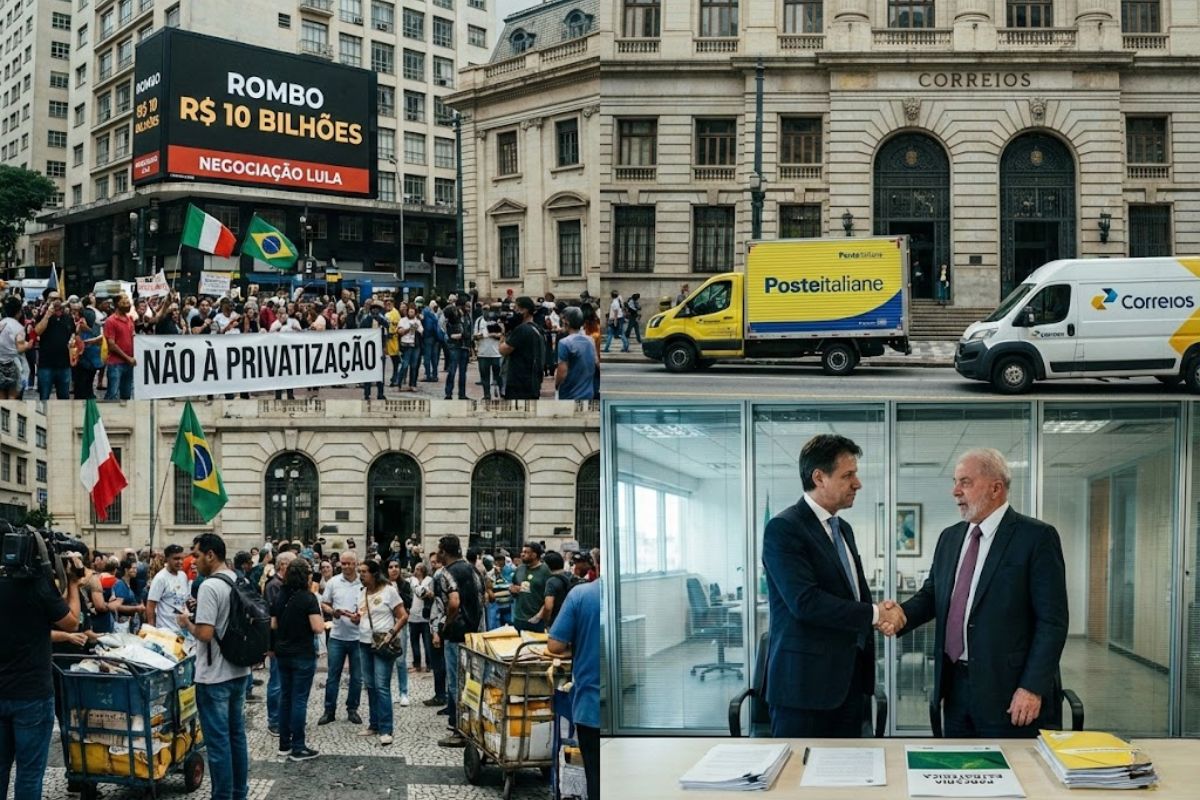


With Projected Loss of Up to R$ 10 Billion in 2025, the Post Office Is Negotiating with Groups from Italy After Lula’s Meeting in Rome in October 2024, Seeking Strategic Partnership to Modernize the State-Owned Company and Preserve Public Control of the Postal Service Throughout Brazil Without Total Sale
The Post Office, created in 1663 and considered the oldest company in operation in Brazil, is going through one of the most delicate phases in its history. In 2023, the state-owned company registered a loss of R$ 633 million, which jumped to R$ 2.6 billion in 2024, with losses already around R$ 6 billion between January and September 2025.
With a projected deficit of up to R$ 10 billion in 2025, Lula admitted in Brasília that Italian companies, including the giant Poste Italiane, have shown interest in negotiating a partnership with the state-owned company after a meeting in Rome in October 2024, ruled out however the privatization of the postal service.
Post Office Accumulates Billion-Dollar Losses in Three Years
Recent numbers made it clear the extent of the crisis. Between 2023 and 2025, the losses of the Post Office went from hundreds of millions to billions of reais.
-
Brazilian city bets on the business environment to generate jobs and attract investments in the energy sector — secretary reveals strategy at Macaé Energy 2026.

-
50 viaducts, 4 tunnels, 28 bridges, and 40 kilometers of bike paths: BR-262 in Espírito Santo will receive 8.6 billion reais for the largest engineering project in the state’s history, inspired by the Immigrant Highway in São Paulo.

-
Brazil produces too much clean energy and doesn’t know what to do with it: over 20% of solar and wind capacity was wasted in 2025 while investors flee and 509 renewable generation projects were abandoned in the last year.

-
Piauí will produce a new fuel that replaces diesel without needing to change anything in the truck’s engine and reduces pollutant gas emissions by half: truck drivers from all over the Northeast are already celebrating the news that will arrive later this decade.


In 2023, the balance was negative by R$ 633 million. In the following year, 2024, the deficit rose to R$ 2.6 billion.
The situation worsened even further in 2025. Only between January and September, the losses already totaled about R$ 6 billion, with internal projections indicating that the deficit could reach up to R$ 10 billion by the end of the year.
Maintaining a strategic state-owned company at this level of deficit directly pressures the public budget and the quality of the service provided to the population.
Lula publicly acknowledged this problem when commenting on the financial situation of the company. According to him, it is not sustainable to allow negative numbers to accumulate without a concrete response from the government.
The guidance is to seek structural solutions to stop the sequence of losses and ensure that the Post Office continues to operate throughout the national territory.
Italian Giant Enters the Radar After Lula’s Trip to Rome
Foreign interest in the Post Office gained strength after an official trip by Lula to Rome in October 2024.
On that occasion, the president met with executives from Poste Italiane, a mixed-capital company responsible for postal services in Italy and cited as a case of successful recovery after a thorough restructuring process.
According to Lula, Italian groups expressed willingness to discuss opportunities in Brazil.
There has not yet been an announcement of a formal proposal, but the Planalto confirms that the door is open to discuss collaboration formats.
The entry of an international partner is being evaluated as a way to bring know-how, technology, and investment capacity without giving up direct public control over the postal service.
Within the government, the view is that models like that of Poste Italiane show it is possible to combine private capital and professional management while preserving the state’s strategic interests.
The Italian experience, which today presents positive results, serves as a reference to think of solutions for the Brazilian crisis.
Partnership Without Privatization: What Is on the Table
Although admitting talks with foreigners, Lula has reiterated that there is no plan to privatize the Post Office.
The official line is clear: discuss partnership, yes; sell the oldest state-owned company in the country, no. The idea under consideration involves forms of cooperation that may include investments, modernization of logistics systems, digitization of services, and improvement of corporate governance.
Any agreements, according to the government’s discourse, would be framed as strategic partnerships. This means preserving state control and the public nature of the service, especially in regions where the presence of the Post Office is virtually the only way to access letters, packages, and basic logistics services.
The concern is to avoid that the pursuit of financial efficiency leaves remote areas and low-income populations underserved.
At the same time, there is pressure for the company to stop being synonymous with permanent deficits. The assessment within the government is that modernization involves attracting technology, increasing revenues with new services, and, if necessary, redesigning the structure of the state-owned company, always with a focus on transparency and financial sustainability.
Why the Post Office Remains Strategic for the Country
For over three centuries, the Post Office has helped integrate Brazilian territory. Even with the expansion of private deliveries, the state-owned company is still a central piece in national logistics, especially in small towns and isolated regions.
In many municipalities, the company’s agency is the main physical link to the rest of the country.
This capillary presence explains why the Palácio do Planalto avoids talking about total privatization.
The mission of the Post Office goes beyond strictly commercial logic, involving commitments to universalize postal service.
In practice, this means operating in places that would not be profitable for private enterprise but are essential for Brazil’s social and economic cohesion.
Therefore, any partnership with foreign groups, such as the Italian giant that has already shown interest, needs to balance two objectives: recover the company’s financial health and maintain the public nature of a service considered historical and essential.
In your view, what do you consider more important in this debate: saving the Post Office with foreign help or maintaining as much autonomy as possible even if recovery is slower?










Qualquer coisa que o PT toca, apodresse se der tempo deles não estragarem.
Os Correios registraram um lucro recorde de R$ 3,7 bilhões em 2021 (o melhor resultado em 22 anos). Mas em 2022 teve prejuízo de R$ 800 Milhões.
Esse desempenho financeiro positivo foi impulsionado principalmente por dois fatores:
Aumento do E-commerce: A pandemia de COVID-19, com suas políticas de isolamento social, resultou em um crescimento exponencial das compras online no Brasil. Isso gerou um volume muito maior de encomendas e entregas para os Correios, aumentando significativamente sua receita.
Remessa Conforme
Outro fator que impactou diretamente a situação econômico-financeira da estatal foram as mudanças implementadas pelo programa “Remessa Conforme”, criado pelo Ministério da Fazenda em 2023.
O governo passou a cobrar imposto de importação de 20% sobre compras internacionais de até US$ 50, que até então estavam isentas para empresas. A medida ficou conhecida como “taxa das blusinhas”.
Com a instituição do programa, a legislação brasileira passou a permitir que empresas de transportes façam o frete pelo Brasil de mercadorias internacionais, deixando de ser obrigatória a distribuição das encomendas junto aos Correios, como era feito até então.
Obs: essa taxa só não foi aprovada pelo congresso “inimigo do povo” em 2022 porque on **** **** **** tentaria a reeleição.
O Partido dos Trabalhadores é assim, pega o país com as contas públicas ajeitadas e com as estatais lucrando e com as contas no azul e muito dinheiro no caixa e começa a estuprar tudo! Foi assim em 2003 quando o socialista, disfarçado de capitalista, Fernando Henrique, entregou o país com superávit para Lula estragar tudo! Em 2008 o Brasil estava “decolando” porque aproveitou o Boomm das comodities, ofuscando a crise e os escândalos de corrupção do Mensalão, fazendo o povo acreditar que o país estava uma maravilha. Em 2011 entregou o país com imagem fictícia de prosperidade para a Dilma assumir, pois a sujeira toda ele jogou para debaixo do tapete. No governo Dilma não teve jeito! Ela não soube disfarçar a sujeira toda de seu antecessor e escancarou tudo! Aí veio o Petrolão e vários outros escândalos de corrupção à tona, continuados dos outros escândalos de corrupção do Lula. E hoje em 2025, estamos mais uma vez vivenciando a incompetência e corrupção do PT no poder.