





 Portuguese
  English
  Spanish
  5 min of reading
  0 comments


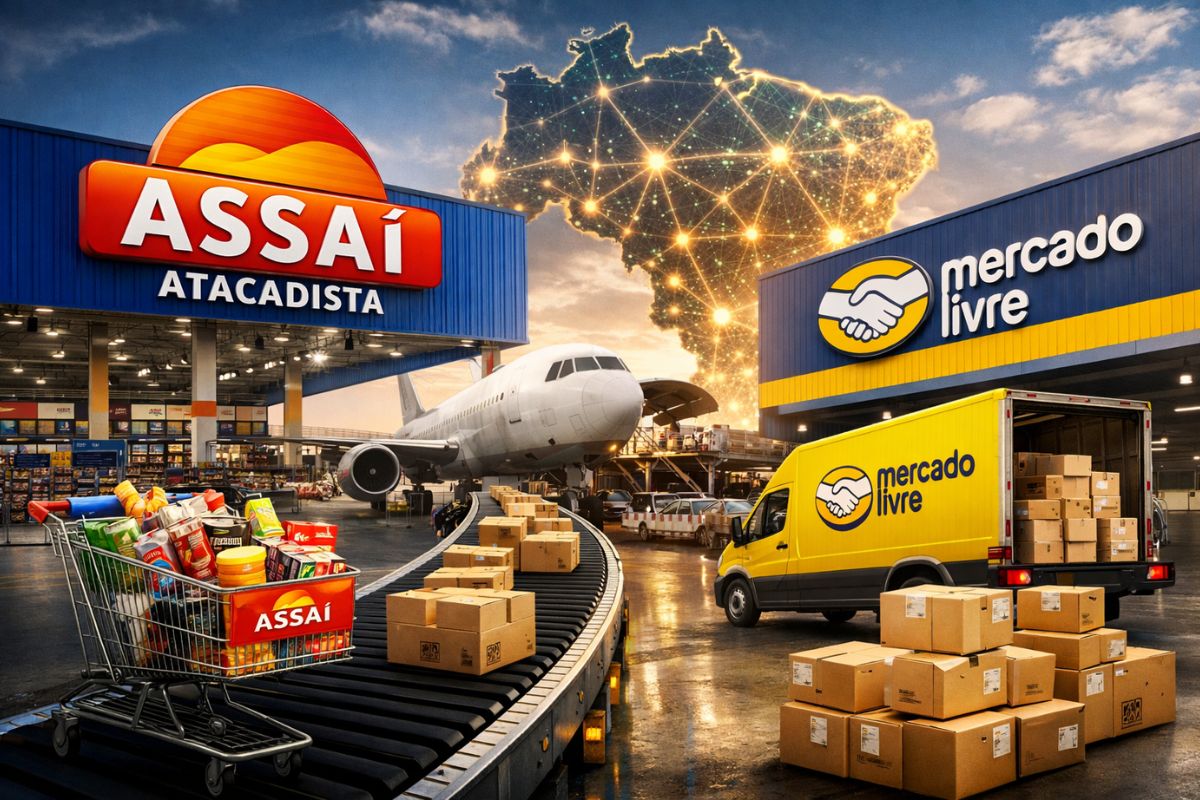
In a Move That Combines Commercial Expansion, Logistical Efficiency, and Process Digitization, Retail Gains a New Arrangement: Assaí Starts Selling on Mercado Livre Through the Fulfillment Model, Debuts in the Southeast in the Second Quarter of 2026, and Connects 312 Stores to Mercado Livre Business for Daily Corporate Purchases.
The retail sector in Brazil enters a phase of deeper integration between physical store, marketplace, and logistical operation with the unprecedented partnership between Assaí and Mercado Livre. Starting in the second quarter of 2026, the cash-and-carry will begin sales on the platform, opening a new channel to reach consumers in a broader digital journey.
In addition to the showcase for end customers, the agreement includes a less visible but strategic front: the 312 Assaí stores will begin using Mercado Livre Business to purchase supplies and operational inputs. In practice, the alliance combines commercial expansion, process reorganization, and a national scale design with a focus on efficiency.
What Changes in Retail Strategy with Assaí’s Entry into the Marketplace
The partnership marks Assaí’s debut in marketplaces within the Assaí Digital strategy, which repositions its role in retail beyond the traditional flow of physical stores.
-
The government requests the Federal Revenue Service for a new system to automate the income tax declaration, reducing errors, time, and bureaucracy for millions of Brazilians.

-
Pix in installments, international Pix, and contactless payment without internet: the Central Bank revealed the new features coming to the tool that is already used by almost every adult in Brazil.

-
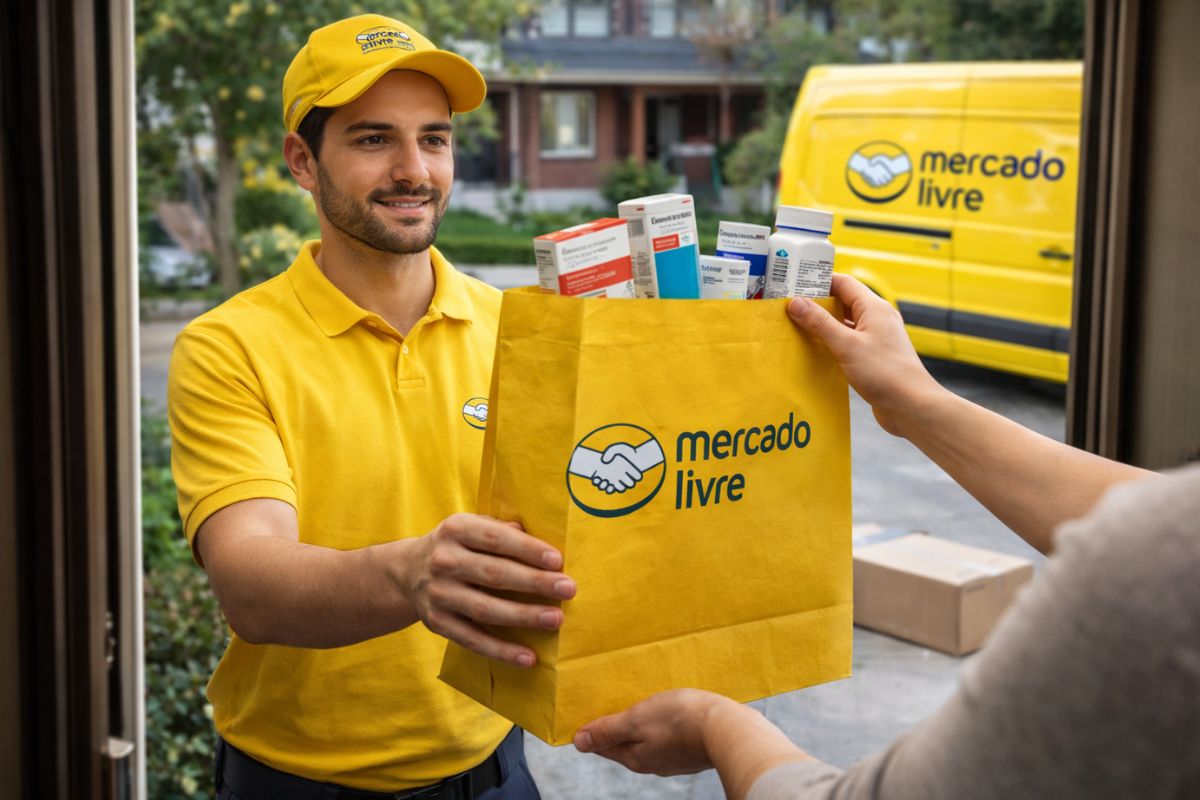
Mercado Livre has just started selling medications with delivery in up to three hours to your door, and this move could completely change the way Brazilians buy medicines on a daily basis.
-
In Dubai, rising tensions from the war in the Middle East are causing super-rich individuals to leave the Gulf and direct their fortunes to a new financial refuge in Asia.


Instead of concentrating growth solely on expanding sales points, the company adds a digital layer that can broaden geographic reach without necessarily depending, at the same pace, on opening new units.
This move occurs alongside a market reading: the e-commerce of Food and Beverages still has low penetration in the country, even though it is a category of recurring purchases.
By entering this space with a structured operation, Assaí aims to occupy a growth window in a segment where purchase frequency, item availability, and delivery time tend to define the customer experience.
Fulfillment in Practice: Who Does What and Why It Matters
The chosen model does not follow the last mile logic based on picking in physical stores. In the announced operation, Assaí sends products to Mercado Livre’s distribution centers, and the platform takes on storage, sorting, preparation, and delivery to the end consumer.
This shifts the operational core to a specialized logistical structure, with the potential to reduce friction in daily execution.
From the perspective of retail and operation, the division of responsibilities tends to simplify the wholesaler’s entry into the marketplace. Assaí focuses energy on portfolio, supply, and commercial strategy, while Mercado Livre executes the final step of the logistical journey.
The expected outcome is less friction to scale, especially at an initial stage that requires fine-tuning between demand, availability, and time.
Initial Product Mix: Recurrence, Ticket, and Economic Discipline
The entry curation prioritizes non-perishable categories with good purchase recurrence and higher average ticket, such as dry grocery, cleaning supplies, beverages, and selected non-food items.
This choice indicates an objective logic: starting with product lines that have more predictable demand behavior, lower operational complexity, and greater adherence to the e-commerce environment.
In the design of digital retail, this decision also creates a phase of controlled learning. Instead of launching the entire assortment at once, the operation starts with a tactical focus to validate order pace, delivery performance, and economic efficiency.
It is a calibrated expansion to gain scale without losing discipline, especially in a new channel for the company.
Where the Operation Begins and How National Expansion Should Occur
Sales are scheduled to begin in the Southeast in the second quarter of 2026, with a gradual expansion across Brazil by the end of the year.
The initial regional focus is consistent with a phased deployment strategy: first, the operation concentrates where there is high consumption density and robust logistical infrastructure; then, coverage expands as execution matures.
For the consumer, the proposal combines journey convenience and reach. The marketplace allows for creating a cart with items from different sellers and categories, while Mercado Livre’s logistical network supports integrated delivery.
In contemporary retail, this combination of broad assortment and predictable delivery has become a criterion of preference, not just a specific differential.
The 312 Stores and the Corporate Front: Digitization of Supply Purchases
One of the central points of the partnership lies in internal operations: the 312 Assaí stores will be able to use Mercado Livre Business for acquiring supplies and operational inputs. This means that the transformation is not limited to the relationship with the end customer; it extends to the supply chain of the network itself.
When digitization enters corporate purchasing, retail reaches a new level of integration between sales front and operational back-office. The trend is towards more standardization of processes between units and greater fluidity in internal purchasing routines.
In the long term, competitiveness in retail depends as much on the shopping experience as on the efficiency of the back office.
What This Alliance Reveals About the Next Cycle of Brazilian Retail
The union between Assaí and Mercado Livre signals a change in logic: competing is not just about pricing and physical presence but about articulating a digital ecosystem, logistics, and operational management within the same strategy.
The move also reinforces that the retail sector in Brazil is accelerating hybrid models, in which store, platform, and distribution function as parts of a single architecture.
At the same time, the announcement shows that scale alone is not enough. The adopted design combines expansion with execution control, careful selection of categories, and gradual regional implementation.
This combination of ambition and discipline may define who transforms digital presence into sustainable results in the coming years.
If you frequently shop at cash-and-carry stores, what weighs more in your decision today: final price, delivery time, or the convenience of solving everything in a single cart? And in your city, does this integration between wholesaler and marketplace tend to genuinely improve the shopping experience, or are there still bottlenecks that retail needs to resolve?









-

-

-

-

-

-

15 pessoas reagiram a isso.