





 Portuguese
  English
  Spanish
  4 min of reading
  0 comments


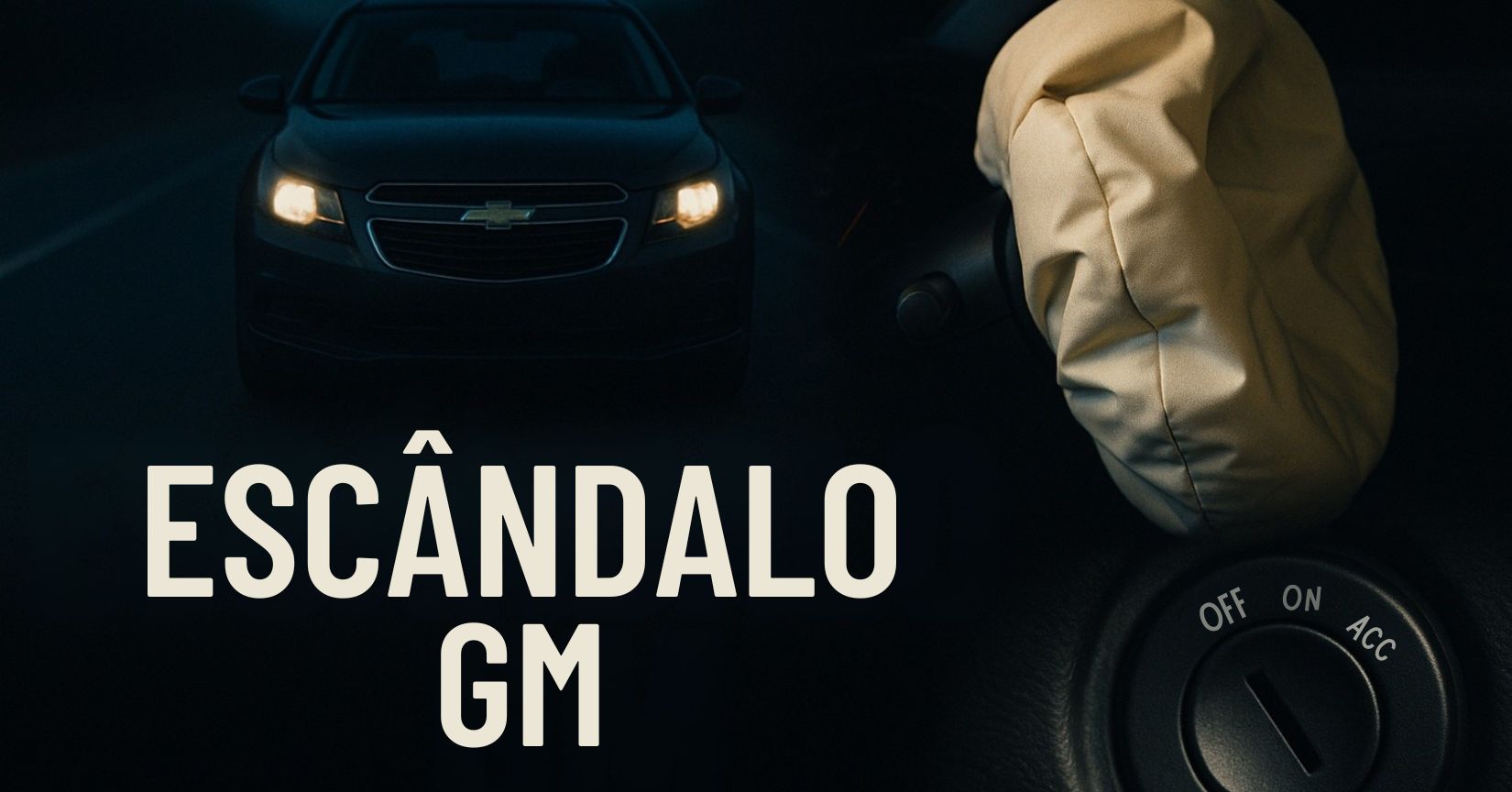
GM Led Historic Scandal: Ignition Switch Defect Turned Off Engine and Airbags, Linked to Over 100 Deaths and Billions in Settlements.
The history of the automotive industry is marked by both transformative innovations and catastrophic failures. Among the latter, few have garnered as much attention as the case of the faulty ignition switch from General Motors (GM). What began as a series of seemingly isolated accidents ended up revealing a global safety issue, which resulted in millions of vehicles involved in recall, dozens of confirmed deaths, and an unprecedented credibility crisis for the American giant.
The Defect That Turned Off Engine and Airbags
The component in question was the ignition switch — the part responsible for starting and keeping the engine running.
The defect allowed, under certain conditions, such as road vibrations or even excessive weight of keys and keychains in the ignition, the key to shift position involuntarily, transitioning from “on” to “accessory” or even “off”.
-
Chevette with cooking gas: How the gas cylinder ends up being used in cars clandestinely and why this makeshift solution can result in leaks, explosions, damaged engines, and seized vehicles.
-
Fiat launches the new 2027 Toro hybrid with 48V, 176 hp, an electric motor of 15.5 hp, a 0.85 kWh battery, up to 7% fuel savings, 8% fewer emissions, and possible exemption from IPVA.

-
Used automatic cars from Hyundai that are reliable, offer comfort, good performance, and cost between R$ 45,000 and R$ 75,000.

-
Electric car surprises on the Transamazon Highway as it tackles a mud pit; Saveiro and Hilux get stuck and need to be pulled out, while a milk truck crosses alongside with ease and draws attention.


This had two devastating effects:
- The engine could shut off while in motion, compromising steering and power brakes.
- The airbags were deactivated, preventing their deployment in a collision.
The result was a lethal combination of loss of control and lack of protection in accidents, contributing to fatalities in various countries, especially in the United States.
Millions of Vehicles Involved in the Recall
The problem was not limited to one or two models. It is estimated that over 30 million vehicles worldwide were impacted directly or indirectly, at different stages of recall.
Among the most affected models were:
- Chevrolet Cobalt (also sold in Brazil in later versions).
- Saturn Ion.
- Pontiac G5.
- Chevrolet HHR.
- Saturn Sky and Pontiac Solstice.
These cars, largely entry-level compacts, shared the same type of problematic switch, produced with design and quality control flaws.
Human Impact: Confirmed Deaths
The National Highway Traffic Safety Administration (NHTSA) of the United States confirmed at least 124 deaths and 275 injuries related to the defect. However, victim groups and attorneys argue that the real number may be higher, as many older accidents were not properly investigated in light of the ignition failure.
Each case represented not only a statistic but families shattered by accidents that could have been prevented with a part costing mere pennies — estimated at less than US$ 1 per unit.
The Delay in GM’s Response
One of the most shocking aspects of the scandal was the discovery that GM engineers and executives had been aware of the problem years before the official recall was issued.
Internal documents and investigations from the U.S. Congress showed that there were reports and technical analyses pointing to the failure, but the company chose not to act promptly.
This omission further aggravated the crisis, as it demonstrated not only technical failure but also a ethical and governance problem within the company.
Billion-Dollar Fines and Settlements
The consequence was a deluge of lawsuits, investigations, and legal agreements. In 2014, GM agreed to pay a fine of US$ 35 million to the U.S. government for the delay in reporting the problem — the largest penalty ever imposed by the NHTSA up to that point.
Additionally, the company set up a compensation fund for victims and families, which disbursed about US$ 600 million in settlements. Adding recalls, repairs, lawsuits, and loss of market value, the total cost of the scandal exceeded US$ 4 billion for the automaker.
Cultural Change at GM
The crisis forced General Motors to rethink its corporate culture. Under the leadership of CEO Mary Barra, who had taken over shortly before the scandal came to light, the company began to adopt a more transparent policy regarding vehicle safety.
Among the measures implemented were:
- Creation of an internal department dedicated exclusively to product safety.
- Encouragement for engineers and employees to report failures without fear of retaliation.
- Preventive auditing and review processes for components.
Mary Barra even testified before the U.S. Congress, acknowledging the company’s failures and offering public apologies to the victims — a rare gesture in an industry historically resistant to admitting mistakes.
Lessons for the Automotive Industry
The case of GM’s ignition switch left bitter but fundamental lessons for the entire industry:
- Small Components Can Cause Big Tragedies: a part costing just a few dollars can jeopardize the lives of hundreds of people.
- Transparency is Crucial: hiding flaws worsens the problem and destroys consumer trust.
- Recalls Are Not Shameful, They Are an Obligation: identifying and correcting defects quickly is part of the responsibility of automakers.
After this episode, regulatory bodies began to require stricter reports and impose harsher penalties for cases of omission.
The ignition switch scandal showed that even the largest automakers can stumble over seemingly simple mistakes, with devastating consequences. For GM, it was a turning point: on one side, public shame and billion-dollar losses; on the other, the opportunity to rebuild its image with greater responsibility.
The episode became one of the greatest examples of how the pursuit of cost reduction without due attention to safety can come at a very high price — first and foremost paid in human lives.









Seja o primeiro a reagir!