





 English
  Francês
  Alemão
  Italiano
  Japonês
  Norueguês
  Portuguese
  Spanish
  5 min of reading
  0 comments


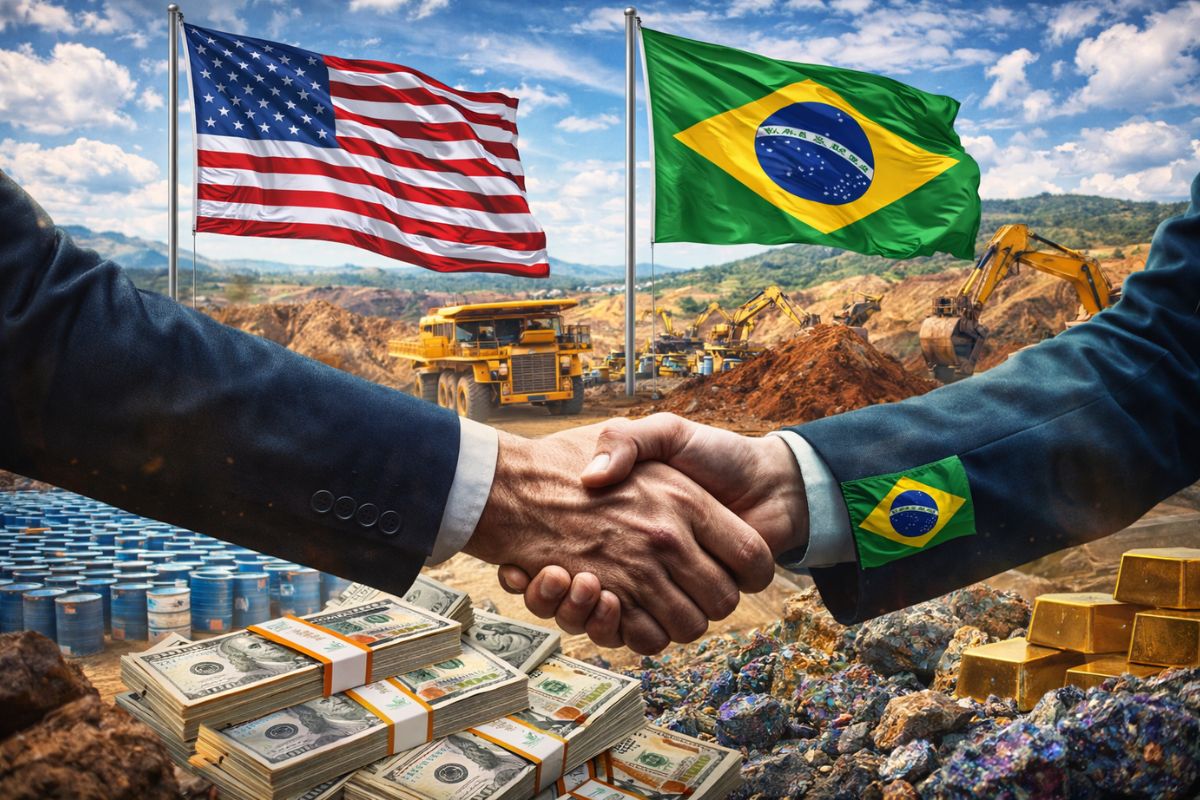
Governor Ronaldo Caiado signed a partnership with the United States involving 575 million dollars for the exploration of rare earths and critical minerals in Goiás, amid the West’s race to reduce dependence on China for these strategic materials.
The government of Goiás signed a cooperation agreement with the United States on Wednesday (18) for the exploration of rare earths and critical minerals in Goiás soil. The planned investment is 575 million dollars, and the partnership was established by Governor Ronaldo Caiado during a forum on strategic minerals that brought together representatives of the Donald Trump government and American and Brazilian businessmen in São Paulo.
This move is part of a broader strategy by the United States to reduce its dependence on China for the supply of materials essential to the technology industry. Brazil hosts the second largest reserve of rare earths and critical minerals on the planet, and Goiás is one of the states with the highest concentration of these elements, used in the manufacture of semiconductors, electric vehicle batteries, and solar panels.
What does the 575 million dollar agreement between Goiás and the United States foresee
The agreement signed between the government of Goiás and the United States establishes cooperation for the exploration and processing of rare earths and critical minerals found in Goiás territory. The declared intention by Governor Ronaldo Caiado is that the state is not just an exporter of raw material, but that it develops locally the technologies for separating and processing these materials, adding value before export.
-
Unemployment rises again to 5.8% at the beginning of 2026, raising alarms about the end of temporary positions and its impact on the Brazilian job market.

-
Document organization can cut invisible costs in small businesses, a simple step that prevents waste, rework, and losses in daily operations.

-
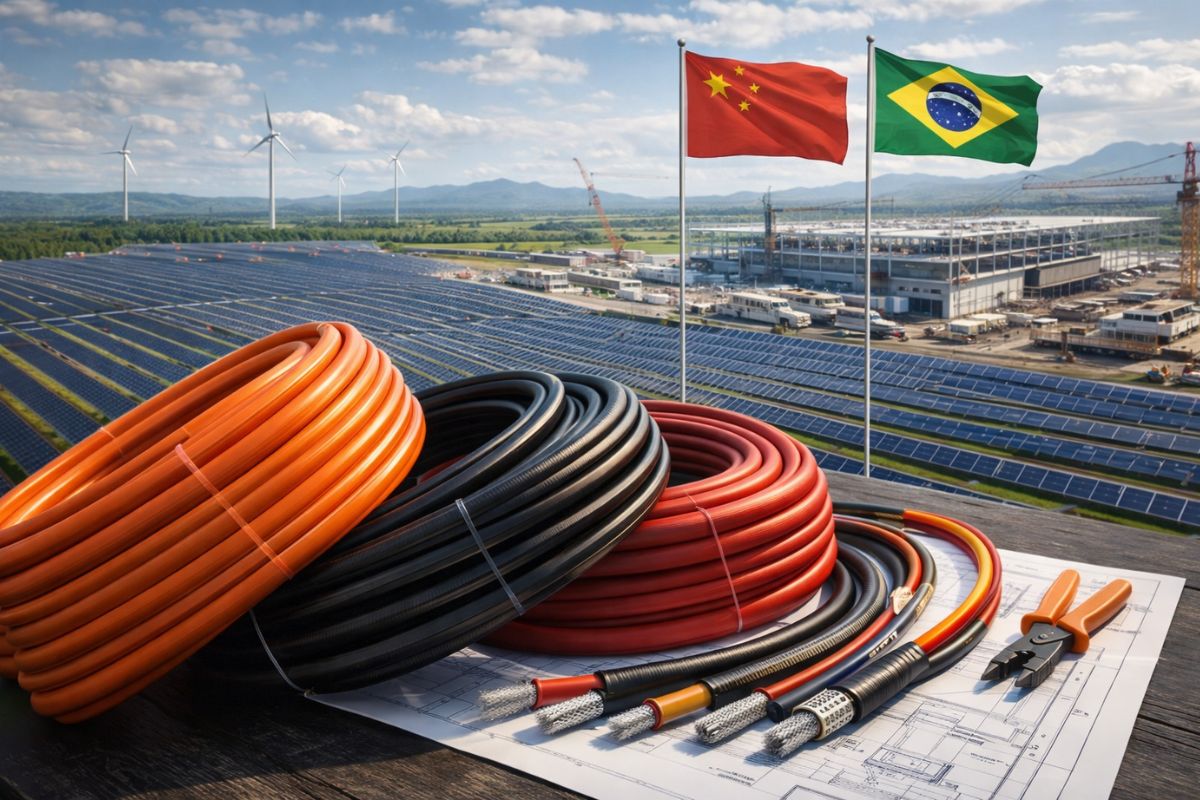
Chinese giant worth nearly R$ 4 billion that manufactures cables for electric cars, solar energy, and robotics wants to open a factory in SC.
-
Many employers do not know, but the law guarantees domestic workers a 25% increase in salary during trips, 50% for overtime, 20% for night shifts, and 17 additional benefits that can lead to labor lawsuits if not paid.


The investment of 575 million dollars represents one of the largest foreign contributions ever directed to the mineral sector of a Brazilian state.
The targeted minerals include lithium, cobalt, nickel, and rare earth elements, all considered essential inputs for the energy transition and high-tech production chains.
The expectation is that the agreement will generate jobs, attract new industries, and position Goiás as a strategic hub in the global critical minerals chain.
Why the United States seeks rare earths and critical minerals in Brazil
The American race for rare earths and critical minerals outside its own territory has a direct explanation: dependence on China.
Currently, China holds the dominant technology for separating and processing these materials and uses this control as a tool for geopolitical pressure, restricting exports when there are trade or tariff tensions.
The interest of the United States is not exclusive. Europe and other Western economies face the same problem and are also seeking alternative suppliers. In this context, countries like Brazil, Chile, and Argentina become strategic partners for hosting significant reserves of these materials.
Goiás, with its high concentration of critical minerals, appears as one of the priority destinations for American investments in this area.
The forum in São Paulo and the absence of the federal government
The agreement between Goiás and the United States was signed on the same day that a forum on critical minerals took place in São Paulo, with the presence of representatives from the Trump government and businessmen from both countries. The event drew attention due to the absence of representatives from the Brazilian federal government, which raised questions considering that mineral exploration in Brazil depends on licensing granted by the National Mining Agency, as the underground and its riches belong to the Union.
The absence may be related to a parallel diplomatic episode. The Itamaraty revoked the entry visa to Brazil of Daren Beat, an advisor to the United States government, after considering that there was a lack of sincerity in the declared reason for the visit.
Beat had informed that he would participate in the minerals forum, which was denied by the organizers. At the same time, he also requested authorization to visit former President Jair Bolsonaro, a request that was initially authorized and then denied by Minister Alexandre de Moraes.
The challenges to explore rare earths and critical minerals in Goiás
Despite the billion-dollar agreement, the exploration of rare earths and critical minerals in Goiás depends on stages involving different levels of government. Mineral licensing is the responsibility of the Union, while environmental licensing falls to state and local governments. This means that the federal government and the state government need to work together for the 575 million dollar investment to become a reality.
There is also a broader structural challenge. Experts present at the forum pointed out that, although there is a growing global demand for these materials, the international market for rare earths and critical minerals is still not fully consolidated.
Creating a production chain that goes from extraction to final processing requires not only capital but also technology transfer and the construction of specialized infrastructure. When asked about the absence at the signing of the agreement, the Ministry of Mines and Energy did not comment.
What the global dispute for strategic minerals means for Brazil
The agreement between Goiás and the United States is not an isolated event. It is part of a global geopolitical dispute in which control over rare earths and critical minerals has become as strategic as the dominance over oil in previous decades. The dependence on China in this sector worries Western governments, and the search for alternatives is reshaping trade and diplomatic alliances worldwide.
For Brazil, the opportunity is significant but requires caution. Exporting raw materials without developing local processing capacity would repeat historical mistakes. The challenge is to ensure that agreements like the one signed by Goiás result in real technology transfer, generation of qualified jobs, and strengthening of the national industry, and not just in the extraction of wealth for external benefit.
The 575 million dollar agreement between Goiás and the United States places Brazil at the center of the global dispute for rare earths and critical minerals. If the investment materializes with technology transfer and local value generation, it could represent a milestone for the Goiás economy and for the country’s position in the global chain of strategic materials.
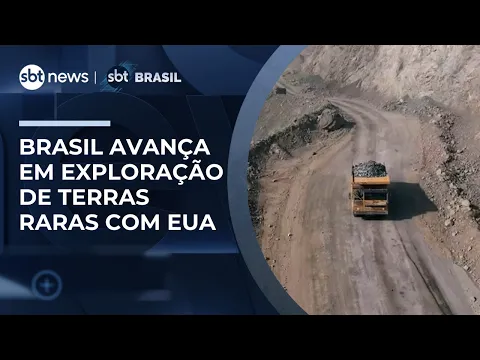

With information from the Channel of SBT.
What do you think about this agreement? Do you believe that Brazil will be able to use its reserves of rare earths and critical minerals strategically, or is there a risk of repeating the cycle of raw material export without processing? Leave your opinion in the comments.








Seja o primeiro a reagir!