Portuguese
  Spanish


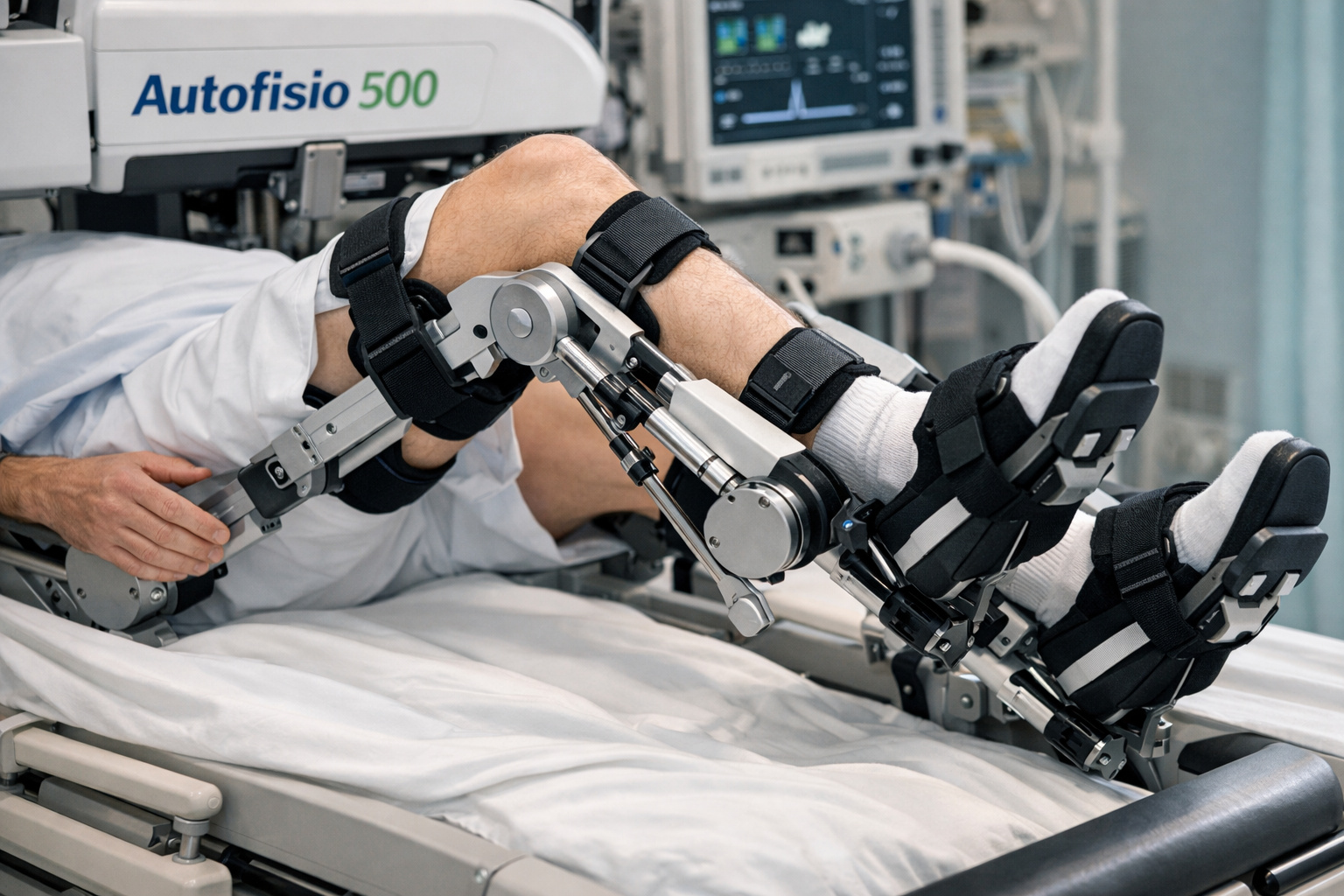

New national low-cost technology emerges as an innovative solution to reduce complications of immobility in severe patients and can transform the public health scenario in Brazil
The Intensive Care Unit (ICU) is one of the most complex environments within a hospital, designated for patients in severe or critical condition who require constant monitoring. However, in addition to medication and equipment care, there is a silent challenge that directly impacts recovery: the accelerated loss of muscle mass.
This information was released by researchers from the University of Caxias do Sul, who highlight how immobility can significantly compromise the clinical evolution of hospitalized patients.
This occurs because, when the patient is sedated or immobilized, the body quickly enters a process of weakening. In just a few days, the muscles begin to lose strength, which consequently hinders recovery and can prolong the length of hospitalization.
-
Two Design Students from Brazil Turn Recycled Plastic into Fashionable Eyewear, Earning $10 Million in a Year

-
Self-Taught Brazilian Innovator Brings Solar Power to Shantytowns Using Scrap, Solar Panels, and Phone Batteries
-
Brazil Pioneers Innovative Project to Transform Used Baby Diapers into Sustainable Solutions for Schools and Cities
-
Cargo Ship Completes Historic Nighttime Voyage to Porto Alegre, Revolutionizing Large-Scale Navigation in Brazil After 42 Years



Moreover, there is another important factor that exacerbates this scenario: the lack of sufficient professionals to continuously stimulate the patients’ bodies. There are not always enough physiotherapists available in the ICUs, making it even more difficult to maintain an efficient rehabilitation routine.
In light of this problem, a Brazilian solution emerges as a significant advancement for intensive medicine.
Equipment simulates walking and keeps the body active even with immobilized patients
Developed by Brazilian researchers, the kinesitherapy equipment called Autofisio 500 was created specifically to combat the effects of immobility. The device works as a true “walking simulator,” automatically reproducing the leg movements of bedridden patients.
Thus, even in situations where the patient cannot move, such as in cases of deep sedation or delicate post-operative conditions, the body continues to receive essential stimuli.
The Autofisio 500 simulates the natural movement of walking, helping to preserve muscles, improve blood circulation, and maintain important physiological functions. As a result, there is a significant reduction in the risk of common complications, such as severe muscle weakness and difficulties in rehabilitation.
Additionally, the continuous use of the equipment contributes to a faster and more efficient recovery, which can directly impact the length of the patient’s stay in the ICU.
Accessible technology could reach the SUS and reduce hospital costs
Another point that makes this invention even more relevant is its cost. Unlike imported high-value technologies, the Autofisio 500 was developed with a focus on accessibility.
The equipment has an estimated cost between R$15,000 and R$20,000, which can be up to 10 times cheaper than similar solutions available on the market. This factor significantly expands the possibilities for adoption in Brazilian hospitals.
The project received support from FINEP, reinforcing the potential of national innovation to transform the reality of public health. With this, there is a concrete possibility that the equipment will be incorporated into the SUS, benefiting thousands of patients across the country.
In addition to improving the quality of treatment, the technology can also reduce hospital costs in the long run. This is because, by accelerating recovery and decreasing complications, there is a tendency to reduce the length of hospitalization.
Therefore, this Brazilian invention not only represents a technological advancement but also a practical solution to one of the biggest challenges faced by ICUs today.
Do you think accessible technologies like this can transform public health in Brazil?