





 Portuguese
  English
  Spanish
  3 min of reading
  0 comments


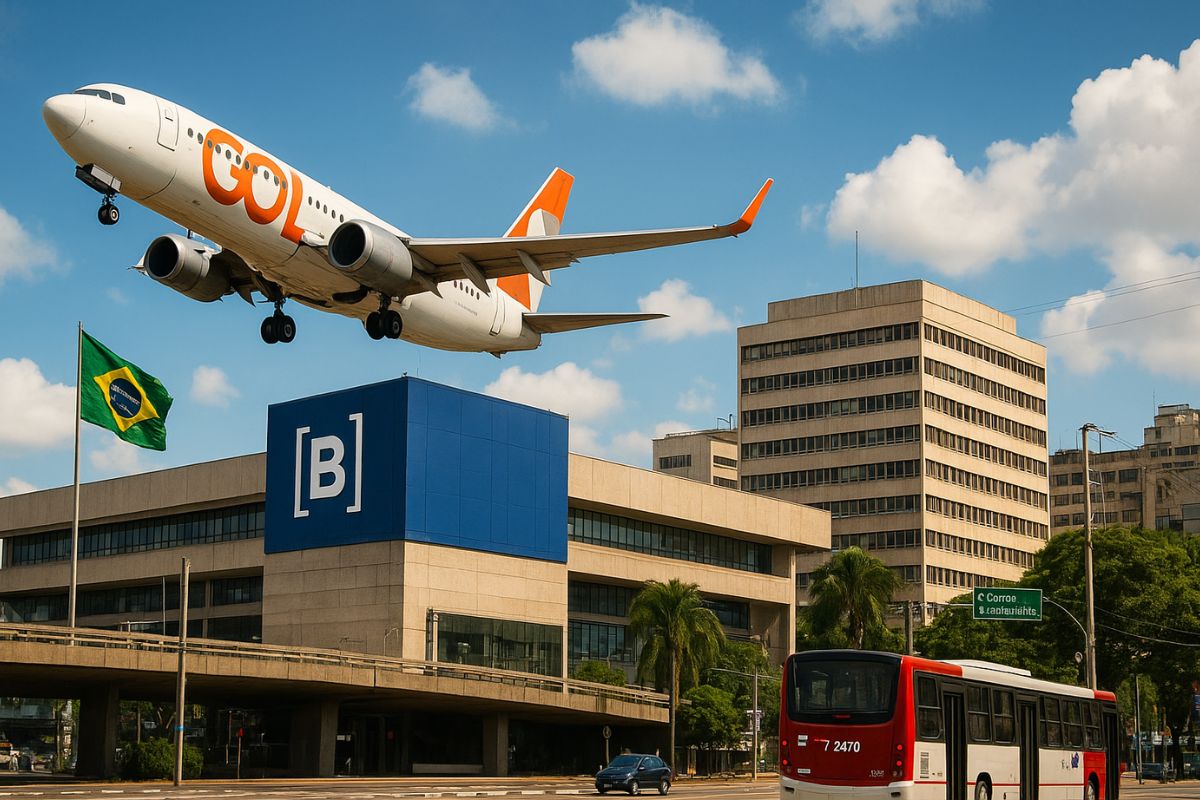
Airline Advances In Plan To Go Private In Brazil And Concentrate Operations Under Abra Holding Control After Bankruptcy Recovery And Strategic Reassessment.
The Gol has taken a new step in its restructuring process and announced the plan to close its cycle on the Brazilian Stock Exchange (B3). The decision comes after a period of strong financial turmoil, ending with bankruptcy recovery in the United States and the termination of merger talks with Azul. The move represents a strategic shift for the company, which aims to simplify its structure and reduce operational costs.
The proposal was deliberated by the Board of Directors and will be submitted to the general assembly on November 4. On that date, shareholders will decide whether to approve the incorporation of the publicly traded company by Gol Linhas Aéreas S.A. (GLA), a privately held company controlled by Abra, a holding that also owns the Colombian Avianca.
What Changes With Gol Leaving The Stock Exchange
With the approval of the operation, Gol will leave B3’s Level 2, becoming a privately held company.
-
Oil surged to $115 a barrel due to the war in the Middle East, and diesel in Brazil has already risen to R$ 7.45 per liter, while the United States…

-
Brazilian city bets on the business environment to generate jobs and attract investments in the energy sector — secretary reveals strategy at Macaé Energy 2026.

-
50 viaducts, 4 tunnels, 28 bridges, and 40 kilometers of bike paths: BR-262 in Espírito Santo will receive 8.6 billion reais for the largest engineering project in the state’s history, inspired by the Immigrant Highway in São Paulo.

-
Brazil produces too much clean energy and doesn’t know what to do with it: over 20% of solar and wind capacity was wasted in 2025 while investors flee and 509 renewable generation projects were abandoned in the last year.


Current investors will have the option to exit or remain as shareholders in the new, now private structure.
Azul will become the only airline with shares traded on the Brazilian Stock Exchange, as Latam maintains its shares listed on the Chilean market.
According to the statement, the incorporation aims for synergies, efficiency gains, and cost reductions.
The restructuring anticipates that each current shareholder of Gol will receive corresponding shares in the new company, with different proportions for common and preferred shares.
“The reorganization aims to strengthen operations and prepare the company for a new cycle of growth,” says a part of the note.
From Crisis To Recovery: A Forced Landing In Reality
The decision to go private comes after a cycle of intense challenges.
The pandemic caused an abrupt decline in flight demand and increased the company’s debt, leading to its bankruptcy recovery in the United States, a process similar to the U.S. Chapter 11.
During this period, Abra increased its stake in Gol, rising from just over 50% to about 80%.
Analysts indicate that the move reflects the need for total control over operations. “Without government support, the company had to redesign its financial structure to survive,” explains economist and FGV professor Cleveland Prates.
End Of Talks With Azul And Strategic Repositioning
The announcement comes shortly after Gol terminated the merger talks with Azul, which included a code-sharing agreement.
The market had evaluated the potential linkage as risky, both from a regulatory viewpoint and for consumers, as it would concentrate the domestic market in just two major operators.
The decision to halt negotiations was well received by some investors, who saw reduced risk of a duopoly and an opportunity to reposition Gol independently, now under a more centralized and streamlined governance.
The Next Step: Private Capital, But Open Ambitions
The exit of Gol from B3 may indicate a broader repositioning, focusing on strengthening international presence and optimizing management without the short-term pressures of the stock market.
“The company gains density and strategic freedom to think about larger flights abroad,” assesses strategist Gustavo Cruz of RB Investimentos.
Despite growth prospects, going private has implications for the minority investor, who may maintain a stake in the new structure but without immediate liquidity.
Still, the market views the measure as a natural step in the post-crisis restructuring process.
A Cycle That Ends, Another That May Begin
The end of Gol’s journey at B3 symbolizes the conclusion of a phase marked by challenges and reinvention.
The company leaves the trading floor with a history of volatility but with plans to rebuild its trajectory in new corporate formats.
Do you agree with Gol’s decision to leave the stock market? Do you think this move can strengthen or weaken the Brazilian airline sector? Leave your opinion in the comments; we want to hear from those who live and closely follow the aviation market.









-

Uma pessoa reagiu a isso.