





 Portuguese
  English
  Spanish
  3 min of reading
  0 comments


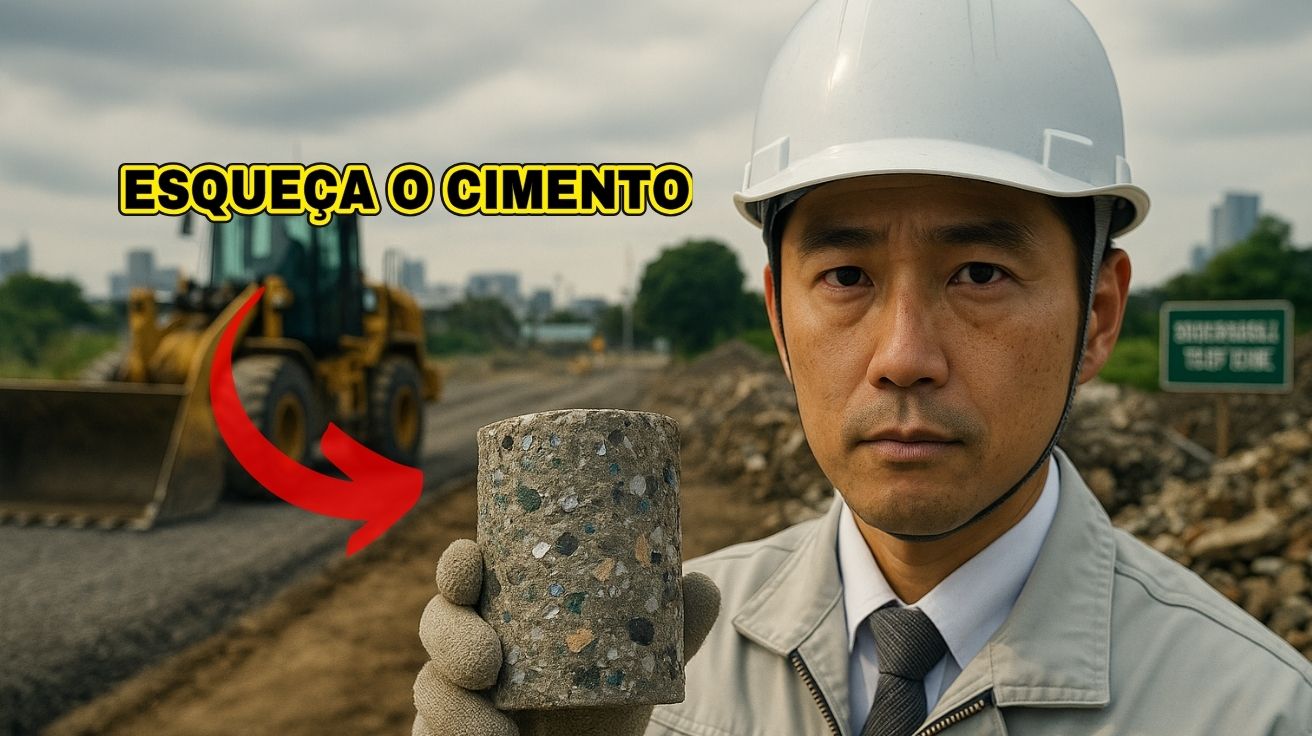
Japanese Researchers Reveal A Revolutionary Material Made From Construction Waste And Ground Glass Capable Of Replacing Traditional Cement And Facing The Environmental Impact Caused By Large-Scale Modern Construction.
A new material developed by scientists in Japan offers an alternative to conventional cement used in construction.
The innovation, created with waste such as ground glass and demolition dust, was designed to act as a soil solidifier and has already demonstrated sufficient strength for applications in structures such as roads, buildings, and bridges.
The proposal aims to replace Portland Cement, responsible for approximately 8% of global carbon dioxide (CO²) emissions, according to data from international organizations.
-
Motorola launched the Signature with a gold seal from DxOMark, tying with the iPhone 17 Pro in camera performance, Snapdragon 8 Gen 5 that surpassed 3 million in benchmarks, and a zoom that impresses even at night.

-
Satellites reveal beneath the Sahara a giant river buried for thousands of kilometers: study shows that the largest hot desert on the planet was once traversed by a river system comparable to the largest on Earth.

-
With 74% of companies facing difficulties in hiring, technicians and engineers in renewable energy are becoming scarce in Brazil and are essential to support the expansion of solar, wind, and green hydrogen projects.

-
Scientists have captured something never seen in space: newly born stars are creating gigantic rings of light a thousand times larger than the distance between the Earth and the Sun, and this changes everything we knew about stellar birth.


This environmental impact is directly linked to the calcination of limestone, an essential process in the production of traditional cement, which releases large volumes of CO² into the atmosphere.
According to the tests conducted, the new sustainable concrete showed compression levels compatible with required standards for soil stabilization in large-scale works.
The waste undergoes a specific thermal process that activates its binding properties, transforming it into a solid mass of high durability.
Sustainable Concrete With Environmental Safety
The study conducted by a team led by researcher Shinya Inazumi from Tohoku University details that the formula was refined after the initial identification of arsenic leakage.
The introduction of calcium hydroxide in the composition eliminated this risk, making the material environmentally safe for use in civil works.
In addition to mechanical strength, the material stood out for characteristics such as accelerated hardening, good workability, and stability against severe climatic variations.
It was also evaluated for exposure to sulfates, chlorides, and repeated freeze-thaw cycles, with results deemed satisfactory for practical application.
The formulation was classified as geopolymeric, meaning it is based on the alkaline activation of industrial waste, without the use of clinker or other conventional inputs in the cement chain.
This positions the material as an eco-friendly construction material, with logistical and environmental advantages over traditional compounds.
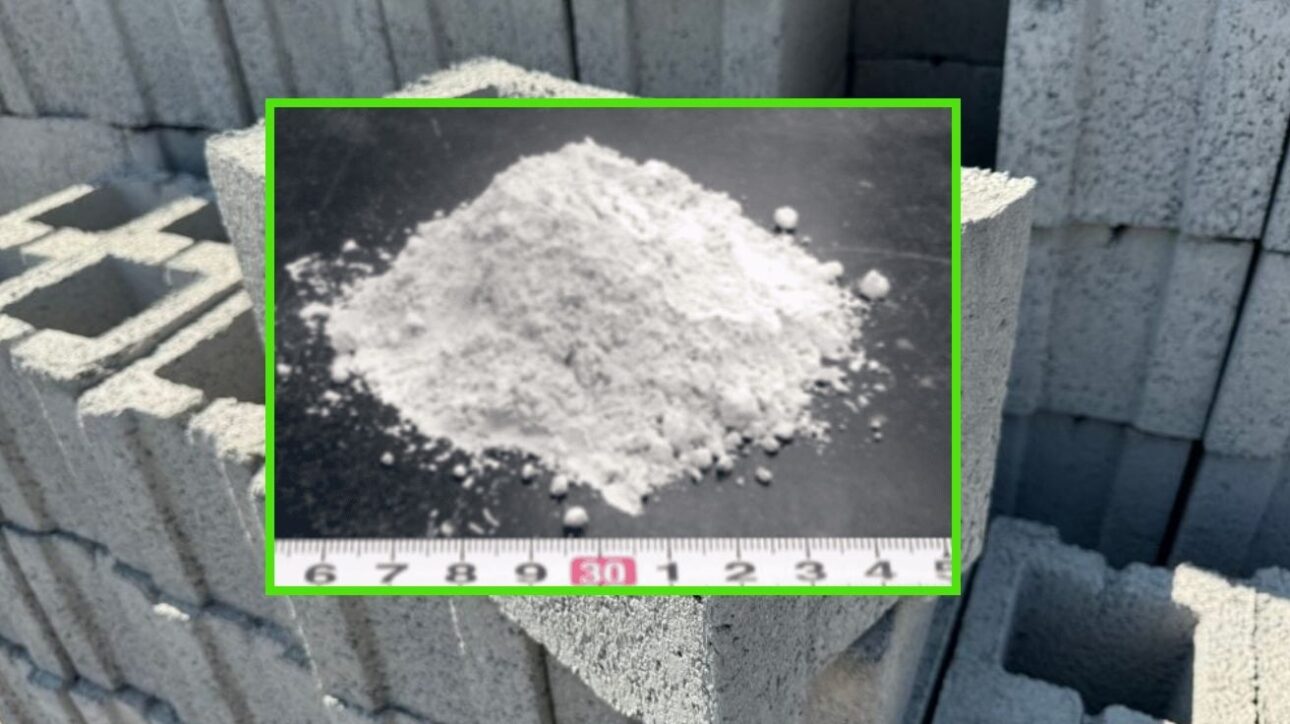
Eco-Friendly Construction Material Reuses Debris
The reuse of construction leftovers and non-recyclable materials, such as glass fragments, is at the center of the proposal.
According to information released on the Interesting Engineering website, the use of the new solidifier allows for useful disposal of waste often discarded in landfills or in irregular areas.
The global scenario presents a growing demand for low-carbon alternatives, especially in light of international climate commitments.
In this context, the new sustainable concrete emerges as potentially applicable technology in different countries and regions.
In Brazil, for example, estimates from the National Environmental Council (Conama) indicate that about half of urban solid waste comes from construction and demolition.
The adaptation of similar solutions could contribute to reducing the volume discarded and developing cleaner construction techniques.
Adaptable And Low-Cost Alternative To Cement
The team responsible for the development states that the compound can be adjusted with local variations of inputs, making its decentralized and regional production easier.
This adaptability increases its potential use in developing countries or in areas of critical infrastructure.
The suggested applications are not limited to large projects. The material can also be used in the production of compacted soil blocks, a technique adopted in low-cost construction systems with less environmental impact.
Resistance to chemical agents and climatic factors reinforces its use in places subject to inclement weather.
Future studies foresee field tests and scaling up production. So far, experiments have been conducted in laboratories focusing on physical-chemical performance and environmental safety.

According to the involved researchers, using abundant and low-commercial-value industrial waste can significantly reduce production costs.
At the same time, it can contribute to meeting environmental targets in sectors related to civil construction.
The material is part of a growing line of technologies aimed at sustainable construction and emission reduction.
These topics are gaining relevance in public policies and international programs aimed at mitigating the effects of climate change.
Considering the environmental impact of the construction sector and the global need for more sustainable solutions, can the use of alternative materials like this be incorporated into future incentive policies and regulations?





-

2 pessoas reagiram a isso.