





 English
  Francês
  Alemão
  Italiano
  Japonês
  Norueguês
  Portuguese
  Spanish
  5 min of reading
  0 comments


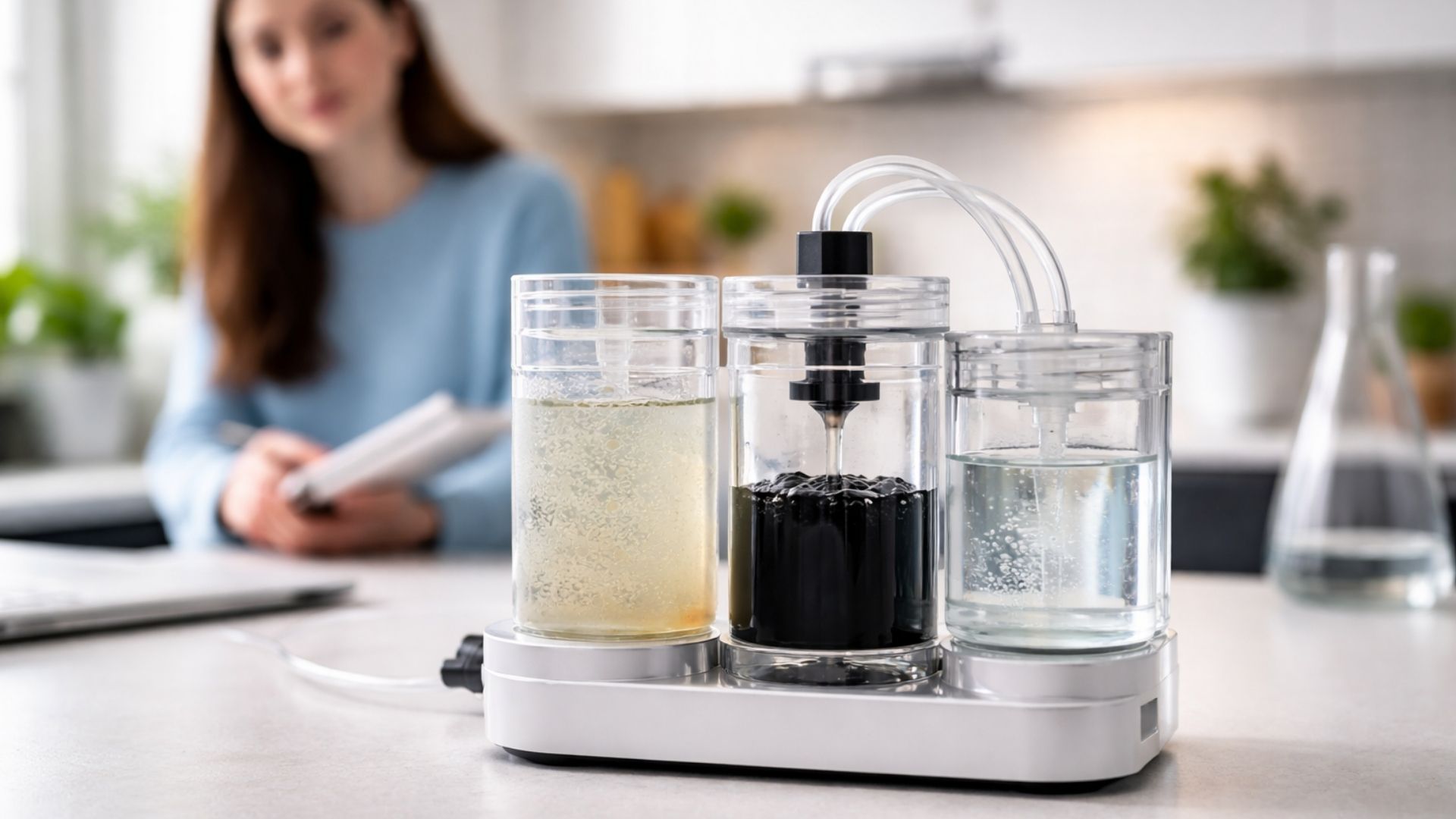
Domestic technology proposes a new way to remove microplastics from drinking water using reusable magnetic ferrofluid and a system without solid membranes, achieving high efficiency in initial tests and catching the attention of the international scientific community.
A high school student from Virginia, United States, presented a water filtration prototype that dispenses with solid membranes and, in tests conducted by her, removed 95.52% of microplastics and recovered 87.15% of the ferrofluid used in the process.
The system was developed by Mia Heller, 18 years old, and gained prominence after being a finalist at the 2025 Regeneron International Science and Engineering Fair, where she also received a special award of $500 from the Patent and Trademark Office Society.
The proposal attempts to tackle a problem that already concerns researchers from different fields.
-
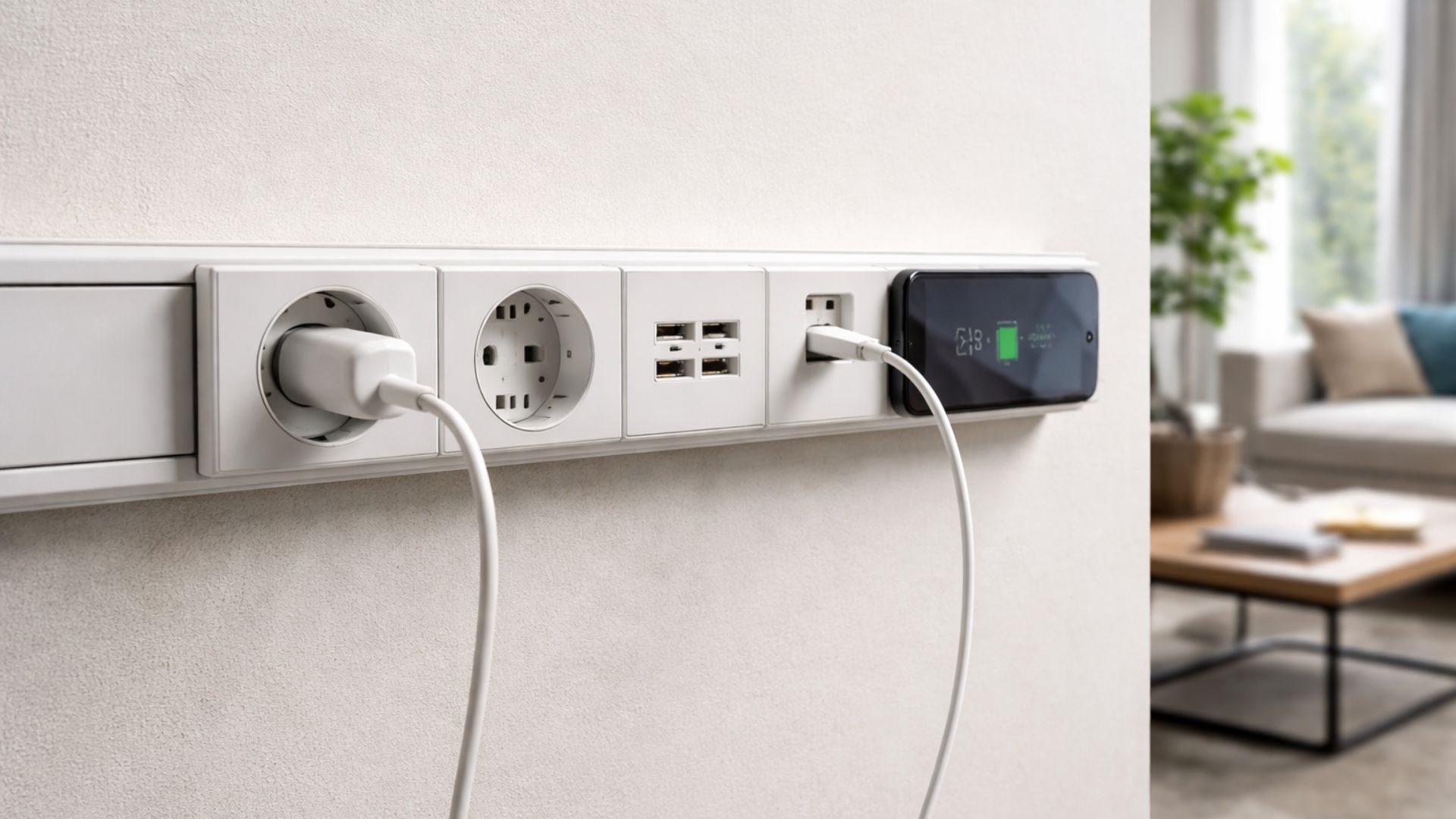
Goodbye to traditional outlets: the new system requires no construction and allows up to 10 modules per track with USB-C, overload protection, and installation in minutes, transforming homes and eliminating dangerous extensions.
-
Norsul achieves CAP 1 classification with the chemical ship Taruca after dry docking and reinforces operational excellence in maritime transport.

-
China discovers a mega reserve with 10.4 million tons of rare earths and could redefine global dominance in technology, clean energy, and the military industry with 27.1 million tons of fluorite and 37.2 million tons of barite.

-
China began working on 6G in 2019 when commercial 5G barely existed and now leads the world in patents for a technology that promises speeds 100 times greater, and no country wants to be left out.


Recent studies indicate that microplastics remain present even after conventional treatment of drinking water, and scientific reviews suggest that traditional stations typically remove 70% to over 90% of these particles, without eliminating them completely in all scenarios.
In this context, compact domestic solutions have begun to attract attention for offering an additional retention step before consumption.
Development of the Membraneless Filter
The idea for the filter emerged in the spring of 2024, but practical development advanced more intensively in 2025.
After months of testing done at home, between the garage and the kitchen, Heller arrived at a first functional version.
Initially, the equipment was already able to remove microplastics from water in two stages, but still required frequent maintenance, because the magnetic material used in capture did not automatically return to the cycle.
It was from this limitation that the most delicate stage of the project was born.
Instead of just separating plastic fragments, the student sought a closed circuit, capable of recovering the ferrofluid after filtration and reusing it without constant replacement.
The obstacle, according to the report published about the project, was to make the thicker-than-water magnetic fluid circulate between compartments without clogging and without compromising the separation of waste.
After about five iterations, the prototype reached its current form, with dimensions similar to a bag of flour.
The equipment consists of three modules: a reservoir for contaminated water, a compartment to store the magnetic oil-based ferrofluid, and a smaller third unit where the central separation stage occurs.
The scale is still domestic, with a capacity to process approximately one liter at a time.
How the Ferrofluid System Works
The operation is based on a different logic than that adopted by many commercial systems.
Instead of using a solid physical barrier to retain particles, the prototype employs a reusable ferrofluid that binds to the microplastics present in the water flow.
Then, a magnetic field pulls this set out of the liquid, allowing the water to continue while the magnetic material is recovered and reinserted into the system.
Heller summarized the result as a low-waste system “without the use of a solid membrane.”
To measure the equipment’s performance, the student also developed a turbidity sensor, used to quantify suspended solids.
With this instrument, she estimated the presence of both the ferrofluid and the microplastics throughout the process and calculated the removal rate based on the weight of the particles removed.
It was from these tests that the numbers emerged that put the project in the spotlight: 95.52% removal of microplastics and 87.15% reuse of the ferrofluid.
The data draws attention because it approaches, and in some cases exceeds, the efficiency range reported for conventional drinking water treatment systems.
Still, the comparison requires caution.
Academic studies show that the efficiency of stations varies according to the size, shape, and composition of particles, in addition to the operational design of each plant.
In other words, the performance observed in the domestic prototype does not, by itself, authorize a direct equivalence with industrial structures, which operate on a much larger scale and under different conditions.
Scientific Recognition and Validation Challenges
Heller’s project was registered at the Regeneron ISEF 2025 as ENEV053 — Self-Recycling System for Microplastic Removal: Development of a Novel Ferrofluid-Based Filtration Technology for Affordable Water Treatment.
At the fair, she appeared among the finalists and received the second-place special award from the Patent and Trademark Office Society, worth $500.
The recognition helped put the research on the radar outside the student circuit and gave visibility to a low-cost proposal aimed at domestic treatment.
Despite the repercussions, the current stage of the work still imposes clear limits.
So far, the results published stem from tests conducted by the project author, and experts consulted about the initiative consider it essential for the system to undergo independent validation in a laboratory.
The discussion about the final destination of the extracted microplastics also remains open, as the simple capture of these particles does not solve the environmental problem if the disposal or destruction of the material is not controlled.
Matthew J. Campen, a toxicologist at the University of New Mexico cited in the report that presented the invention to the international public, stated that the technology points in a necessary direction, but noted that it will still be necessary to prove whether the removal of microplastics occurs without leaving other problematic residues in the process.
He also raised a central question for any innovation in the sector: whether the solution should be restricted to residential use, like a filter under the sink, or if it could someday be adapted for larger applications.
For now, the student herself treats the system as a more suitable alternative for the domestic environment.
According to Heller, the current cost of ferrofluid on a large scale still limits immediate expansion to other contexts.
The short-term goal, therefore, is not to launch the product, but to professionally confirm the numbers obtained at home and understand more precisely the technical reach of the prototype.
At this stage, the invention stands out less as a ready-made solution and more as a promising advance that attempts to simplify the removal of microplastics without relying on disposable membranes.







Seja o primeiro a reagir!