





 Portuguese
  English
  Spanish
  5 min of reading
  0 comments


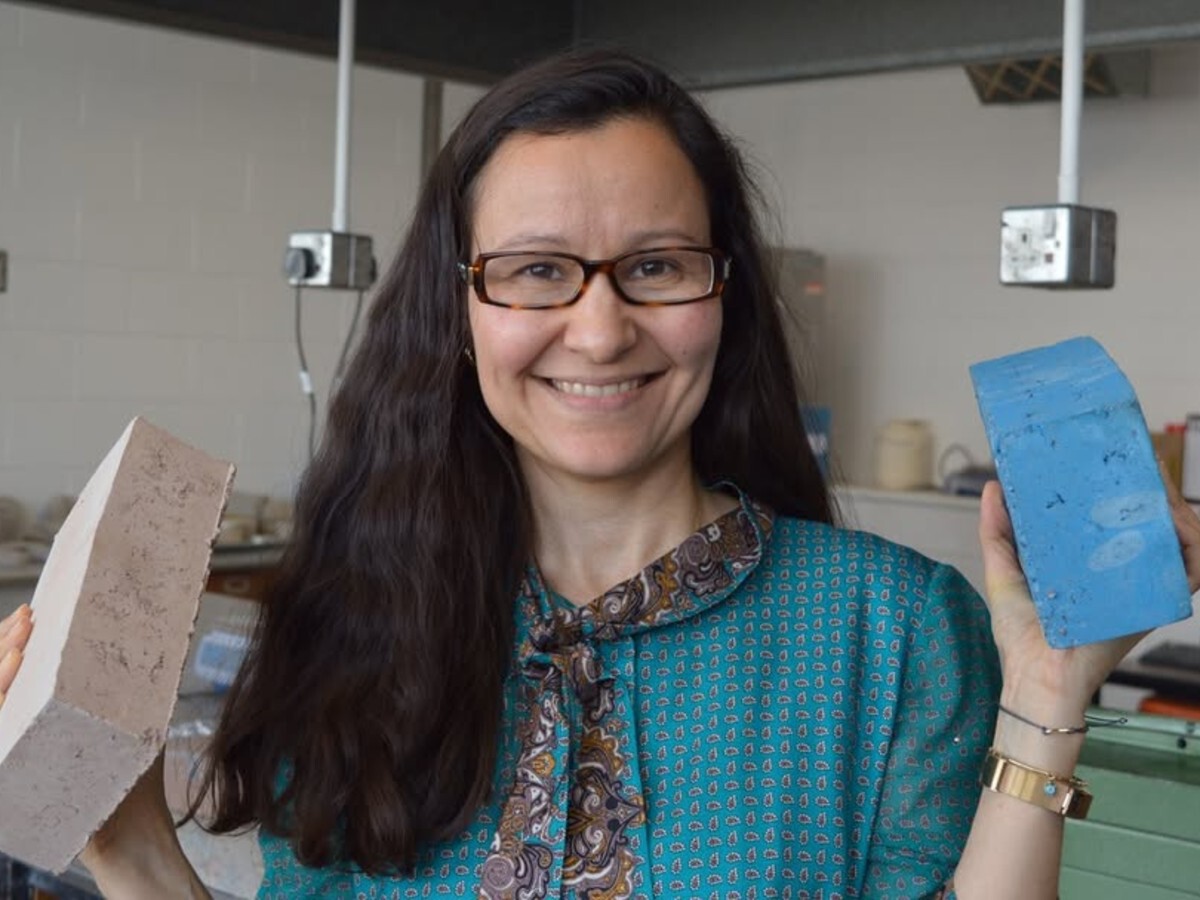
Research led by a Brazilian transformed construction waste into a low-carbon brick, already certified in international markets and inserted in the debate on recycling, industrial innovation, and emission reduction in the sector.
The Brazilian engineer Gabriela Medero developed, alongside engineer Sam Chapman, a brick produced mainly from construction waste that reached the British market as a lower environmental impact alternative.
Called K-Briq, the material was created from research conducted at Heriot-Watt University in Edinburgh, and is now presented by the company Kenoteq as a construction product with a high recycled content and technical certifications for use in the UK and the United States.
The main differentiator lies in the manufacturing process.
-
China has created a mass-produced hypersonic missile that costs the same as a Tesla, and this is changing everything in modern warfare because the United States cannot defend itself without spending millions.

-
100% Brazilian technology transforms agricultural waste into a meat-scented ingredient using fungi from the Amazon rainforest. The process does not use excessive water or chemicals, and it also increases the nutritional value of the final product.

-
Psychology reveals that adults who avoid conflicts at all costs are not balanced individuals, but rather children who learned in the worst way that expressing emotions brought punishment and now live paralyzed by the fear of expressing themselves.

-
Goodbye pet hair on clothes: a washer with an internal filter promises to remove up to 5 times more hair than regular machines and uses an XL trap dryer system to capture what remains.


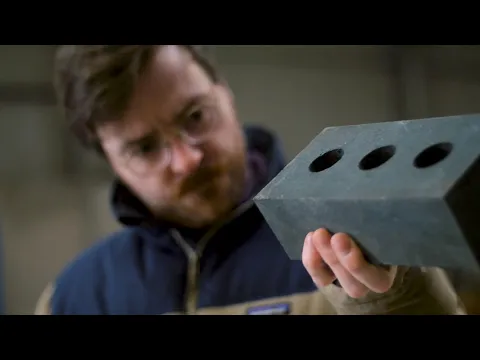
Unlike traditional ceramic bricks, the K-Briq is not subjected to firing in high-temperature kilns.
According to Kenoteq, the product is made by compressing construction, demolition, and excavation waste, which reduces energy consumption in production.
The company also claims that the material has at least 95% less embedded carbon than conventional materials and that its composition can vary from over 90% to nearly 100% recycled content, depending on the formulation provided by the manufacturer itself.
Development of K-Briq and origin of the research
The technology began to be developed in academic research focused on the life cycle assessment of construction materials.
According to Heriot-Watt University and the British Board of Agrément, the project evolved over more than ten years until it reached the commercial stage.
In 2019, Medero and Chapman founded Kenoteq to transform the results of this research into a market product.
In information released by the university and industry-related entities, the initiative appears as an attempt to address a recurring problem in the construction sector: the large volume of waste generated by construction and demolition.

In this context, the proposal was to develop a brick capable of reusing part of this material without repeating the production model of traditional bricks, which depends on high temperatures.
In an interview reproduced by specialized architecture and design outlets, Gabriela Medero stated that she spent years researching construction materials and that her concern was related to the use of raw materials without sufficient consideration of the environmental impact.
This statement helps to situate the motivation behind the project, but the commercial advancement of K-Briq was primarily accompanied by technical testing, certifications, and factory expansion.
Differences between K-Briq and conventional brick
Kenoteq informs that the K-Briq maintains dimensions and applications similar to those of bricks traditionally used in construction, with the possibility of different colors and finishes.
The company also highlights that the product has undergone evaluations regarding strength, durability, and color stability.
In the institutional material, K-Briq is presented for use in facades and internal surfaces, within the limits set by the obtained certifications.
In addition to reusing waste, the company states that manufacturing occurs in a facility located in East Lothian, Scotland, close to the supply chain of recycled materials.
According to Kenoteq, this logic aims to reduce transportation and reinforce the circular economy model, in which waste from one sector returns to the construction industry as a new product.
The environmental comparison with conventional bricks appears in various communications from the company and partner organizations.

In general terms, the central argument is that the absence of the firing stage significantly reduces energy use and the emissions associated with the process.
In publications about the technology, K-Briq is described as a non-fired, low-carbon brick with over 90% recycled material.
Construction industry, waste, and pressure for decarbonization
The creation of K-Briq gained visibility in a scenario of increasing pressure on the construction industry to reduce emissions and waste.
The European Commission reports that construction and demolition waste accounts for more than one-third of all waste generated in the European Union.
This is a significant fraction because it includes concrete, bricks, wood, glass, metals, and plastics, materials that can have economic value and potential for reuse.
In the debate on decarbonization, initiatives focused on the reuse and recycling of materials have begun to gain traction in universities, companies, and public policies.
Zero Waste Scotland links Kenoteq’s trajectory to this circularity effort and had already supported the industrial expansion of the product in its commercialization phase.
Records from 2021 indicate that the project received funding to increase production to over two million units per year.
Sam Chapman, co-founder of the company, stated in material released by partner organizations that the construction industry faces a significant challenge in meeting decarbonization targets and that part of the discarded waste could be reintegrated into the production chain.
This statement was used by the company and industry entities to advocate for the reuse of aggregates from bricks, stone, concrete, and mortar.

International certification and market entry
The project also received international recognition.
In 2022, Heriot-Watt reported that Kenoteq won the sustainability category in the public vote of the Dezeen Awards, an award focused on architecture and design.
On that occasion, the university highlighted that the product was made with construction waste and recycled pigments.
More recently, the most relevant advancement occurred in the regulatory field.
Kenoteq reports that K-Briq obtained certification from the British Board of Agrément in the UK and DrJ certification in the United States, while the European certification is still in progress.
In a statement published on June 30, 2025, the BBA stated that the technical approval increased the confidence of architects and specifiers and accompanied the new growth phase of the company.
As a result, the invention associated with Gabriela Medero’s research moved from the experimental stage to integrate the low-carbon construction materials market.
The case brings together university research, institutional support, technical certification, and production scale, at a time when the construction industry seeks alternatives to reduce waste disposal and dependence on higher-emission processes.









Seja o primeiro a reagir!