





 Portuguese
  English
  Spanish
  3 min of reading
  0 comments


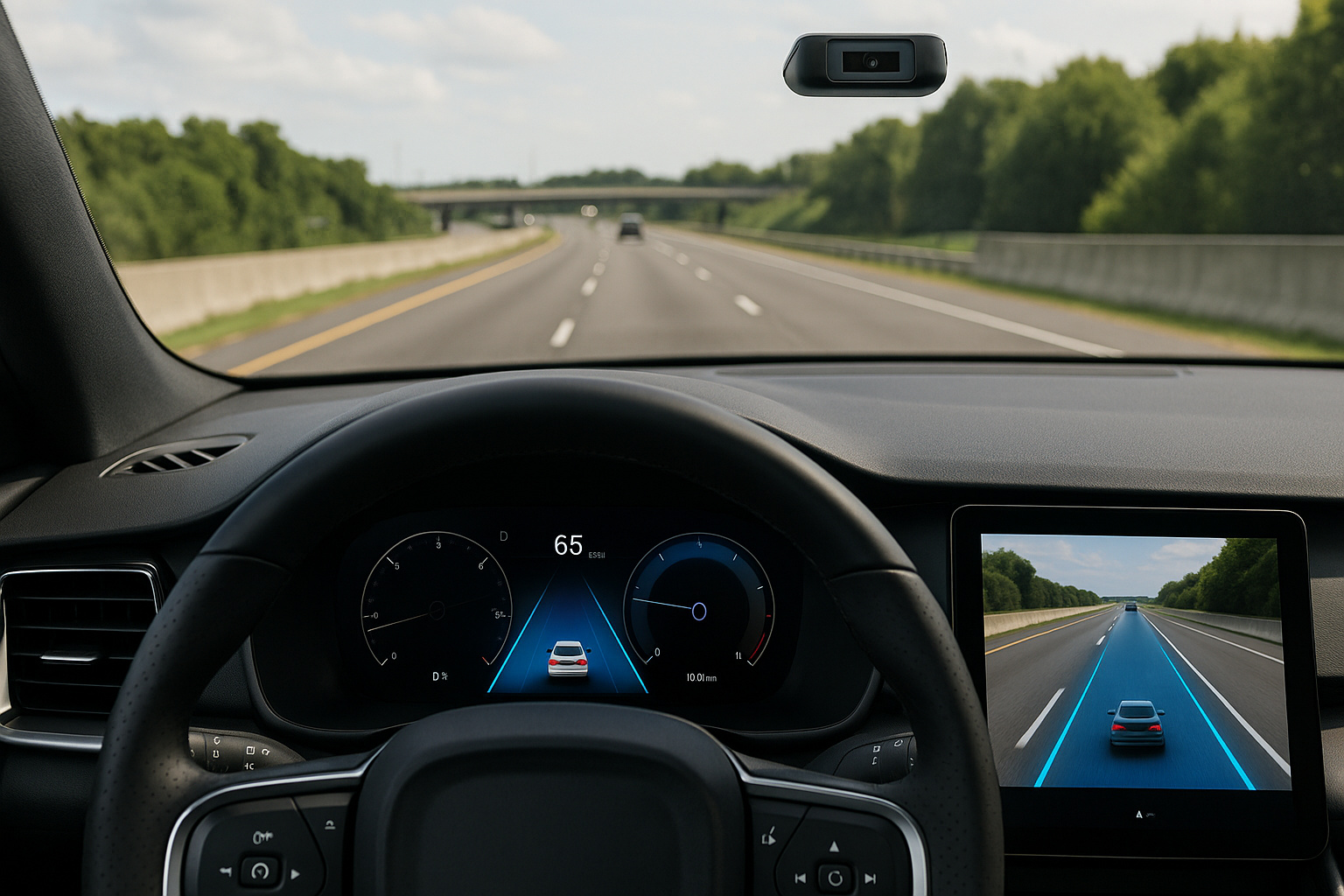
Google Maps With AI Uses Cameras and Sensors from Cars to Guide with Unprecedented Accuracy, Debuting in the Polestar 4 and Marking a New Automotive Era.
Google Maps Receives Update with AI and Aims for the Future of the Automotive Sector
Google has announced a major revolution in the automotive sector. Google Maps will “see” the road with car radars and cameras. The feature uses embedded artificial intelligence to guide with greater precision. The feature, called Live Lane Guidance, will be available in 2026.
The new automotive technology uses data from ADAS sensors and front cameras. Thus, the system understands in real time the exact lane of the vehicle. Additionally, it indicates which route to follow. Google aims to eliminate an old problem of Maps: lane errors in complex roads and large cities.
Embedded AI Technology Promises Smarter Navigation
Unlike the current versions of the app, which rely solely on GPS and internet connection, the new Live Lane Guidance processes automotive AI locally. Thus, the system cross-references information from cameras, sensors, and location to guide the driver autonomously and safely.
-
For R$ 32,000, a brand new Hyundai car is a rival to the Kwid with a 1.2 engine producing 82 hp, 6 airbags as standard, multimedia with wireless Android Auto, up to 391 liters in the trunk, and a refreshed look for 2026 in India.
-
He bought a new car in 1983, locked it in the barn in 1988, and no one opened the door for 38 years until the family discovered what was stored inside and realized it looked like something out of a movie.

-
A 250cc motorcycle that can reach 560 km with a 14-liter tank, features disc brakes on both wheels and is among the most well-known in Brazil.

-
Man finds over 200 rare cars abandoned on a lot and tries to do the impossible in 8 hours with a surprise at the end.

Moreover, the feature displays visual and audible alerts when the car leaves the correct lane, making the driving experience smoother and more intuitive.
This way, Google Maps starts offering almost real-time driving assistance, even in areas with unstable signal— a crucial advancement in regions like Avenida Paulista, in São Paulo, where GPS and radio interference is still frequent.
Polestar 4 Will Be the First Car with Google’s Technology
The global debut of Google’s new AI will take place in the Polestar 4 2026, a model that will also introduce Android Automotive, the complete operating system developed by the tech giant.
Unlike Android Auto, it fully replaces mirroring interfaces, allowing all vehicle controls to be integrated directly into the system.
Polestar, a brand born from Volvo’s performance division in 1996 and now under the command of Geely Holding, is one of the automakers that bets the most on innovation and automotive electrification.
For Google, the partnership symbolizes the union between automotive software and hardware in one technological ecosystem.
AI Identifies Lanes and Traffic Signs with Millimeter Precision
According to the manufacturer, Live Lane Guidance can interpret the surrounding environment of the vehicle based on images captured by one of the front cameras.
“The feature detects which lane the car is in using Google’s advanced AI in the vehicle to analyze elements on the road, such as lane markings and traffic signs, captured by one of the forward-facing cameras in the Polestar 4,” the brand reported.
On the 10.2-inch digital display, the driver will see a live view of the road, showing the available lanes and route instructions in real time. This integration of AI, sensors, and GPS makes navigation more natural, less dependent on a connection, and, above all, safer.
Advancement That Can Redefine the Standard for Automotive Navigation
With the launch, Google Maps is preparing to redefine automotive navigation. The tool aims to compete directly with the most advanced platforms in the market. Thus, the new feature could consolidate Android Automotive as the leading global reference among embedded systems.
In the coming months, Live Lane Guidance will start operating on highways in the United States and Sweden. After that, the technology will be extended to other cars and countries. Meanwhile, the automotive sector closely watches the impact of this innovation, which uniquely combines AI, connectivity, and safety.
Thus, Google strengthens its presence in the automotive market and takes a decisive step toward the future. Now, cars not only hear the driver— they also see for him.










-

-

-

12 pessoas reagiram a isso.