





 Portuguese
  English
  Spanish
  4 min of reading
  0 comments


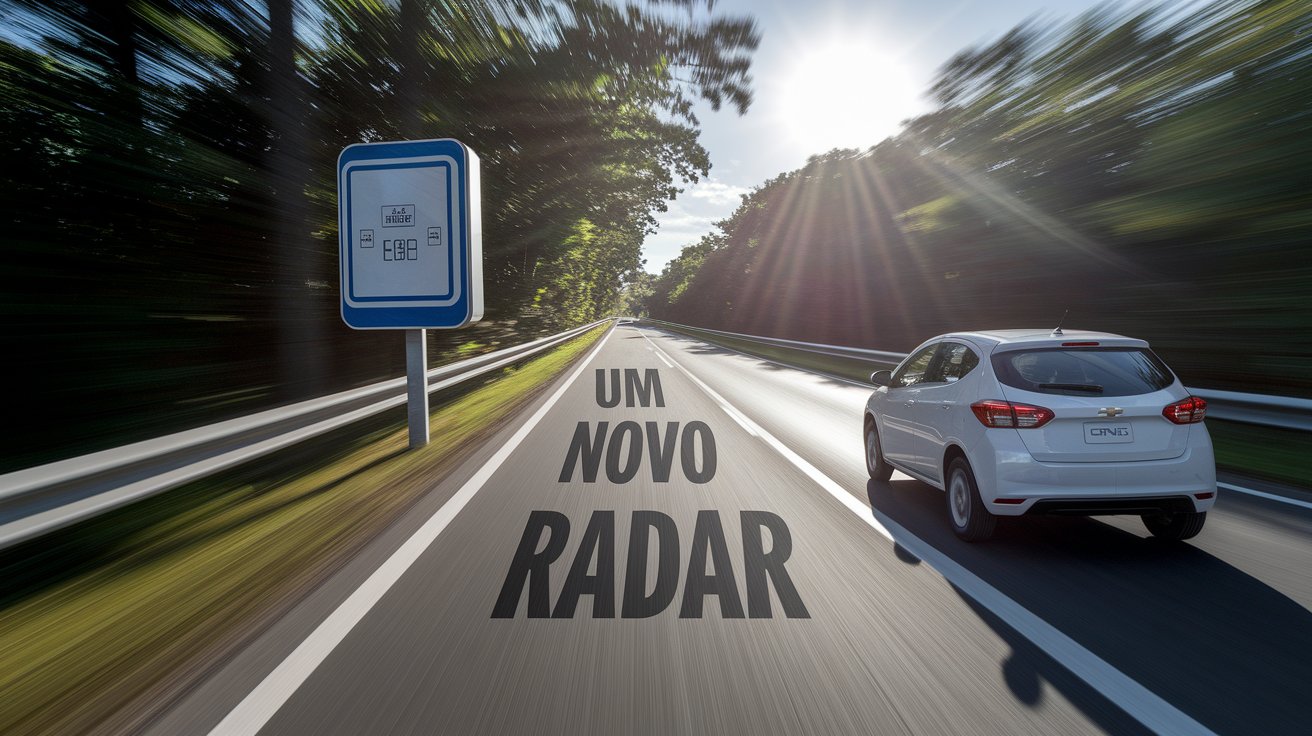
Did You Know That The Radars On BR-050 Can Change Your Behavior On The Road? The Installation Of A New Radar With Average Speed Technology Promises To Revolutionize Highway Safety In Brazil.
Two state-of-the-art radars have surprised drivers traveling on the Chico Xavier Highway (BR-050), between Uberaba and Delta.
Located at kilometers 171 and 182, in the Uberaba-Delta direction, these devices are making history by adopting an innovative system that goes beyond simple speed measurement at fixed points.
Instead, they calculate the average speed of vehicles along a specific stretch of road.
-
The government requests the Federal Revenue Service for a new system to automate the income tax declaration, reducing errors, time, and bureaucracy for millions of Brazilians.

-
Pix in installments, international Pix, and contactless payment without internet: the Central Bank revealed the new features coming to the tool that is already used by almost every adult in Brazil.

-
A French brand placed a car on four huge red balloons to prove that its suspension made the vehicle “float,” and the surreal scene became one of the most iconic and unusual images in automotive history.

-
Mercado Livre has just started selling medications with delivery in up to three hours to your door, and this move could completely change the way Brazilians buy medicines on a daily basis.


This model of supervision, which is already widely used in countries such as Italy, aims not only to fine offenders but also to prevent accidents and encourage drivers to respect speed limits.
The method has proven effective in reducing accidents, which has generated high expectations about the impact of this new approach in Brazil.
What Makes The New Radar System So Different?
Traditionally, the radars used on Brazilian highways work by measuring the instantaneous speed of vehicles, recording only the speed at a specific point on the road.
The new radar, however, has a technology that allows it to monitor the average speed of vehicles over a stretch of road, making it more effective in traffic enforcement.
The main difference of this system is that it does not limit itself to flagging drivers who exceed speed limits at fixed points, but rather during the total journey of a segment.
This means that even if a driver manages to slow down at a specific point before passing the radar, if they speed up again and do not obey the speed limit during the monitored stretch, they could be fined.
This approach aims to curb the common practice of speeding up and abruptly braking when approaching a radar.
The decision to implement this innovative system on BR-050 came as part of an effort to increase safety on Brazilian highways, where, historically, the number of accidents has been concerning.
Eco-050, the concessionaire responsible for managing the road, aims to transform BR-050 into a model of safe and efficient roadway.
Gradual Implementation For Motorist Awareness
At the beginning of the operation, the radar was treated more as a phase of awareness than a punitive tool.
During the first months of operation, no fines were issued, allowing drivers to get used to the new system and adjust their behaviors.
According to the Federal Highway Police (PRF) and teams from Eco-050, this initial phase aimed to educate the public and demonstrate how the system works.
The presence of authorities on-site was also important to ensure that drivers understood how the radar operated, avoiding surprises and confusion.
The expectation is that over time, fines will start being issued, but always with the focus on changing the culture of Brazilian drivers regarding respect for speed limits and road safety.
According to experts, reducing accidents on highways can be significantly achieved when drivers are more aware of the risks they take by disregarding speed limits.
With the implementation of the new radar system, it is expected that drivers will adjust their behavior and consequently reduce the number of accidents and fatalities on the roads.
Expected Results And Impact On Highway Safety
According to assessments conducted by highway concessionaires, radars like these play a crucial role in reducing fatal accidents.
The presence of these devices has proven effective in decreasing the number of deaths on the roads, especially in areas with high incidence of collisions and serious accidents.
With the average speed system operating along a length, the goal is to prevent speed excesses that are often responsible for major accidents.
Studies show that stricter enforcement on Brazilian highways has contributed to a decrease in accidents, especially when compared to previous years.
Although Brazil still faces challenges related to road safety, innovations like this have the power to bring significant changes for accident prevention.
The implementation of this radar in Uberaba is seen as an important step to make Brazilian highways safer and less prone to fatal accidents.
Eco-050, in partnership with PRF, believes that the change in driver behavior will be gradual but lasting over the coming months.
The Radar That Is Already Changing Habits On The Highways
Drivers on BR-050 now need to pay extra attention to the importance of maintaining a constant speed within the limits set by the signage.
The use of average speed radars represents a step forward in road monitoring technology, bringing Brazil in line with traffic enforcement practices in European countries.
Moreover, the use of this type of radar has the potential to positively impact reducing public health costs, since traffic accidents generate high costs for the healthcare system, not to mention the emotional and social impact on victims and their families.
Therefore, the installation of these radars has a preventive character not only for people’s safety but also for the well-being of society as a whole.
Another notable benefit of the new radar system is the encouragement of increased enforcement by local authorities, making drivers feel more observed and, consequently, more responsible.
This is reflected in the reduction of risky behavior observed on many Brazilian highways, such as speeding, improper overtaking, and lack of attention while driving.
And you, what do you think of this new technology? Are Brazilian drivers ready to adopt more responsible habits on the road?








-

2 pessoas reagiram a isso.