





 Portuguese
  English
  Spanish
  5 min of reading
  0 comments


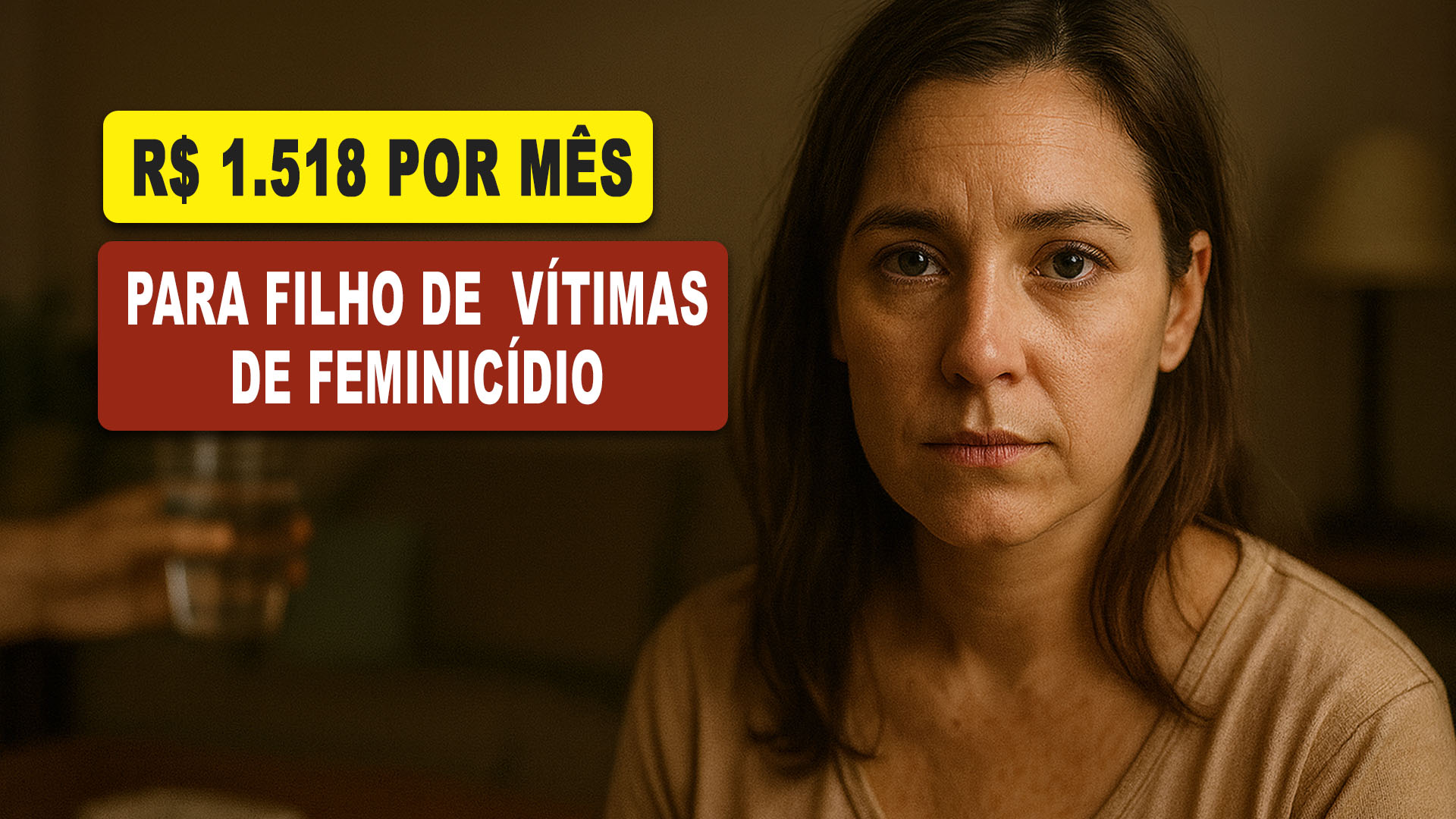
Benefit Will Ensure A Minimum Monthly Salary For Children And Dependents Of Victims Of Femicide Up To 18 Years Old, Provided The Family Is Registered In CadÚnico And Has A Low Income. Experts See Progress, But Warn That The Country Still Sets Records For Femicides.
Starting in December, the federal government is expected to begin paying the special pension for children of femicide victims, almost two years after the law establishing the benefit was created. The confirmation was made by the Minister for Women, Márcia Lopes, in an interview with the program “Good Morning, Minister,” from the Empresa Brasil de Comunicação (EBC).
According to the minister, the new pension is seen as “a minimum reparation from the Brazilian state” for children and adolescents who lost their mother due to gender-based violence and, often, began living with grandparents or other relatives without any guaranteed income.
The benefit was established in the Law No. 14,717/2023, which created a special pension for children and dependents under 18 years of age orphaned due to femicide, and regulated by Decree No. 12,636/2025, published at the end of September in the Diário Oficial da União.
-
The Senate approves a bill that criminalizes misogyny, hatred, or aversion towards women, and includes the crime in the Racism Law with a penalty of up to 5 years.

-
Chamber Approves Bill That Allows Pepper Spray for Women Over 16 and Imposes Strict Rules for Purchase, Possession, and Use as Self-Defense

-
Chamber Approves Law to Combat Leucaena, Fast-Growing Plant That Dominates Land and Threatens Native Species in Various Regions of the Country

-
Asset Division: Know What Cannot Be Divided in Case of Divorce


In practice, the measure creates a new layer of social protection for femicide orphans, in a country where this type of crime reached a historic record in 2024, with 1,492 women murdered for gender reasons, equivalent to four murders per day, according to the 19th Brazilian Yearbook of Public Security.
How The Special Pension For Femicide Orphans Works
The special pension guarantees a monthly payment of one minimum salary, currently R$ 1,518, for each family unit with children or dependents under 18 years of age orphaned due to femicide. The amount is divided equally when there is more than one beneficiary in the same family.
Despite the name, specialists in social security law emphasize that the benefit has an assistential nature, and is not contributory: it is not required that the murdered woman was insured by Social Security. Legal analyses highlight similarities with the Continuous Cash Benefit (BPC), aimed at low-income elderly individuals and people with disabilities.
The decree regulating the law establishes that the execution and management of the pension are the responsibility of the National Institute of Social Security (INSS), which will be responsible for receiving, analyzing, and granting requests, with mandatory reviews every two years to verify whether the eligibility conditions have been maintained.
Another important point is that the pension will not have retroactive effect to the date of the victim’s death. Payment will begin from the date of the request, making it essential for families to seek guidance and make the request as soon as possible to avoid losing months of income that may be crucial to their budget.
Who Is Entitled: Age, Income, And Requirements In CadÚnico
Children and adolescents under 18 years old at the time of their mother’s death have the right to the special pension for children of femicide victims, provided that the crime is classified as femicide by the justice system. The law also covers children and dependents of trans women victims of femicide, recognizing that gender-based violence affects various identities.
The benefit is intended for low-income families: the monthly family income per person must be equal to or less than 25% of the minimum wage, which currently amounts to R$ 379.50. Additionally, it is mandatory for the family to be registered in the Cadastro Único for Social Programs (CadÚnico), with data updated every 24 months.
In families with more than one orphan, the amount of one minimum salary is divided among all those entitled.
How To Request The Pension From INSS And What Documents Are Required
The request for the special pension must be made by the legal representative of the child or adolescent – generally, the responsible person who began caring for the orphan after the crime, such as a grandmother, grandfather, uncles, or another guardian. The legislation prohibits the author, co-author, or participant of the femicide from being a representative or administrator of the amount paid by the benefit.
The request can be made through the usual channels of the INSS: the website and app Meu INSS, phone number 135, or in-person service at Social Security agencies. In notes and brochures on the topic, public agencies and specialists have been advising families to also seek assistance from the Social Assistance Reference Centers (CRAS) to receive support in filling out data and updating CadÚnico.
At the time of the request, it will be necessary to present an official identification document with a photo of the child or adolescent, or a birth certificate, when there is still no RG, in addition to documents that prove the bond with the victim, such as a birth certificate or guardianship or custody document, in the case of dependents who are not biological children.
It is also necessary to prove that the death occurred in the context of femicide. For this, the decree lists documents such as flagrant arrest record, denunciation with conclusion of police inquiry, or judicial decision indicating the classification of the crime. In many cases, the family will have to follow up on the criminal process to obtain this documentation.
Another point of attention is that the payment of the pension will end when the beneficiary turns 18 years old. Young people who were already 18 years old or older at the time of the law’s publication cannot be included. The continuation of the benefit also depends on CadÚnico remaining updated and the maintenance of the income limit for at least two consecutive years.
Knowing that the government will start paying this special pension for femicide orphans, do you believe that the measure does justice to the families, or is it still insufficient in light of the gravity of the problem? Do the requirements for proving femicide and the income rules help prevent fraud, or could they exclude the most vulnerable? Leave your comment and participate.










-

-

-

3 pessoas reagiram a isso.