





 Portuguese
  English
  Spanish
  6 min of reading
  0 comments


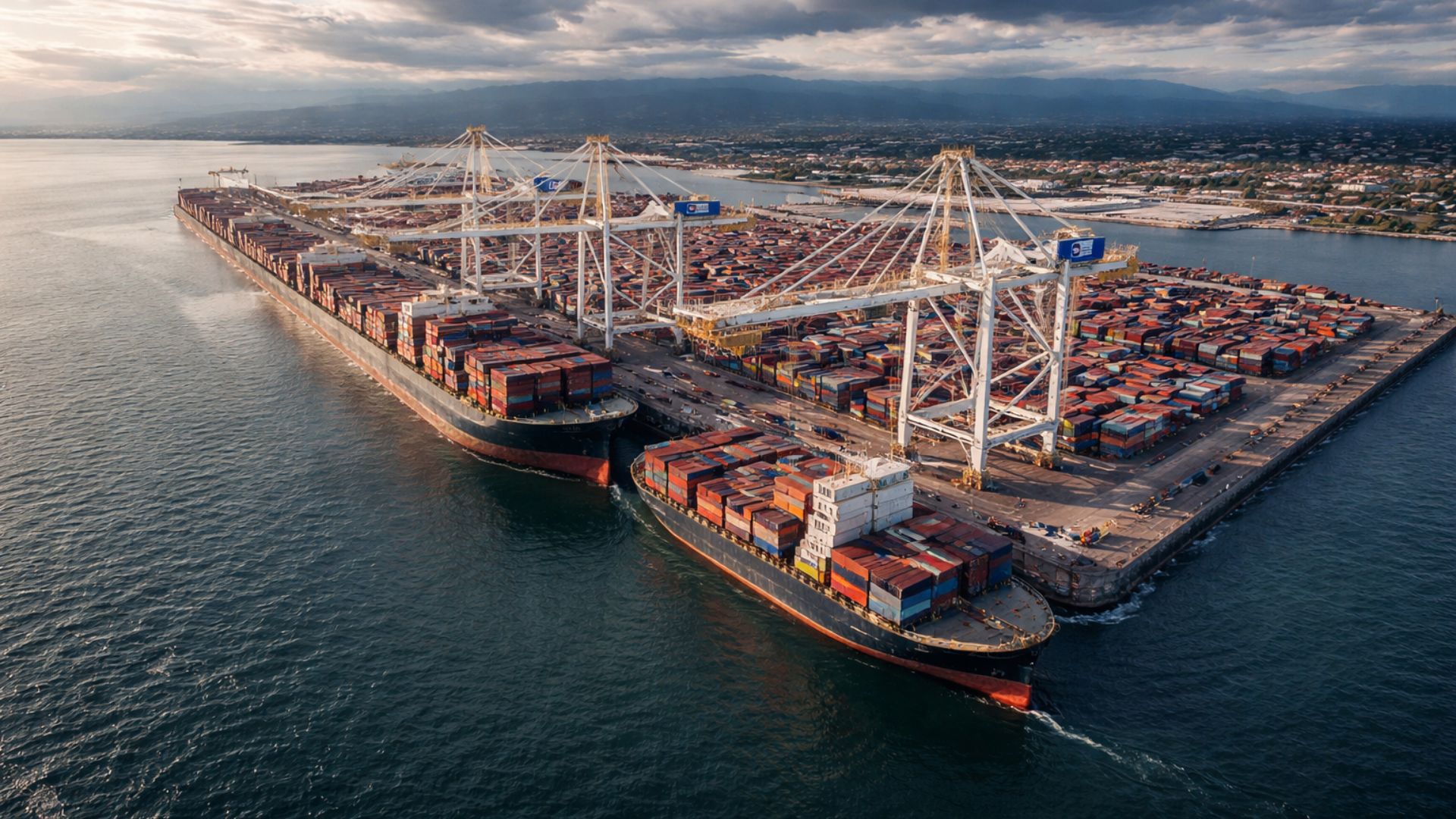
Canadian Pacific Port Megaproject Gathers Three Berths, Expansion Built Over the Sea and Strict Environmental Rules, in a Bet to Increase Container Movement and Strengthen the Logistics Corridor of the West Coast. Project Promises to Increase Annual Capacity and Redesign Operations at Roberts Bank.
The federal government of Canada has authorized the construction of Roberts Bank Terminal 2, a new container terminal designed to increase the capacity of the country’s main maritime trade corridor on the Pacific coast.
Proposed by the Vancouver Fraser Port Authority, the project includes the construction and operation of a marine terminal with three berths at Roberts Bank, in the Delta region of British Columbia, promising to add 2.4 million TEUs per year to the system when fully operational.
Roberts Bank Terminal 2 and the Expansion of the Port of Vancouver
The project is planned alongside existing facilities, such as Deltaport and Westshore Terminals, in an area known for its logistical role and, at the same time, for its environmental sensitivity.
-
Spain surprises the world by erecting 62 artificial dunes, mixing sand with natural remains of posidonia, and causing the structure to lose only 1.4% of its volume in 1 year.

-
With 16 Bulava missiles, improvements in acoustic stealth, and a design focused on silent patrols, Russia’s nuclear submarine was born to ensure Moscow’s invisible retaliation and has become one of the pillars of its maritime strength.

-
‘Populous’ city in Rio among the worst in Brazil in national ranking and exposes silent development crisis.
-
Couple buys house in the South Zone of São Paulo, opens a hidden door in the garage, and finds a secret wine cellar with dozens of old wines forgotten since the 1970s.


The federal impact assessment agency itself describes Roberts Bank Terminal 2 as an expansion aimed at providing additional capacity for containers at a strategic point on the Canadian west coast, keeping operations concentrated in a port area where maritime and land access infrastructure already exists.
The scale of the plan is evident both in its dimensions and construction method.
The proposal involves creating new operational areas over the sea, often depicted in maps, technical renderings, and satellite images available to the public, which helps explain the visual appeal of the project.

Practically speaking, this is a terminal that relies on significant coastal intervention to accommodate the necessary yards, equipment, and quay front for container ships, along with reinforcing the rail and road connections that support cargo movement.
Environmental Conditions and Rules for the Advancement of the Project
Although the decision to allow the project to proceed was announced as an important step for the country’s logistical capacity, it came with an extensive set of conditions.
In the federal announcement regarding the authorization, the government stated that the project could move forward as long as it complies with 370 legally binding conditions aimed at environmental protection, local wildlife, and land use activities related to communities and indigenous peoples.
The official text highlights that the assessment considered concerns raised in consultations, including effects on the coastal environment and required mitigation measures to reduce impacts.
This framework sets the tone for how Roberts Bank Terminal 2 is treated by authorities: on one hand, as essential infrastructure to maintain competitiveness and predictability on an international trade route; on the other, as an intervention that only receives the green light within strict, verifiable, and conditioned limits.
The project’s page maintained by the federal government describes the terminal as a “new marine container terminal with three berths” and emphasizes the additional capacity number, making clear that the central objective is to increase the annual volume of movement at Roberts Bank.
Strategic Location and Environmental Sensitivity in British Columbia
The location of the project helps explain why it has garnered so much attention.
Roberts Bank is near the mouth of the Fraser River and is part of a coastal zone with significant circulation of migratory birds and marine life, as well as being part of an estuarine system that connects freshwater and saltwater environments.
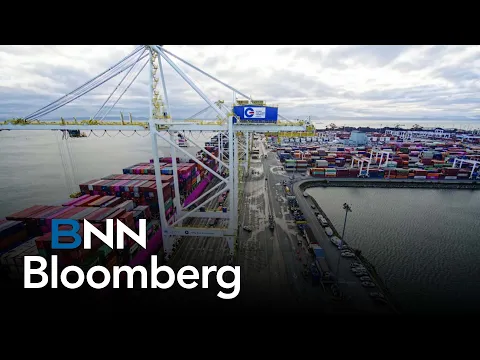

This is precisely why federal licensing and environmental monitoring take center stage: the project is not just a port construction but a physical transformation in an area where economic activities and sensitive ecosystems coexist.
Pacific Gateway Corridor and Container Capacity
Beyond the docks, the logic of the terminal depends on modal integration.
The Canadian government describes the initiative as part of an effort to sustain the so-called “Pacific Gateway”, a commercial corridor that concentrates a significant part of the flow of goods between North America and Asia.
In public materials, the project is contextualized as a response to medium-term capacity needs, mentioning an operational horizon in the mid-2030s, a reference used in institutional documents that describe when the facility could be fully operational, depending on compliance with stages and conditions.
Port Engineering, Access, and Rail Integration
The engineering behind the terminal has also been publicly presented in technical documents of the environmental process itself.
One of the components associated with the project is the expansion of the elevated access structure and improvement of the rail connection along the corridor that links the terminal to the mainland, reinforcing the role of trains in the removal of containers and distribution to other regions.
In a port project of this nature, efficiency is no longer just productivity at the dock; it becomes the ability to keep the cargo flowing out of the port without creating bottlenecks in yards, roads, and railways.
Federal Assessment, Consultations, and Oversight
However, as advancement is conditioned, the project has also become a reference for how large logistical projects can be subjected to high environmental standards.
The federal announcement accompanying the decision describes the conditions as legally mandatory and aimed at protecting the environment, wildlife, and land uses.

This includes requirements for monitoring, mitigation, and specific measures to reduce risks to species and habitats, in addition to commitments that must be verified throughout development and operation.
The discussion surrounding Roberts Bank Terminal 2 has also drawn attention for involving different levels of government and regulatory stages.
The process underwent federal assessment, with analysis of environmental, social, and economic effects, and was accompanied by decisions and public documents detailing how recommendations were treated.
This documentation trail has been used by both advocates of the expansion, who highlight its relevance for the country’s commercial infrastructure, and critics, who point out the need for ongoing caution in a complex coastal environment.
Billion-Dollar Investment and Public Impact
In economic terms, part of the public reaction also involved cost estimates released by Canadian news outlets, which described the terminal as a billion-dollar venture.
These figures vary depending on scope, timeline, and associated work packages, but the central idea that gained traction is that of a large-scale investment, anchored in heavy, long-term infrastructure, with direct implications for the logistical capacity of western Canada.
Still, the factual core of the project, as presented in government sources, remains stable: a container terminal with three berths at Roberts Bank, proposed by the local port authority, alongside existing terminals, expected to add 2.4 million TEUs per year and with the obligation to meet hundreds of environmental conditions to advance.
It is this combination of scale, sensitive location, and regulatory demand that makes Roberts Bank Terminal 2 a topic capable of attracting readers beyond Canada, especially in a scenario where global supply chains increasingly rely on port capacity and operational predictability.
If a terminal of this size can only advance tied to hundreds of environmental conditions, how will major maritime hubs around the world balance logistical expansion and the protection of coastal ecosystems?






-

-

-

-

-

15 pessoas reagiram a isso.