





 Portuguese
  English
  Spanish
 4 min of reading
  109 comments


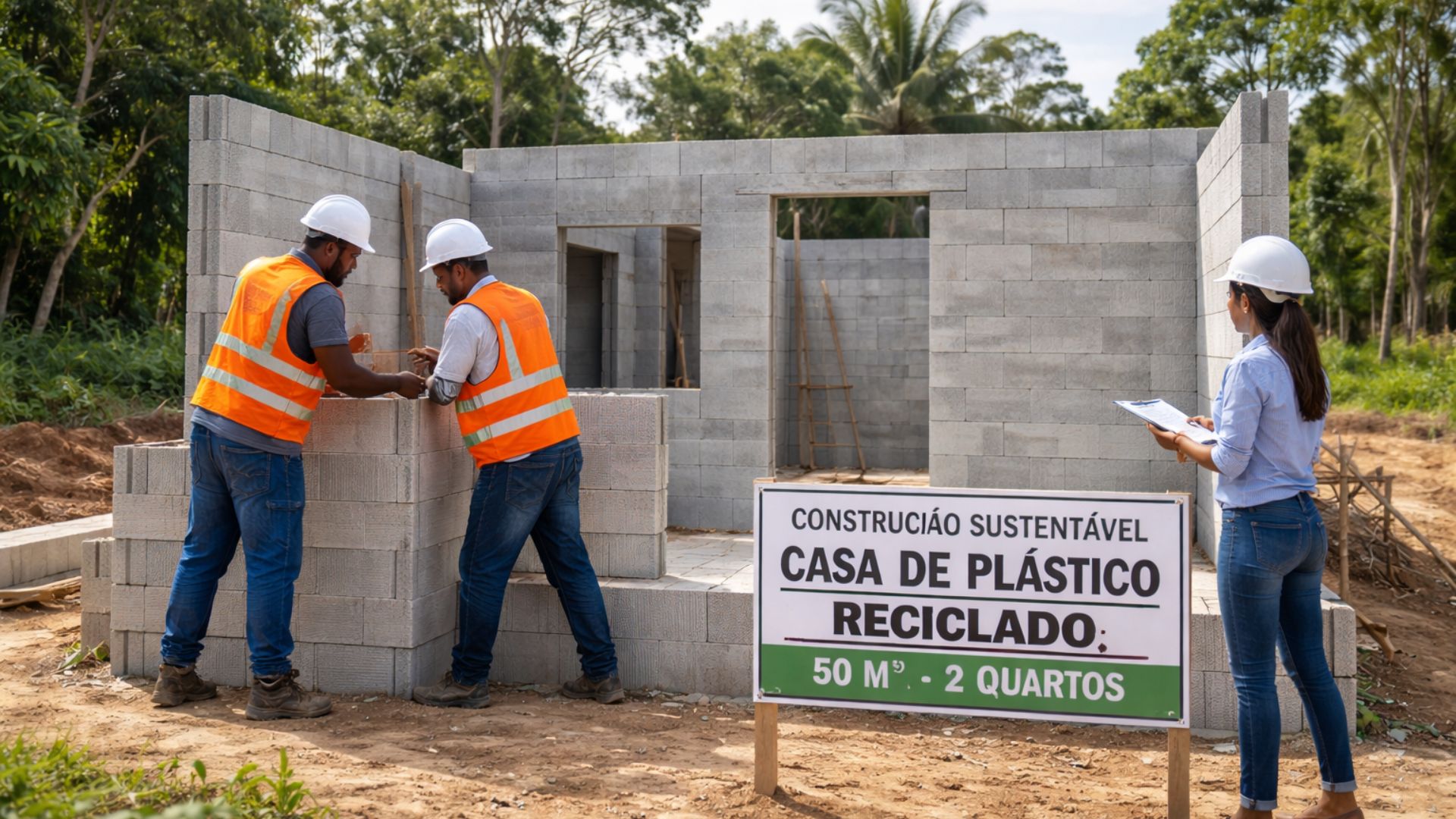


Project In Amazonas Uses Recycled Plastic For 50 M² Homes Assembled With Interlocking Pieces In A Few Days, Promising Quick Delivery And Focusing On Low-Income Families.
The Government of Amazonas has initiated the implementation of a model for affordable housing made of recycled plastic blocks, with units of 50 m² assembled using interlocking pieces, without mortar, within a timeframe disclosed of up to five days to raise the main structure.
Presented as a pilot project, the plan aims to start with 25 houses in Iranduba, in the Metropolitan Region of Manaus, prioritizing low-income families and, especially, those who need to be relocated from areas classified as risky.
Instead of relying solely on traditional materials, the proposal transforms post-consumer waste into modular pieces that make up walls and partitions, in an attempt to reduce plastic waste and shorten logistical distances within the state itself.
-
The lack of welders, electricians, and operators becomes a structural threat in 2025, with the construction industry and manufacturing already suffering from delays, cost pressures, and labor shortages in Brazil.
-
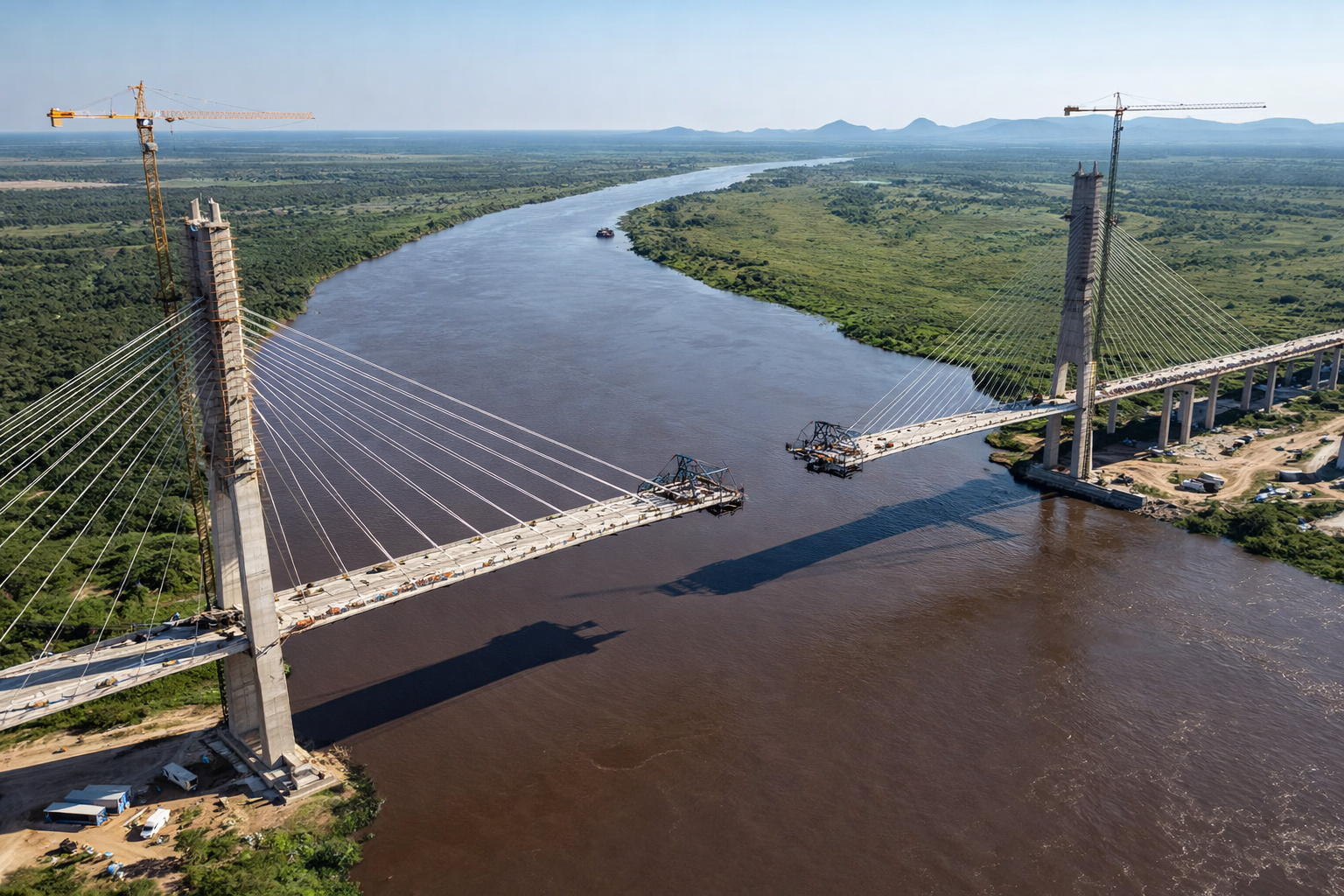
Brazil and Paraguay are just 46 meters away from a historic union on the bioceanic bridge that promises to revolutionize trade between the Atlantic and the Pacific.
-
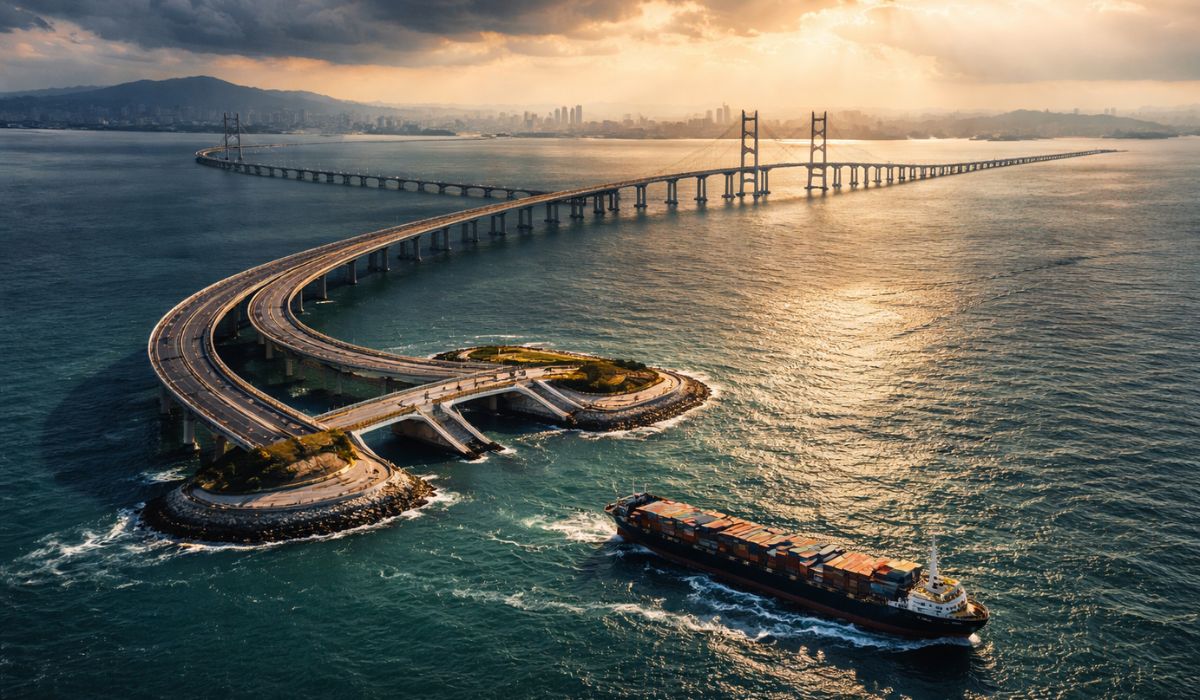
With 55 km over the sea, a cost of US$ 20 billion, and enough steel to build 60 Eiffel Towers, China’s largest project has connected Hong Kong, Zhuhai, and Macau in a colossal bridge that defies the logic of engineering.
-
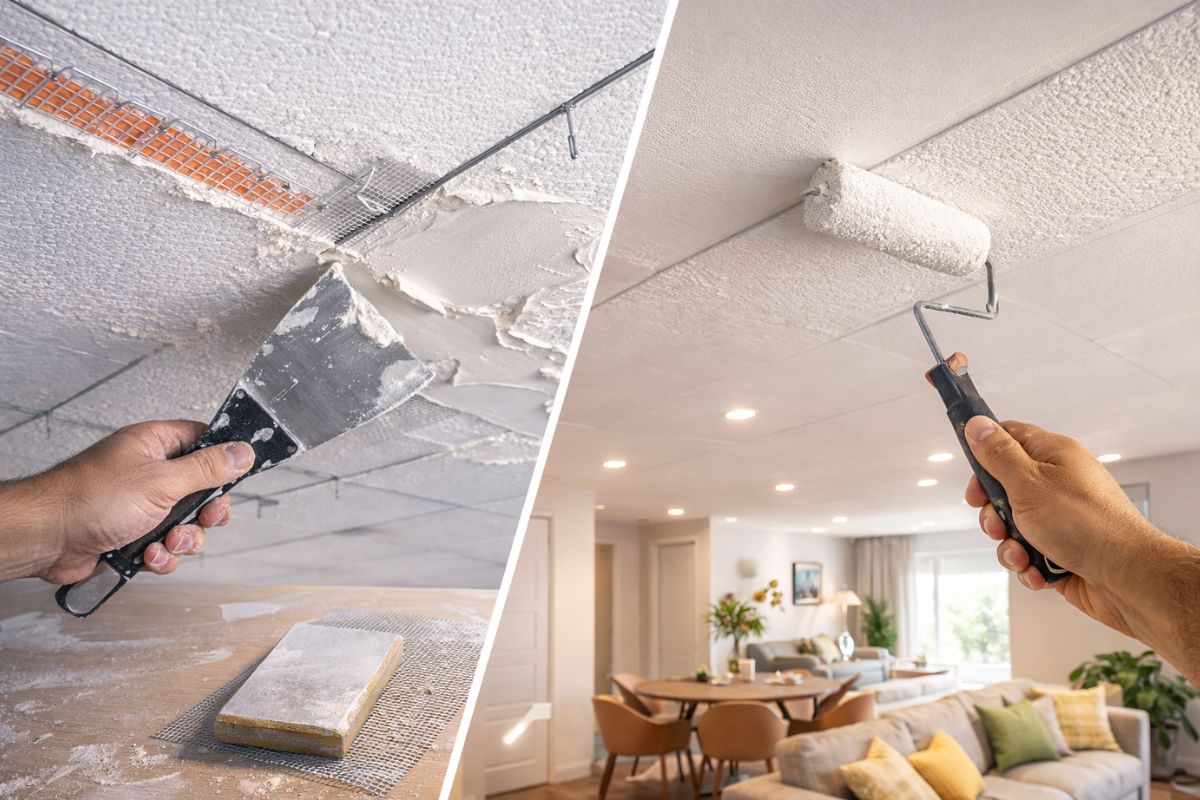
A trick with joint compound transforms a Styrofoam ceiling into a plaster-like ceiling: leveled panels, wires and mesh at the joints, sand, paint, and change the environment while spending little today.

At the same time, the government links the delivery of the houses to a new industrial structure in Manaus, created to process the material that previously used to leave Amazonas for recycling in other locations, raising costs and limiting the scale of reuse.
How The 50 M² House Assembled By Interlocking Works
With a design focused on basic use, each unit has two bedrooms, a living room, a kitchen, and a bathroom, in square footage reported by the government as the initial standard for the project, aligned with a format of social housing for small families.

In the assembly, the recycled plastic blocks fit together in an interlocking system, which reduces stages on site compared to conventional masonry, as the structure dispenses with mortar and bets on standardization of pieces.
According to the program presentation, the promise of speed refers to the time required to raise the structural part with the modules, while other phases of the process, such as site preparation and installations, also influence the final schedule.
The defense of the model includes the argument of adaptation to the hot and humid environment of the region, where problems such as infiltration and mold are recurrent in constructions with irregular maintenance, although the government did not detail technical tests in the announcement.
Resistance To Humidity And Comfort In The Amazon Climate
According to state agencies, the material was designed to withstand typical conditions of Amazonas, with high humidity and persistent heat, by using recycled polymers processed to become construction blocks with standardized interlocks.
In addition to durability, the project also points out benefits related to thermal comfort, stating that the modular system can help reduce the sensation of heat inside, although no public performance indicators comparison has been disclosed.
As part of the announced design, the modular logic allows for adaptations and expansions with less need for demolition, as the house can receive new modules over time, as the family grows or new needs arise.
Meanwhile, the accelerated execution appears as a response to a known bottleneck in housing policies, where the distance between beneficiary selection and occupancy tends to stretch due to lengthy works and successive contracting stages.
The Recycling Center In Manaus And Production Capacity

To supply the construction, the government inaugurated in Manaus the Civil Defense Recycling Center, which will concentrate the transformation of plastic into blocks, connecting collection, processing, and final use within the Amazonian territory.
The initial capacity reported for the plant is more than 80 tons of plastic per month, a volume described as sufficient to produce components for up to ten houses monthly, depending on the material consumption pattern of each unit.
In the presented strategy, part of the plastic is to be acquired from cooperatives and associations of waste collectors, with the intention of creating stable demand for selective collection and increasing income generation for those working at the base of the system.
In an update released by state environmental agencies, the project also mentions the presence of a biodigester in the houses and an estimated cost of R$ 60,000 per unit, although the government has not published, at the same level of detail, a breakdown of costs.
Amazonas Ecolar And What Still Needs Clarification
The initiative is part of Amazonas Ecolar, described as a policy that combines housing and circular economy by transforming an environmental liability into a construction supply, with the possibility of using the blocks in community facilities and other structures.
Even with the presentation of the pilot and the recycling infrastructure, the available public material does not explicitly clarify, with the same clarity, criteria for selecting families, the total source of funding, and scale goals beyond the initial phase in Iranduba.
Nonetheless, by linking housing to the efficiency of recycling and collection logistics, the government places the program before a practical test that depends on continuous production, quality control, technical assistance, and transparency about delivery timelines.
With the first units under construction and an official deadline for delivering the pilot set for March 2026, what results will the population observe in practice regarding cost, maintenance, and speed of occupancy when these houses begin to be inhabited?








Muito interessante o projeto, parabéns ao pessoal que idealizou e colocou em pratica. Como sempre tem comentários ignorantes de pessoas que não entendem nada sobre assunto falando que é altamente inflamável ou que é muito quente. Deveriam usar a internet pra pesquisar algo sobre casas de plástico reciclável antes de sair emitindo sua opinião completamente i g n o r a n t e sobre o assunto
Só serve como casa de boneca e casa de brinquedo em quintal. É pior que boate Kiss. Esse site está louco ou ****.
Isso é incrível
Talvez seja a solução para todos os outros estados brasileiros se for possível é claro uma economia muito boa porque apartamento está em média,180 ou mais