





 English
  Francês
  Alemão
  Italiano
  Japonês
  Norueguês
  Portuguese
  Spanish
  3 min of reading


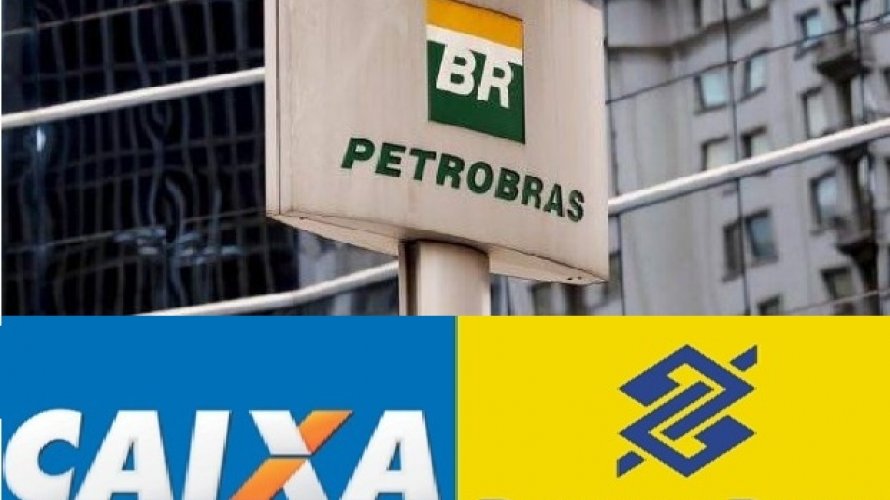
The Government’s Economic Team Reviewed Its Policy for State-Owned Enterprises and Will Now Cease to Privatize at Least 12 Companies.
Today, there are 134 state-owned companies, of which the 18 dependent on the Treasury demand about R$ 20 billion annually. The intention of Minister Paulo Guedes is to sell the companies to reduce public debt. Currently, the value of state-owned enterprises corresponds to 27% of the net debt of the public sector. In 2010, that ratio reached 60%. The government is still studying the fate of other companies. This includes the Postal Service, which has already had the analysis for its sale released by Bolsonaro.
In addition to Petrobras, Banco do Brasil, Caixa Econômica Federal, and Banco Nacional de Desenvolvimento Econômico e Social (BNDES), the Ministry of Economy added to the list of companies that will not be sold eight of the 18 state-owned enterprises that rely on Treasury funds to survive.
-
Government unlocks R$ 554 million for a highway that has been requested for decades and accelerates the duplication of BR.
-
Without bricks, without cement, and without endless construction: the cardboard house that is assembled in modules and can be moved.

-
Billions of barrels on the equatorial margin could lead Amapá to double its oil production in Brazil — the state aims to enter the route of companies in the Campos Basin, attract investments, and boost jobs and businesses in the oil and gas sector.
-
Without bricks, without cement, and without endless construction: the cardboard house that is assembled in modules and can be moved.

Among them are military sector companies such as Amazônia Azul Tecnologias de Defesa (Amazul). Linked to the Navy, it develops the nuclear-powered submarine. The project began in 2012 and was supposed to be completed in 2025 — with delays, the completion has been postponed to 2029.
Another company to be retained is the Empresa Gerencial de Projetos Navais (Emgepron), created in 2013. Also linked to the Navy, it manages orders for vessels, naval repairs, and trades goods in the sector. The Indústria de Material Bélico do Brasil, which manufactures and sells defense and security products to clients such as Armed Forces, police, and private clients, will also remain public.
Bolsonaro has also opposed the sale of companies considered strategic for the country. Embrapa, linked to Agriculture, will also be maintained. The interpretation is that companies like this generate value that is not solely measured by profit or loss.
There is a set of other companies considered important by the government to execute actions related to public policies and that, for this reason, will be maintained at this time. These include the Empresa Brasileira de Serviços Hospitalares (Ebserh), the Hospital de Clínicas de Porto Alegre, and the Grupo Hospitalar Conceição. The Companhia de Pesquisa de Recursos Minerais (CPRM), linked to the Ministry of Mines and Energy, will also remain state-owned.
Other state-owned companies may have a different fate than sale, such as the Empresa Brasil de Comunicação (EBC). Recently, Bolsonaro stated in an interview that it should be abolished.
Companies Saved from Privatization Related to Defense, Research, and Hospitals
- Amazul (Amazônia Azul Tecnologias de Defesa)
- Emgepron (Empresa Gerencial de Projetos Navais)
- Imbel (Indústria de Material Bélico do Brasil)
- Embrapa (Empresa Brasileira de Pesquisa Agropecuária)
- CPRM (Companhia de Pesquisa de Recursos Minerais)
- Ebserh (Empresa Brasileira de Serviços Hospitalares)
- HCPA (Hospital de Clínicas de Porto Alegre)
- GHC (Grupo Hospitalar Conceição)
Petrobras Operates 95% of Oil Exploration, After Twenty Years of the 1st Auction






Seja o primeiro a reagir!