





 English
  Francês
  Alemão
  Italiano
  Japonês
  Norueguês
  Portuguese
  Spanish
  2 min of reading


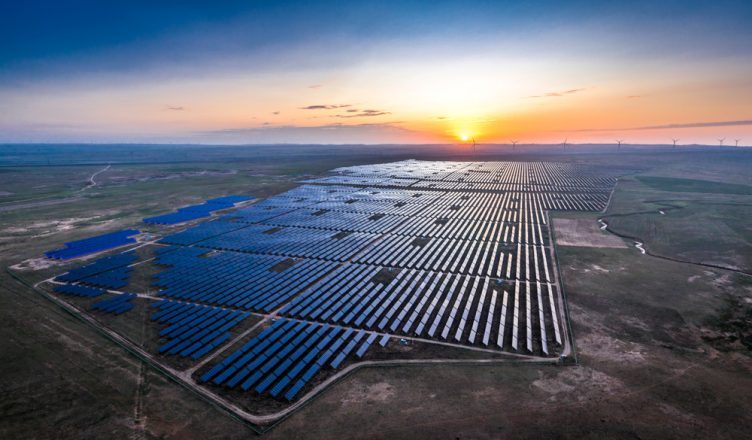
Project Will Be in PPP (Public-Private Partnership) Regime with the Government of the State of Piauí and Bidding Will Be Open for Public Consultation Until July, with Proposal Submission Expected in August
The Government of Piauí has just released a public consultation notice for the construction of mini solar photovoltaic plants totaling 5 MW.
The project will be in a PPP regime and according to the notice, it will be available for public consultation until July 11. Competitors must submit their proposals in August.
The municipalities in Piauí that will host the eight solar power plants are: Caraúbas, Miguel Alves, José de Freitas, Piracuruca, Cabeceiras, and Canto do Buriti.
According to Viviane Moura, the Superintendent of Partnerships and Concessions of the state of Piauí, “These projects are in the initial bidding process. After the public hearing, we will proceed to the proposal submission phase, still in August.”
-
Government unlocks R$ 554 million for a highway that has been requested for decades and accelerates the duplication of BR.
-
Without bricks, without cement, and without endless construction: the cardboard house that is assembled in modules and can be moved.

-
Billions of barrels on the equatorial margin could lead Amapá to double its oil production in Brazil — the state aims to enter the route of companies in the Campos Basin, attract investments, and boost jobs and businesses in the oil and gas sector.
-
Without bricks, without cement, and without endless construction: the cardboard house that is assembled in modules and can be moved.

Piauí Stands Out in Renewable Sources
It is worth noting that the state of Piauí has received many investments in the renewable energy sector and has played a prominent role in the national scenario.
At the end of last year (2018), the largest photovoltaic plant in Latin America and its 500 KV transmission line in Nova Olinda received an Environmental Operating License from the State Department of the Environment of Piauí.
The intention of the government of Piauí is to enable the state to produce its own energy and that, when released into the national distribution system, it compensates for internal consumption, thereby initially reducing electricity costs by 14%.
These investments fill Brazilians and environmentalists with pride, after all, Brazil was declared by the International Energy Agency (IEA) as the country with the least polluting energy matrix in the world and with the highest share of renewable fuels among major energy consumers worldwide.







Seja o primeiro a reagir!