Portuguese
  Spanish



Japanese military project reveals silent strategy based on electronic warfare, repurposing technology, and stealth operations to neutralize threats without direct use of weapons
The image of Kawasaki is often associated with powerful motorcycles and striking designs. However, behind this popular perception lies a much broader and strategic industrial conglomerate. It is precisely in this context that one of the most impressive creations of recent years emerges: a 140-ton aircraft that does not fire weapons but can be decisive in modern conflicts.
The information was disclosed by “Xataka,” based on analyses of the Japanese military sector and the technological development conducted by the local industry. According to the portal, the new platform represents a significant advancement in how wars may be conducted in the future.
Moreover, this innovation reinforces the role of Kawasaki Heavy Industries, a company that goes far beyond the motorcycle division into areas such as aerospace, energy, railways, and robotics. Therefore, understanding this new creation helps reveal a lesser-known side of the Japanese brand.
-
Two Design Students from Brazil Turn Recycled Plastic into Fashionable Eyewear, Earning $10 Million in a Year

-
Self-Taught Brazilian Innovator Brings Solar Power to Shantytowns Using Scrap, Solar Panels, and Phone Batteries
-
Brazil Pioneers Innovative Project to Transform Used Baby Diapers into Sustainable Solutions for Schools and Cities
-
Cargo Ship Completes Historic Nighttime Voyage to Porto Alegre, Revolutionizing Large-Scale Navigation in Brazil After 42 Years




what is the kawasaki EC-2 and why does it not fire
Unlike what many might imagine, the Kawasaki EC-2 is not a traditional fighter. Despite its imposing size and robust structure, this aircraft does not carry missiles or conventional armaments. On the contrary, the EC-2 was designed to operate in electronic warfare, a type of operation that is becoming increasingly important in modern conflicts.
In practice, this means that the aircraft has the capability to interfere with radars, block communications, and “blind” enemy systems. In other words, instead of attacking directly, it acts strategically, reducing the adversary’s ability to respond.
Additionally, this silent and highly technological approach allows military operations to be conducted with greater efficiency and less direct exposure to risks. Thus, the EC-2 represents a significant shift in the traditional logic of combat.
unusual design and structure catch the eye
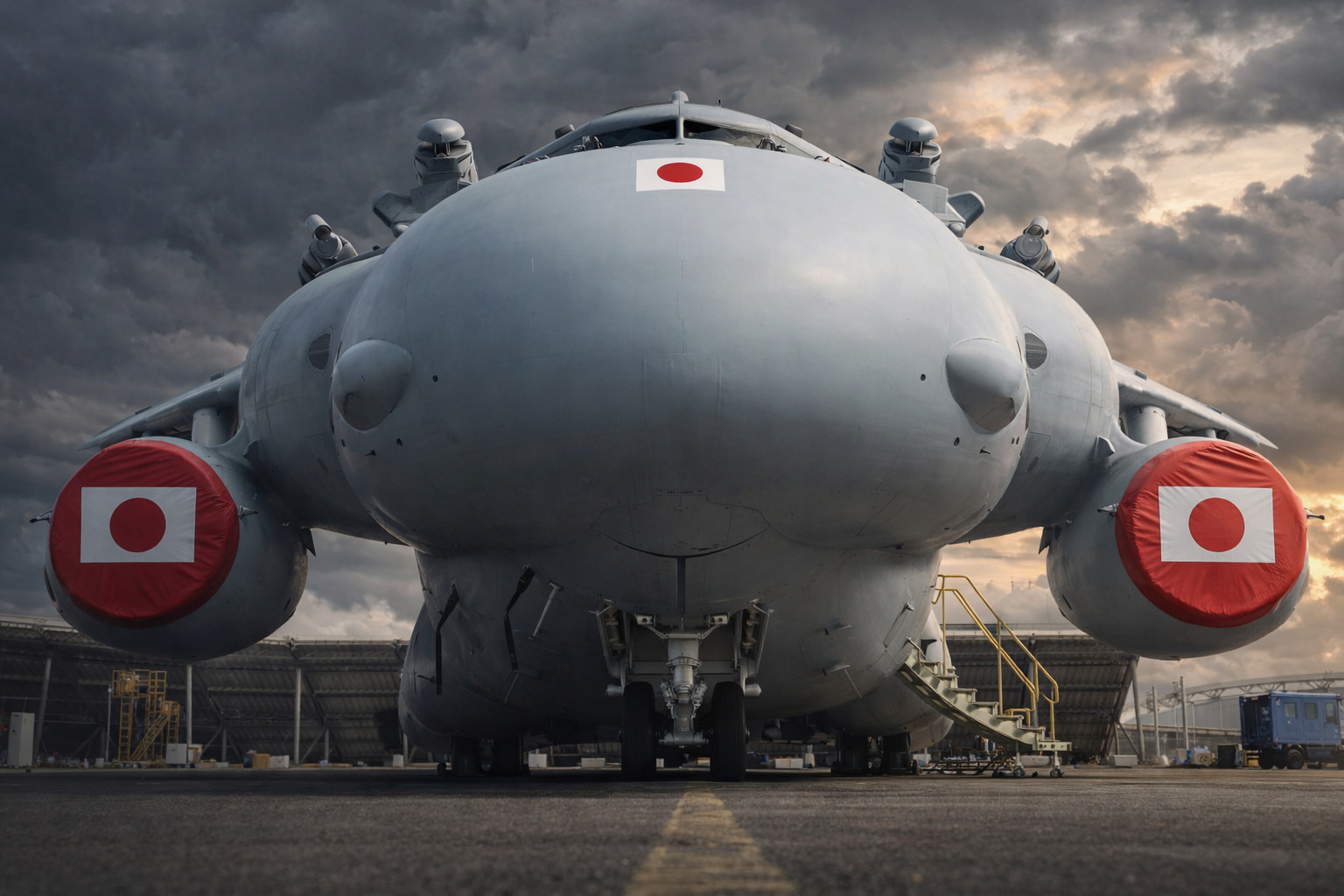
Physically, the Kawasaki EC-2 is an aircraft that impresses at first glance. Its size, estimated at around 140 tons, already places it among the most robust structures in its category.
However, what really catches the eye is the non-standard design. The model features an extremely large nose, along with various protrusions along the fuselage.
These characteristics are not merely aesthetic. In fact, they are directly linked to the onboard electronic systems responsible for conducting interference and blocking operations.
Furthermore, the aircraft has unusual rear fairings that further reinforce its strategic function. Therefore, every detail of the design has a specific purpose within the concept of electronic warfare.
military technology and strategic repurposing
Another important point is that this new platform was not created from scratch. Kawasaki is repurposing a military transport vehicle as the basis for developing the EC-2.
This type of strategy allows for cost reduction and accelerates the implementation process. Additionally, it ensures greater reliability, as the original structure has already been tested in other applications.
Consequently, the expectation is that the project will be fully operational by 2027, becoming a key asset for the Japanese armed forces, especially for the country’s Air Self-Defense Force.
Thus, more than just an aircraft, the EC-2 represents a new technological approach aimed at national defense.
kawasaki beyond motorcycles: a hidden industrial giant
Although many associate the brand solely with the world of motorcycles, the reality is quite different. Kawasaki Motors is just a part of a much larger conglomerate: Kawasaki Heavy Industries.
This company has been operating for decades in highly specialized sectors such as heavy engineering, rail transport, energy, and even robotics — including advanced projects like animal-structured robots.
Moreover, its involvement in the aerospace sector demonstrates its capacity for innovation in strategic and highly technological areas.
Thus, the creation of the EC-2 highlights a lesser-known side of Kawasaki, showing that the company also plays a relevant role in the global military landscape.
Do you believe that technologies like this can completely change the way wars are fought in the future?