





 English
  Francês
  Alemão
  Italiano
  Japonês
  Norueguês
  Portuguese
  Spanish
 4 min of reading


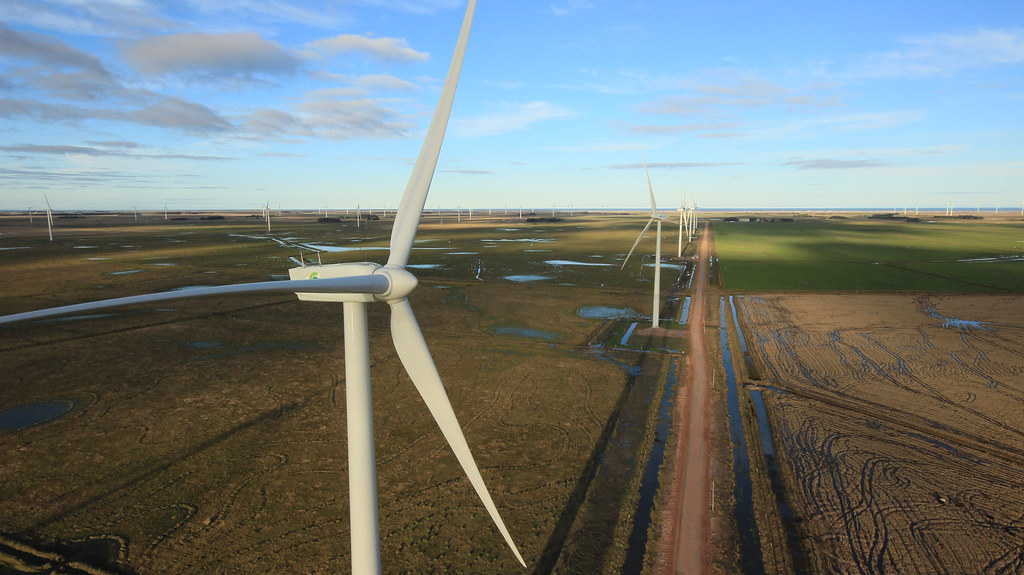
The State of Rio Grande do Norte’s Project Regarding Wind Power Plants Will Be Voted on at Conema and, Once Voted, Will Be Published and Come into Effect
In a new proposal, the Government of Rio Grande do Norte suggests that new wind energy projects with a capacity above 150 megawatts present environmental impact studies and reports (EIA-RIMA). The proposal conflicts with a recommendation from the Attorney General’s Office of the State (PGE-RN), which proposed studies for new projects above 10 megawatts (MW).
Read Also:
- Bahia Mining Company Has Job Openings for IT Professionals, Technicians, and Supervisors;
- Flying Car: Embraer Submits Certification Request to the National Civil Aviation Agency (ANAC) for Aircraft;
- The Heavy-Duty Vehicle Manufacturer Iveco Plans Investments of R$ 1 Billion in Latin America Over the Next 3 Years
According to Hugo Fonseca, Coordinator of Energy Development at the Department of Economic Development (Sedec-RN), this determination will create guidelines and regulations for new wind energy projects in Rio Grande do Norte. According to the online newspaper Tribuna do Norte, the document is set to be analyzed by the State Council for the Environment (Conema) this Tuesday (15), and once voted on, it will be published and come into effect.
“The proposal has already been sent to the Council and is in the process of being forwarded to the councilors. The hearing is scheduled for the 15th,” says Hugo. He also expresses concern regarding the wind category, noting that the requirement for environmental studies may hinder investments in a sector where Rio Grande do Norte is a leader in energy production. “We set the ‘exceptional’ size for parks above 150 MW, but we’ll only know if the councilors will accept it or not at the vote. Any councilor can suggest or propose changes,” he adds.
-
Rio Grande do Sul accelerates energy transition: State invests in renewable technologies and consolidates decarbonization strategies and pathways to attract billions in new industrial investments.

-
With 160,000 m² of collectors, an area larger than 20 football fields, Silkeborg, in Denmark, hosts a solar thermal plant that heats 19,500 homes and could become the largest solar heating plant in the world.

-
A study reveals the expansion of renewable energy procurement in Brazil and shows how companies are taking advantage of opportunities to reduce expenses, ensure energy efficiency, and strengthen strategic environmental commitments.

-
Mato Grosso do Sul excels in the sugar-energy sector: the state reaches a milestone of 22 operating mills and accelerates the production of clean energy in MS with a focus on sustainability.

For Rio Grande do Norte to comply with the national law of Conama, regulation is essential. According to the recommendation from the Attorney General’s Office, electricity plants, regardless of whether the energy source is wind or any other, above 10 MW would require environmental assessments to be licensed.
The President of the Brazilian Wind Energy Association, Elbia Gannoum, states: “Quantitative definition does not solve the problem. You can create restrictions where they are not necessary (EIA-RIMA), depending on the diversity, the biome, and you can leave areas that need protection open when you define power. So, defining power is not a technical solution to the environmental issue. The definition must be qualitative, and I hope that the work being done by Sedec follows this line. The other states are working that way too.”
For example, in Ceará, environmental impact studies are only required for energy projects over 150 MW. For Elbia, the requirement for small projects may deter investors in Rio Grande do Norte.
“If the State imposes such a restrictive target, what will happen is that Rio Grande do Norte will lose investments […] The investor will come here and find so many difficulties that they will move elsewhere, and the state will miss the opportunity and investment,” she adds.
Report in Fragile Environmental Areas
According to Hugo Fonseca, the documentation that will be voted on at Conema includes the requirement for EIA-RIMA in two cases: the installation of wind farms in sensitive locations and “Exceptional” size projects.
“That is, in areas of environmental fragility, Atlantic Forest, advanced desertification, indigenous and quilombola areas, which are more sensitive from a social and environmental point of view, EIA-RIMAs will be required there, regardless of the power. […] Those of exceptional size will already need to submit EIA-RIMA, regardless of whether they are in a fragile area or not. Normally, exceptional size would already mean 150 MW,” explains the coordinator.
PGE/RN Recommendation
The recommendation was changed due to an inconsistency observed by the agency between the state regulation of Conema and the national resolution of the National Environment Council (Conama). Rio Grande do Norte differentiates wind farms into micro (up to 5 MW); small (from 5 to 15 MW); medium (from 15 to 45 MW); large (from 45 to 135 MW); and exceptional (above 135 MW). However, the State considers all levels as potential environmental pollutants.
Thus, wind energy plants in Rio Grande do Norte are exempt from presenting the EIA-RIMA to the Institute for Sustainable Development and the Environment (Idema). Today, only a Simplified Environmental Report is required, as the enterprises have a low potential for pollution. The EIA-RIMA requires environmental compensation of up to 0.5% of the investment value.






Seja o primeiro a reagir!