





 Portuguese
  English
  Spanish
  6 min of reading
  0 comments


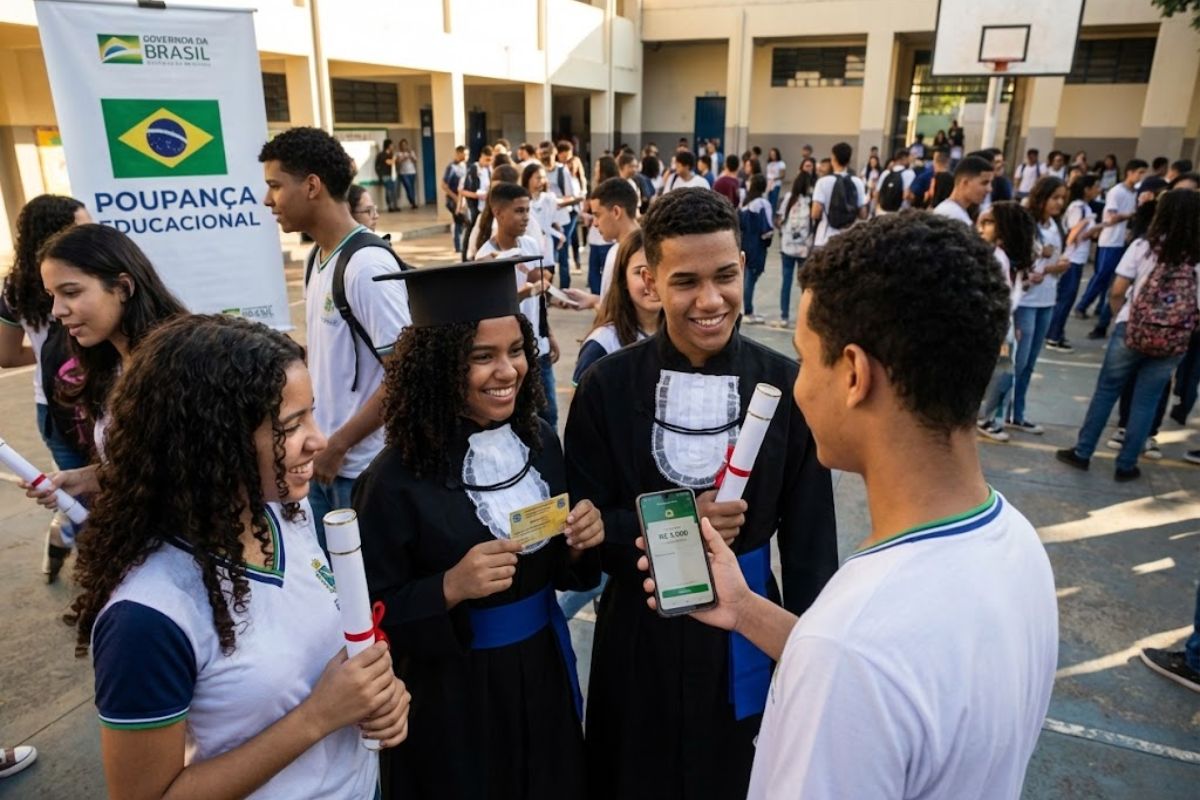
Unique Educational Savings Advance Throughout Brazil With Pé-de-Meia: Federal Government Deposits Incentives in Digital Accounts at Caixa for Low-Income Students and EJA from Public Schools. In 2026, Amounts Depend on Confirmed Enrollment, Attendance Above 80%, Annual Approval, and Participation in Both Days of Enem.
The unique educational savings launched by the federal government will operate as a package of financial incentives for low-income high school and Youth and Adult Education students in public schools across Brazil, with deposits made in digital accounts opened in the students’ names.
In 2026, the Pé-de-Meia program gains practical relevance because the payment schedule becomes a central piece to ensure predictability for beneficiaries. The structure includes bonuses for enrollment, monthly payments conditioned on attendance, annual deposits upon completion with approval, and an additional payment for those who participate in both days of Enem.
Where It Happens and How Money Reaches the Student
The operation is national, with reach across Brazil, aimed at high school and EJA students in the public network.
-
Larger than entire cities in Brazil: BYD is building a 4.6 km² complex in Bahia with a capacity for 600,000 vehicles per year, but the discovery of 163 workers in conditions analogous to slavery has shaken the entire project.

-
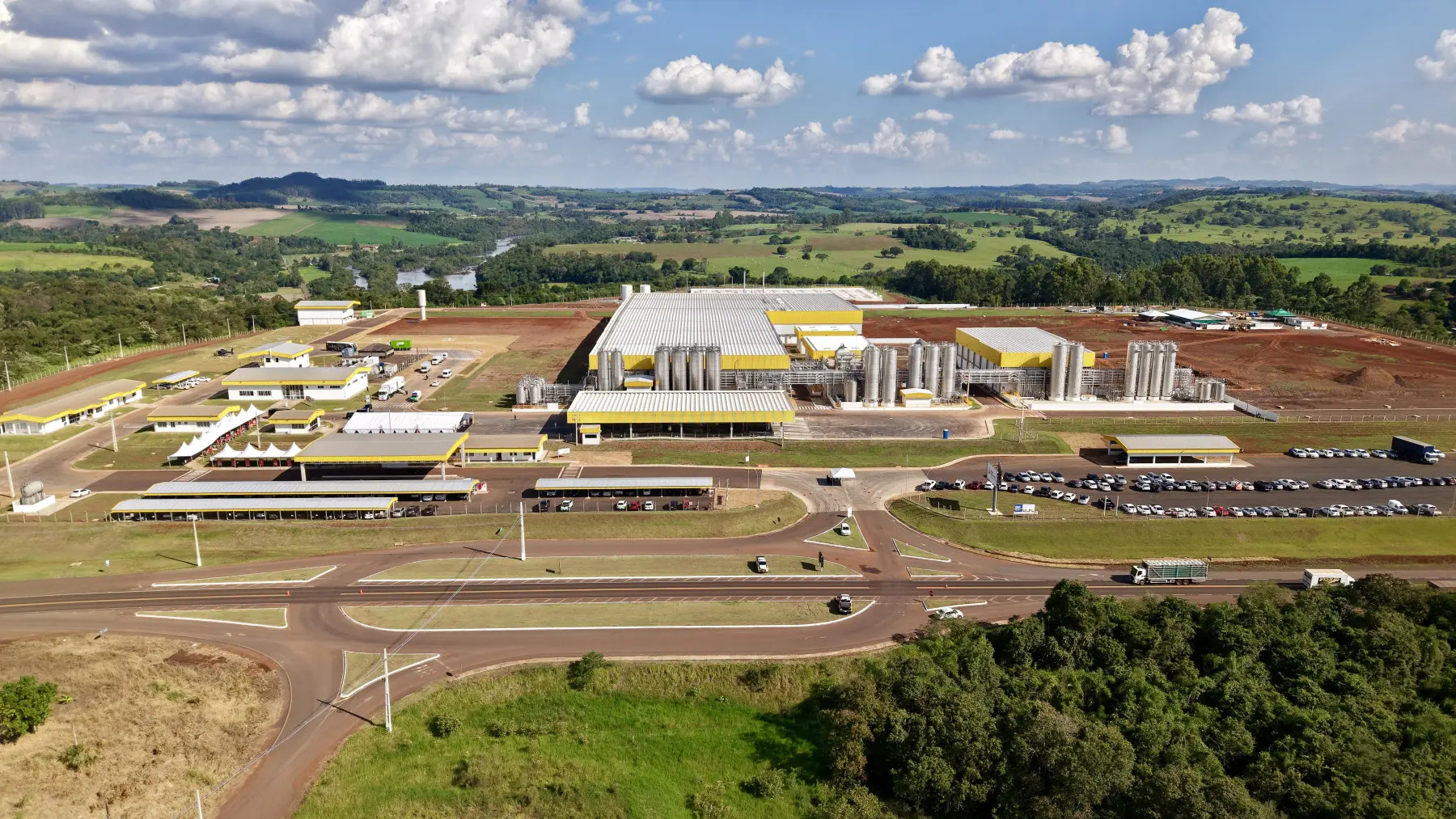
With an investment of R$ 612 million, a capacity to process 1.2 million liters of milk per day, Piracanjuba inaugurates a mega cheese factory that increases national production, reduces dependence on imports, and repositions Brazil on the global dairy map.
-
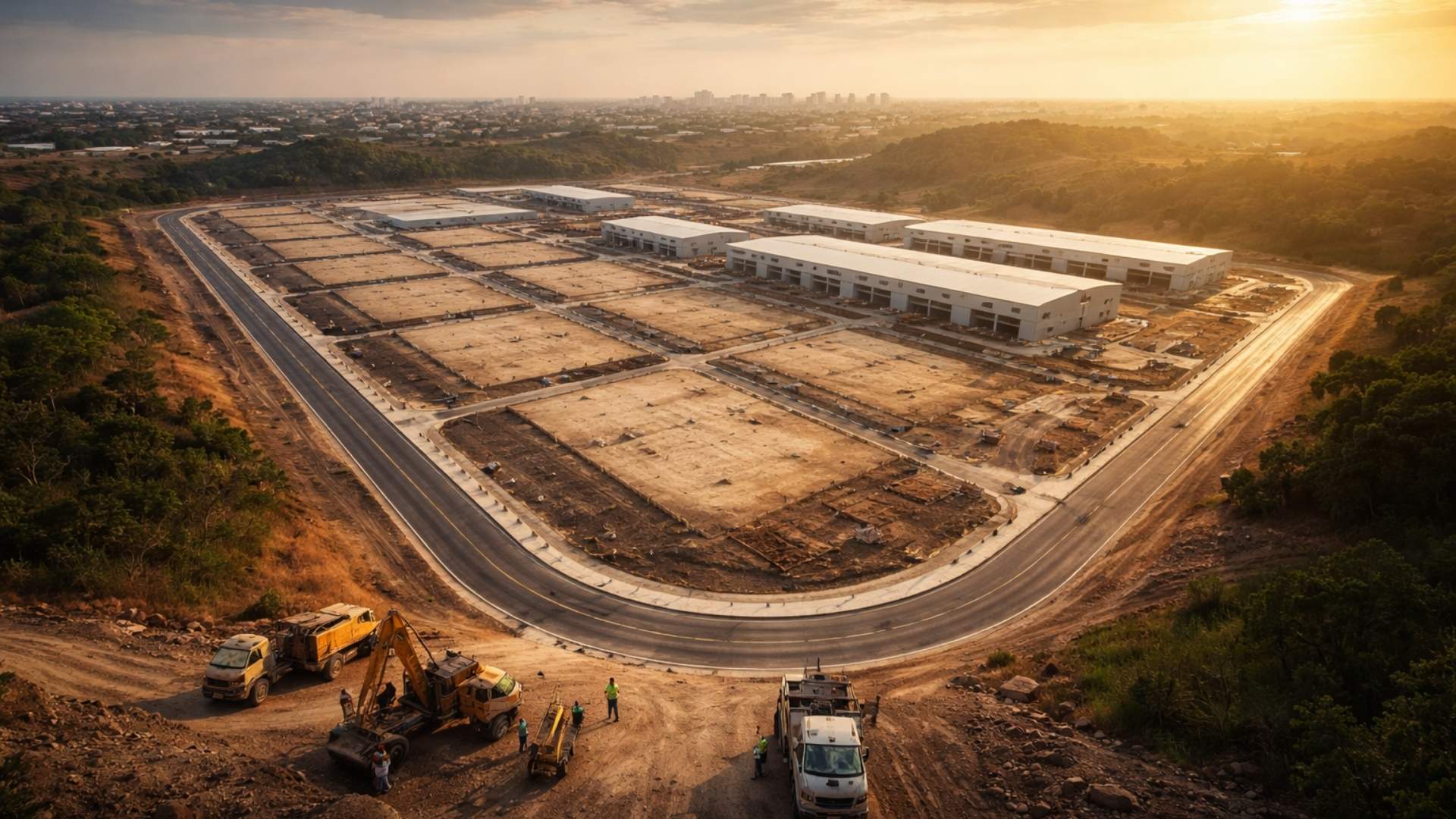
Brazilian city gains industrial hub for 85 companies that is equivalent to 55 football fields.
-
Peugeot and Citroën factory in Argentina cuts production by half and opens a layoff program for more than 2,000 employees after Brazil drastically reduced purchases of Argentine vehicles.

Financial execution is done by Caixa Econômica Federal, responsible for making deposits in digital accounts opened in the students’ names.
This means that money is not delivered in cash nor does it depend on in-person withdrawal as a rule.
The described setup is for an individual student account, receiving deposits throughout the school year and partially accumulating amounts that can only be withdrawn at the end of the high school cycle, reinforcing the logic of persistence and completion.
How the Unique Educational Savings Works in Pé-de-Meia in 2026
The unique educational savings of Pé-de-Meia is structured around distinct incentives, with different rules for each component.
The program combines immediate payments with amounts that remain deposited until the student completes the 3rd year, creating a final “cushion” linked to annual approval and high school completion.
Although the 2026 payment calendar has not been officially disclosed, there is a temporal reference used as a basis: in 2025, the first payment occurred between March 31 and April 7, and the indicated expectation is that 2026 follows a similar pattern.
The decisive point for the student is to understand that this is not a single amount but rather a set of installments with monthly and annual requirements.
Enrollment Incentive: R$ 200 Per Year, Paid After Confirmation at the Start of the School Year
The first component of the program is the Enrollment Incentive, worth R$ 200.00 annually.
It is paid once a year, after confirmation of enrollment at the beginning of the school year.
This installment functions as an initial trigger: it confirms that the student officially entered the cycle for that year and opens the sequence of conditional payments that will follow.
Within the logic of the unique educational savings, it is the simplest payment, as it depends on an objective administrative event: confirmed enrollment.
Attendance Incentive: R$ 200 Monthly in 8 Installments, Requiring Over 80% Attendance
The second component is the Attendance Incentive, with R$ 200.00 monthly, paid in eight installments throughout the school year, totaling R$ 1,600 per year.
The access rule is clear: the student needs to maintain school attendance above 80%.
This requirement places attendance as the main marker of persistence throughout the year because it is the incentive that comes in monthly and acts as continuous reinforcement.
If attendance drops, the direct risk is losing the monthly benefit, which increases pressure to maintain regular participation in classes.
Completion Incentive: R$ 1,000 Per Year, Deposited and Locked Until the End of the 3rd Year
The third component is the Completion Incentive, worth R$ 1,000.00 annually, deposited at the end of each completed year with approval.
The most important rule is the lock: the amount can only be withdrawn after completing the 3rd year of high school.
Summing the three years, this incentive totals R$ 3,000, which appears as the most symbolic amount of the program for functioning as a “finishing prize”.
This is the heart of the unique educational savings: the money exists in the account, but the student only accesses it upon completing the entire cycle, transforming completion into a financial requirement, not just educational.
Enem Incentive: R$ 200 Unique for Those Taking Both Days of the Exam in the 3rd Year
In addition to the payments linked to enrollment, attendance, and approval, there is the Enem Incentive, of R$ 200.00, paid once to 3rd-year students who participate in both days of the Enem exam.
This installment introduces an additional objective: it is not enough to be enrolled and attend; the program also encourages students to approach the entrance to higher education, reinforcing participation in the main national access exam.
The rule is specific and objective: attendance on both days of the Enem.
How Much Can Be Received: Up to R$ 9,200 During High School, Summing All Incentives
The program is presented with a maximum receiving cap: the total funding can be up to R$ 9,200 during high school, considering the sum of the structured incentives.
This maximum total results from different nature installments: annual amounts, monthly amounts, and a unique amount.
Within the unique educational savings, the design mixes money to relieve the present, such as the monthly incentive, with money to support the student until the end, such as the R$ 3,000 linked to completion.
Payment Calendar in 2026 and the Reference of 2025
A highlighted point is the importance of the calendar in 2026 for beneficiaries to receive incentives on time.
At the same time, it is informed that the 2026 schedule has not yet been officially disclosed, so students can rely on previous schedules to predict when deposits are likely to occur.
The concrete reference cited is 2025: the first payment occurred between March 31 and April 7.
The expectation is that 2026 follows a similar pattern, but with no officially confirmed date.
This detail matters because, in the Pé-de-Meia model, the payment flow is part of the incentive, and predictability helps reduce dropout rates.
Who Is Served: Low Income, Public Network, and EJA in Brazil
The unique educational savings of Pé-de-Meia is described as aimed at low-income students from high school and also from Youth and Adult Education (EJA), always in the public network.
By including EJA, the program expands its reach to young people and adults who have returned to studies outside the standard age for high school.
This changes the profile of the beneficiary: it is not just adolescents, but also those who have returned to study and need to balance school with work and responsibilities, making the persistence issue even more delicate.
How Other Programs Connect to Educational Support
In addition to Pé-de-Meia, initiatives were mentioned that help reduce economic barriers and support educational trajectories.
Among them are:
Bolsa Permanência, aimed at low-income students in higher education
Rio Endowment, directed at students in STEM
Mais Professores, which encourages enrollment in teacher training
These fronts are described as complementary, enhancing educational support at different stages, from high school to higher education and teacher training.
Pé-de-Meia, in this context, acts as a mechanism for persistence and completion in high school, while other programs cover transitions and specific areas.
Do you think the unique educational savings of up to R$ 3,000 for completion will actually reduce dropout rates in high school, or is the main problem outside of school, related to income and early work?






-

-

-

-

-

20 pessoas reagiram a isso.