





 Portuguese
  English
  Spanish
  6 min of reading
  0 comments


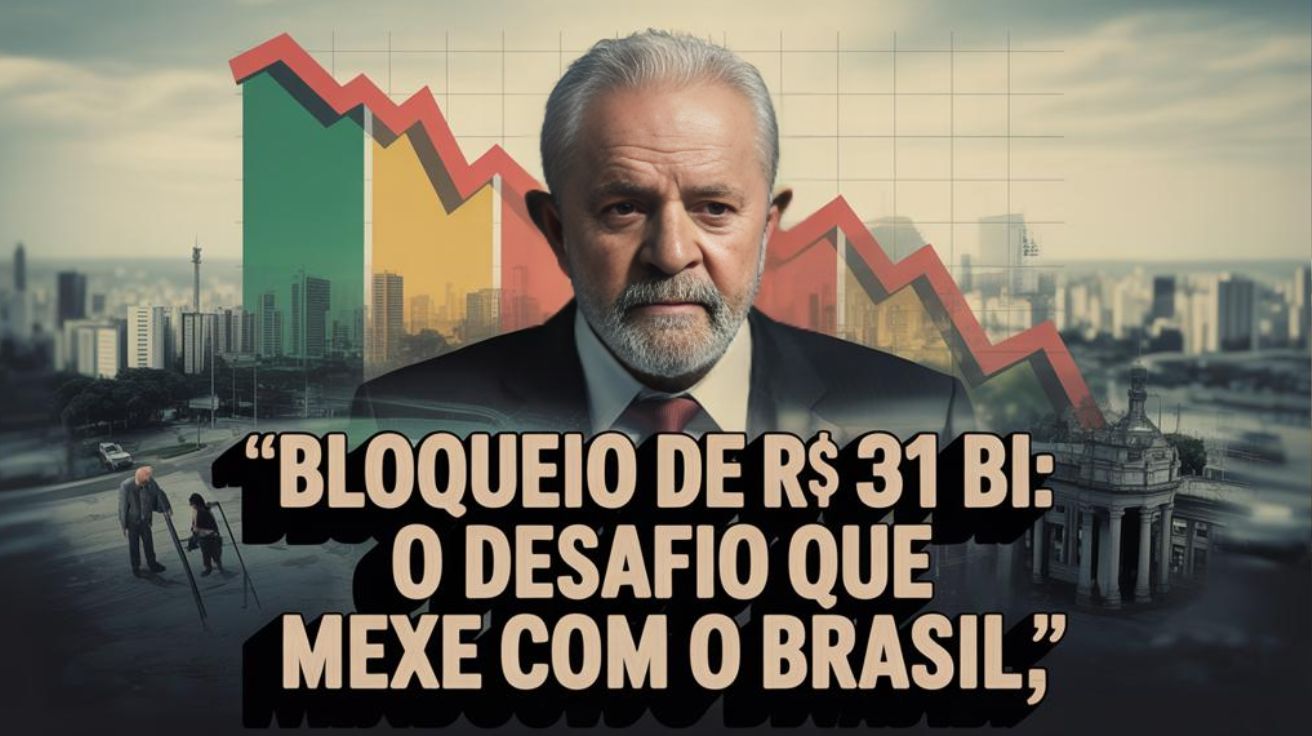
Billion-Dollar Freeze Hits Multiple Strategic Areas of the Federal Government in 2025, Generating Concern About Social, Economic, and Institutional Impacts on Essential Sectors That Directly Affect the Lives of Brazilians and the Sustainability of Public Programs.
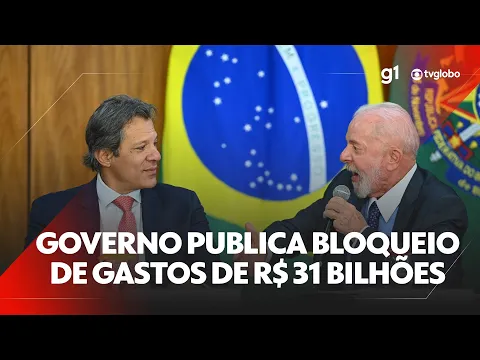
The federal government published on the night of this Friday (30) the decree that freezes R$ 31.3 billion from the 2025 Budget, a measure that already raises concern about the impacts on essential areas such as Health, Social Security, Defense, Cities, Social Development, and Public Safety.
This budget freeze, an attempt by the Lula government to balance public accounts and meet the fiscal target for the year, represents one of the largest cuts in recent years across various Executive departments.
As disclosed by the Ministry of Planning and Budget, the total amount of R$ 31.3 billion was divided into R$ 10.6 billion in freezes — amounts that can only be released with proof of reduced spending — and R$ 20.7 billion in contingencies, which can be reversed throughout the year, depending on revenue.
-
The Argentine government celebrates the lowest poverty rate in 7 years, but experts warn that the methodology has changed, real wages have fallen, unemployment has risen, and the number of people on the streets of Buenos Aires has increased by 57% since Milei took office.

-
7.8 magnitude earthquake in Indonesia frightens the population, triggers tsunami alert, and hits an island with over 200,000 inhabitants this Thursday.
-
Google will finally let you change that embarrassing Gmail address you created in your teenage years without losing any accounts, logins, or old emails: the feature is already available in the United States.

-
The institute that trained the greatest aerospace engineers in Brazil has just opened its first campus outside São Paulo after 75 years: ITA Ceará will have R$ 445 million, new courses in energy and systems, and classes are expected to start in 2027.

The measure was confirmed in the official decree published on Friday (30).
Among the most affected departments are the Ministry of Cities, which will have R$ 4.3 billion frozen; the Ministry of Defense, with R$ 2.6 billion; Health, which suffers a cut of R$ 2.37 billion; and Social Development, with freezes exceeding R$ 2 billion.
The government’s announcement causes concern not only because it affects essential areas for the population but also due to its direct relationship with widely used public policies and programs, such as Minha Casa, Minha Vida and Farmácia Popular, whose impacts have not yet been detailed officially.
According to the decree, agencies will have until June 6 to indicate which specific programs and actions will suffer cuts, leaving an uncertain scenario for managers and beneficiaries.
Strategic Ministries and Major Departments
| Agency | Value of Containment (R$) |
|---|---|
| Ministry of Cities | 4.288 billion |
| Ministry of Defense | 2.593 billion |
| Ministry of Health | 2.366 billion |
| Ministry of Social Development | 2.123 billion |
| Ministry of Integration and Regional Development | 1.3 billion |
| Ministry of Transport | 1.487 billion |
| Ministry of Finance | 1.41 billion |
The freeze, however, is not limited to the mentioned ministries: several agencies and departments will suffer financial restrictions, such as the Ministry of Agriculture (R$ 622.8 million), the Ministry of Justice and Public Safety (R$ 748.6 million), and the Ministry of Finance (R$ 1.41 billion), showing that the fiscal adjustment will have broad effects across different sectors.
An important point is that the Ministry of Education had its budget fully preserved, being excluded from the linear cuts, which indicates the government’s priority in the educational area even in a context of spending cuts.
In addition to freezes and contingencies, the government also announced an attempt to increase revenue through the rise of the Tax on Financial Operations (IOF), a measure that could generate R$ 20 billion in extra revenue.
However, Congress resists the increase of IOF, which may force the government to implement even larger cuts to meet the fiscal target, as warned by the economic team.
These measures reflect the challenges the Lula government faces to balance fiscal responsibility with the social demands of a population still recovering from the economic effects of the pandemic and inflation.
Details of the Freeze by Agency and Area
According to official data, the cuts are divided into freezes and contingencies, with the total freeze corresponding to one third of the value and the contingency accounting for two thirds.
The Ministry of Cities leads the list with a freeze exceeding R$ 4.2 billion, followed by Defense (R$ 2.6 billion), Health (R$ 2.37 billion), and Social Development (R$ 2.1 billion).
Other agencies also face significant restrictions, such as the Ministry of Transport (R$ 1.48 billion), Integration and Regional Development (R$ 1.3 billion), and the Ministry of Finance (R$ 1.4 billion).
This distribution highlights a government effort to dilute cuts across different areas, even though strategic sectors are facing considerable losses.
Some regulatory agencies and research institutes will also face freezes, albeit at lower amounts, which can impact everything from technological development to the oversight of essential sectors.
Sectoral and Specific Ministries
| Agency | Value of Containment (R$) |
|---|---|
| Ministry of Ports and Airports | 780.8 million |
| Ministry of Justice and Public Safety | 748.6 million |
| Ministry of Agriculture and Livestock | 622.8 million |
| Ministry of Social Security | 586.4 million |
| Ministry of Foreign Affairs | 581.8 million |
| Ministry of Agrarian Development and Family Agriculture | 502.2 million |
| Ministry of Tourism | 489.3 million |
| Ministry of Culture | 254.8 million |
| Ministry of Sports | 333.7 million |
| Ministry of Management and Innovation in Public Services | 325 million |
| Ministry of Planning and Budget | 301.7 million |
| Ministry of Labor and Employment | 225.8 million |
| Ministry of Communications | 168.8 million |
| Ministry of Development, Industry, Commerce and Services | 171.9 million |
| Ministry of Mines and Energy | 152.2 million |
| Ministry of Science, Technology and Innovation | 679.9 million |
| Ministry of Human Rights and Citizenship | 87.4 million |
| Ministry of Women | 63.4 million |
| Ministry of Racial Equality | 45.4 million |
| Ministry of Indigenous Peoples | 41.6 million |
Impacts and Prospects
The government justifies the cuts as necessary to meet the fiscal target for 2025, which requires that public expenditures do not exceed revenues to avoid a rise in public debt.
However, experts and representatives from affected sectors warn that these freezes can compromise essential services for the population and the progression of important public policies, especially in health, security, and social assistance areas.
Furthermore, the government’s reliance on increasing the IOF to offset part of the cuts signals the fragility of public accounts in a challenging economic scenario.
The scenario also raises questions about how the government will manage social pressure for social programs and investments in infrastructure, which typically have significant electoral and social impacts.
What Happens to Social Programs and Investments?
There is still no clear information on which programs will be directly affected.
Minha Casa, Minha Vida, for example, one of the largest housing programs in the country, is among those that may face restrictions, but the definition will only occur after the five working days provided by the decree.
The lack of details about the cuts leaves local managers and beneficiaries on alert, as the reduction of resources may delay works, limit services, and restrict access to basic services.
In the health sector, the cut of R$ 2.37 billion represents about 2.5% of the total budget of the Ministry, impacting discretionary expenses and parliamentary amendments.
While this may seem small relative to the total, experts explain that this amount can affect the procurement of medications, hospital funding, and preventive actions, particularly in more vulnerable regions.
Regulatory Agencies
| Agency | Value of Containment (R$) |
|---|---|
| National Health Surveillance Agency | 59.2 million |
| National Electric Energy Agency | 38.6 million |
| National Agency of Petroleum, Natural Gas and Biofuels | 34.9 million |
| National Mining Agency | 28.7 million |
| National Agency of Supplementary Health | 30.7 million |
| National Land Transport Agency | 74.1 million |
| National Telecommunications Agency | 73.3 million |
| National Water and Basic Sanitation Agency | 48.4 million |
| National Civil Aviation Agency | 30 million |
| National Waterway Transport Agency | 15.2 million |
What Do Experts Say?
Financial analysts and economists consulted by specialized media emphasize that the budget freeze is an expected measure given the rigidity of Brazilian fiscal rules but poses risks of slowing economic recovery and increasing inequality.
For some, the dependence on increasing the IOF to reverse the cuts can be risky, as the tax is controversial and may affect consumption and financial investments.
On the other hand, public managers point to the need for greater transparency and planning to avoid the freeze harming essential programs, advocating for efficiency and cuts in less prioritized expenses.
Other Agencies and Institutions
| Agency | Value of Containment (R$) |
|---|---|
| Advocacy General of the Union | 140.2 million |
| Administrative Council for Economic Defense | 12.5 million |
| National Cinema Agency | 11.2 million |
| Office of the Vice Presidency of the Republic | 1.3 million |
What Lies Ahead?
The government has until early June to define the details regarding which actions will suffer freezes and contingencies, a deadline that will be decisive for the direction of public policies in 2025.
Meanwhile, the discussion on fiscal balance and social investments remains prominent, reflecting a classic dilemma of Brazilian economic policy.
Do you believe that the R$ 31 billion freeze will directly affect the quality of essential public services? How do you think the government should act to balance accounts and maintain social programs? Comment!









Seja o primeiro a reagir!