





 English
  Francês
  Alemão
  Italiano
  Japonês
  Norueguês
  Portuguese
  Spanish
  4 min of reading
  1 comment


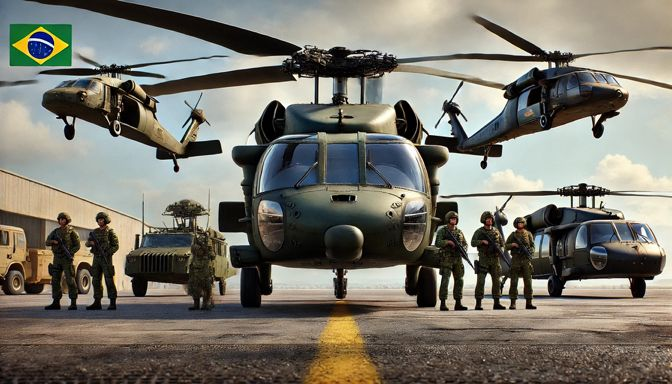

The Lula Government Opts For R$ 5 Billion Helicopters Manufactured In The USA, Ignoring National Industry Capacity And Endangering Brazil’s Security. Understand What Is Behind This Decision And The Economic Impact It May Cause.
When the Brazilian government, under President Luiz Inácio Lula da Silva’s leadership, decides to invest billions in helicopters from an American company, many wonder: what is behind this choice?
In a multimillion-dollar transaction involving the purchase of 12 Black Hawk helicopters, national security may be at risk, and the country’s economy could also suffer irreparable damage.
What Is Behind The Purchase Of The Black Hawk Helicopters?
According to reliable sources, the federal government announced its intention to spend around R$ 5.2 billion on the purchase of Black Hawk helicopters, manufactured by the American company Sikorsky, a subsidiary of the military giant Lockheed Martin.
-
Unemployment rises again to 5.8% at the beginning of 2026, raising alarms about the end of temporary positions and its impact on the Brazilian job market.

-
Document organization can cut invisible costs in small businesses, a simple step that prevents waste, rework, and losses in daily operations.

-
Chinese giant worth nearly R$ 4 billion that manufactures cables for electric cars, solar energy, and robotics wants to open a factory in SC.
-
Many employers do not know, but the law guarantees domestic workers a 25% increase in salary during trips, 50% for overtime, 20% for night shifts, and 17 additional benefits that can lead to labor lawsuits if not paid.


However, what is most puzzling about this negotiation is that, instead of encouraging aircraft production in Brazil, as occurs with other large national manufacturers, such as Helibras, the government seems to ignore Brazilian industry capabilities.
Helibras, since its founding in 1978, has demonstrated competence in manufacturing high-quality helicopters for various uses, including the production of the H-145M, a medium-sized twin-engine model that would perfectly meet the needs of the Brazilian Army.
This local option, in addition to generating jobs and strengthening the national economy, could ensure greater autonomy for the country, without dependence on foreign suppliers.
Risk To National Security And External Dependence
According to experts, the Brazilian government may be making a risky decision by importing helicopters without ensuring technological offset.
The Brazilian legislation, specifically Law 12.598/2012, requires that the country ensure the transfer of technology in defense agreements to guarantee independence in terms of equipment maintenance and operation.
The purchase of the Black Hawk, without proper offset, could leave Brazil vulnerable, as we would depend on a foreign company for the maintenance and modernization of the aircraft.
The risk, therefore, is not only economic but also related to national security. For specialist Roberto Caiafa, one of the leading names in the defense sector in Brazil, the purchase of Black Hawk helicopters could compromise the country’s sovereignty, as he advocates that models like the H-145M, manufactured by Helibras in Minas Gerais, would be more suited to Brazilian realities.
In addition, the H-145M model would be more versatile and better adapted to the needs of the armed forces, as well as providing substantial benefits for the local industry.
The Economic Impact In Minas Gerais And The Loss Of Investments
If the Brazilian government finalizes the deal with the American company, the economic impact will be significant.
Helibras, controlled by the giant Airbus Helicopters, had planned to invest R$ 300 million in its factory in Itajubá, Minas Gerais, to produce the aircraft nationally.
The loss of this investment would represent not only a disappointment for the company but also a major loss for the local economy, which already heavily relies on the aerospace industry and job generation in the region.
The transfer of manufacturing to the United States, therefore, not only represents a loss for Brazil in terms of security and autonomy but also in terms of economic growth and the generation of skilled jobs.
Instead of strengthening the national industry, the government seems, once again, to opt for external interests, disregarding the potential of Helibras and the impact this could have on the country as a whole.
A Questionable Strategic Choice
The Lula government’s decision to prioritize the purchase of Black Hawk helicopters raises a number of questions, especially regarding the future of the national defense industry.
With Helibras capable of producing high-quality aircraft and with a solid maintenance and logistics infrastructure in Brazil, many wonder if there are hidden reasons for the choice of a foreign option.
Additionally, experts warn that this decision goes beyond a simple helicopter purchase.
It is linked to a broader defense policy and a model of dependence that may place Brazil in a vulnerable position in the near future.
What The Future Holds For The Brazilian Defense Industry?
The choice between investing in a strong national industry or prioritizing agreements with foreign companies is a question that involves not only the economy but also sovereignty and security.
The government has a duty to make decisions that ensure Brazil’s independence and strengthen its defense capabilities, without compromising national autonomy and security.
If Brazil opts to continue investing in imported equipment without adequate technological offset, the future of the national defense industry may be even more compromised.
The country has the resources, technical capacity, and skilled labor to build its own aircraft and thus ensure greater security and independence.
The Decision That Could Mark The Future Of Brazilian Defense
The question posed is simple: why does the government prefer to close advantageous deals for other countries instead of betting on the potential of the national industry? Lula’s choice to opt for Black Hawk helicopters manufactured in the United States may represent a setback for Brazil’s defense industry, compromising its national security and economy in a move that seems disconnected from the country’s needs.
Are National Security And Economic Development In Brazil Being Sacrificed In The Name Of International Agreements?








Este artigo se parece mais como fofoca! Tudo no modo “se”…as forças armadas devem saber o que mais interessa para ela..não é o Lula que dá um canetaço.